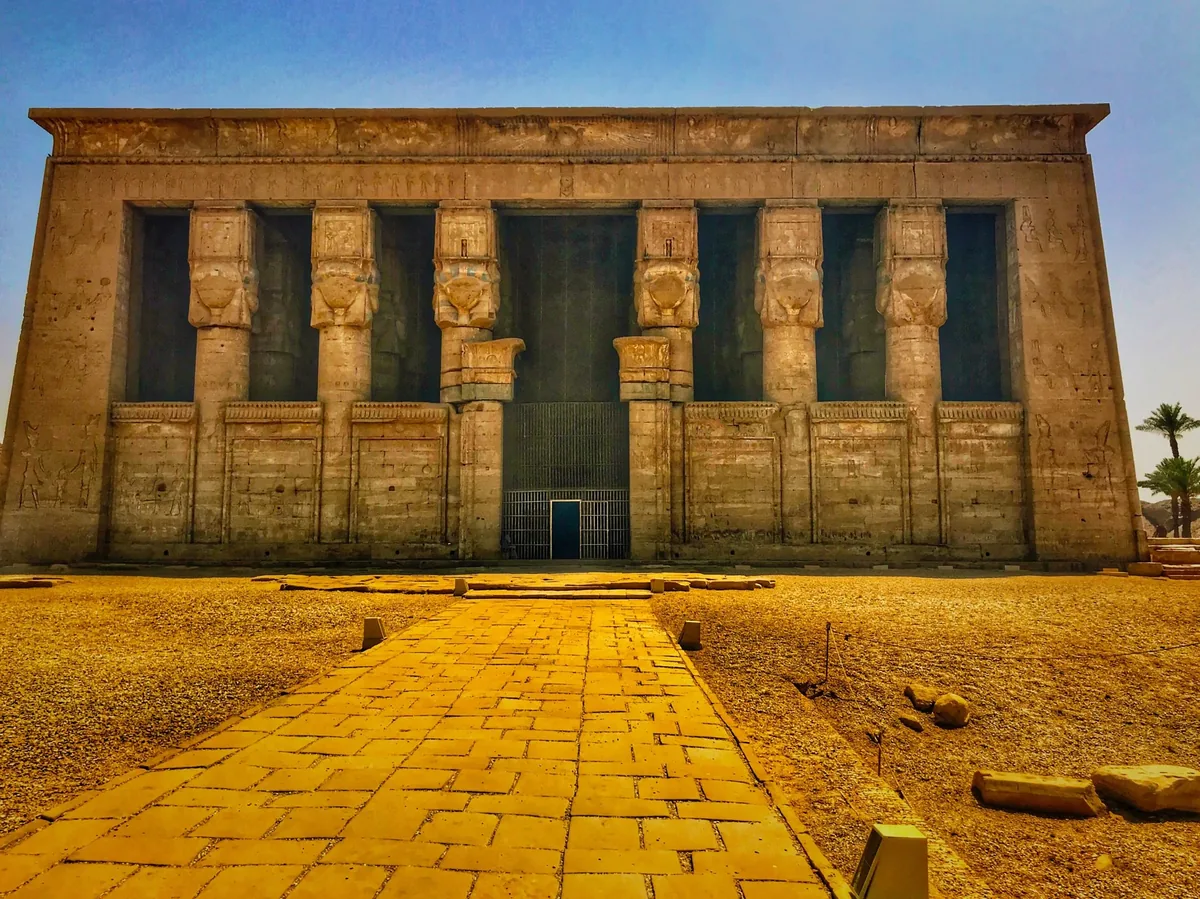
The painted astronomical ceiling of this Ptolemaic temple survived because centuries of Christian lamp-burning filled the chambers with protective soot, and the colors are still vivid.
About Temple of Hathor
Built primarily between 54 BCE and 20 CE by the Ptolemaic dynasty, the Temple of Hathor stands on a cult site used for thousands of years. Ptolemaic rulers pragmatically inscribed their Roman successors on the outer walls to maintain imperial patronage.
The Temple of Hathor at Dendera is one of Egypt's best-preserved ancient temples, and its preservation owes something to the same process that damaged others: its chambers were used as a Christian church in late antiquity, and the accumulated soot from centuries of burning lamps protected the painted ceilings from the bleaching effect of sunlight. The result is a temple where the astronomical ceiling of the hypostyle hall retains color and detail that most pharaonic structures have lost.
The existing temple dates primarily from the Ptolemaic period, the Greek dynasty that ruled Egypt after Alexander the Great's conquest, with the main structure built between approximately 54 BCE and 20 CE. However, Dendera had been a cult center for Hathor, goddess of love, music, and motherhood, for thousands of years before the Ptolemies; earlier temples stood on the same site back to the Old Kingdom. The Ptolemaic builders inscribed the later Roman emperors, Augustus, Tiberius, Claudius, on the outer walls, a standard diplomatic accommodation that kept the temple's patronage relationship with Roman rulers intact.
Visiting Temple of Hathor
The hypostyle hall's astronomical ceiling is the visual centerpiece, a detailed rendering of the night sky including zodiac signs, a lunar calendar, and representations of Nut, the sky goddess, arching across the ceiling. The famous Dendera zodiac, a circular bas-relief of the night sky that became controversial when it arrived in France in the nineteenth century, is a cast; the original is in the Louvre. The temple's roof is accessible and provides views over the Nile agricultural plain. The crypt chambers beneath the temple, used for storing sacred objects, contain the finest relief carvings in the complex.
Dendera is about sixty kilometers north of Luxor, near the town of Qena. Organized day tours from Luxor take roughly ninety minutes each way; private taxis are also available for the round trip.
The Experience
Study the detailed astronomical ceiling of the hypostyle hall with its zodiac and lunar calendar, visit the underground crypt chambers with the finest carvings in the complex, and climb to the roof for views over the Nile plain.
Why It Matters
One of Egypt's best-preserved ancient temples, with painted ceilings and underground crypt reliefs that represent the highest quality of Ptolemaic religious art.
Why Visit
The preservation of Dendera's painted ceiling, unmatched at any comparable Egyptian site, makes it essential for understanding what pharaonic temple interiors originally looked like. The majority of visitors reach Luxor without continuing to Dendera; those who do are consistently rewarded.
✦ Photo Gallery
Best Season
🌤 October through March. The site is forty minutes from Luxor and is typically combined with Abydos as a single day trip.
Quick Facts
Best time to visit
October through March. The site is forty minutes from Luxor and is typically combined with Abydos as a single day trip.
Getting there
In Dendera, Egypt; reach Dendera first, then continue to the site.
Location
Dendera, Egypt
Type
attraction
Insider Tips
- 1
Bring a strong torch, the crypt chambers are only partially lit and the finest reliefs are in the darkest sections.
- 2
The Dendera zodiac on the ceiling is a cast; understand this before arriving to avoid disappointment.
- 3
Combining Dendera and Abydos in a single day from Luxor is the standard itinerary and works well if you depart by 7am.
- 4
The temple guards sometimes offer to open otherwise-closed areas for a small fee, evaluate case by case, but the crypt access is genuine.