“Over a thousand fossilized whale skeletons lie exposed in a Western Desert valley, evidence of an ancient sea that covered this part of the Sahara forty million years ago.”
About Wadi Al-Hitan
The Tethys Sea covered this region during the Eocene epoch, approximately 40 million years ago. As it retreated, creatures like Basilosaurus and Dorudon were fossilized and later exposed by wind erosion. The site became a UNESCO World Heritage Site for the evidence it provides of whale evolution from land to sea.
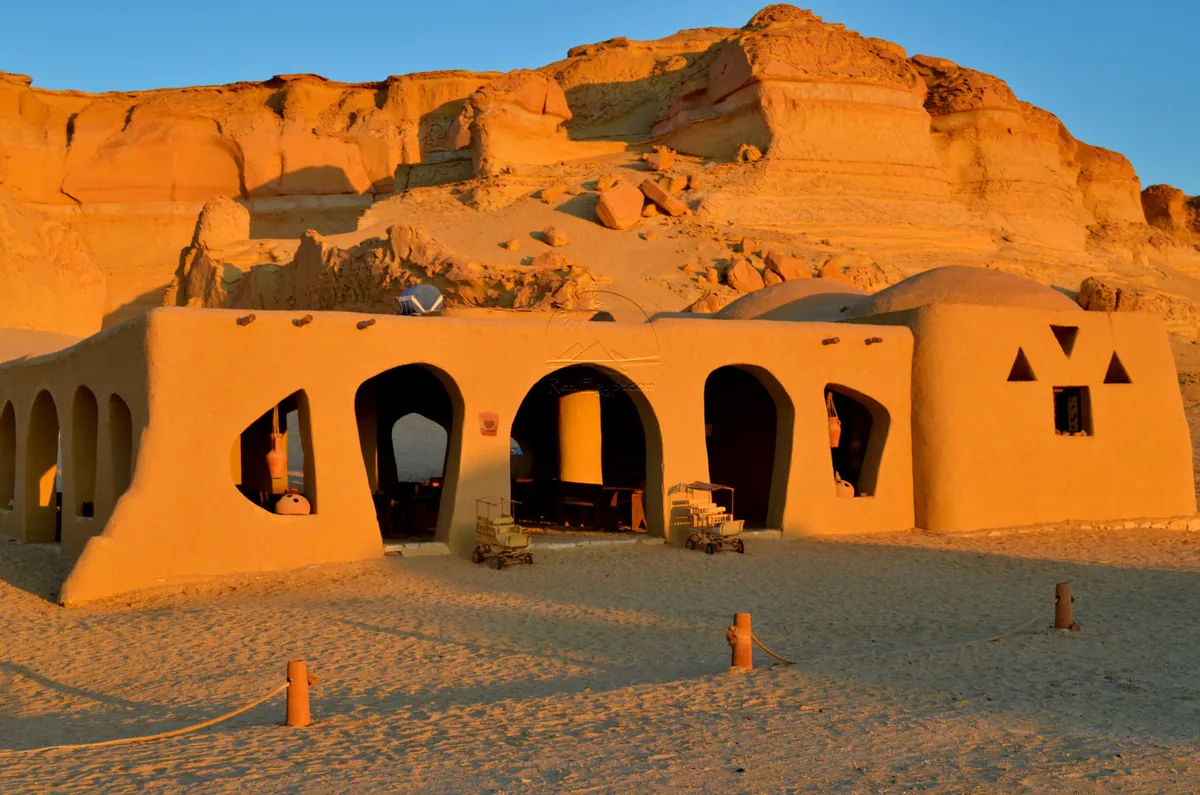
Wadi Al-Hitan, Valley of the Whales, is a paleontological site in Egypt's Western Desert that contains the fossil remains of ancient whales from a period when this desert was the floor of a shallow sea. The fossils date to approximately forty million years ago and represent a transitional stage in whale evolution: the creatures preserved here, Basilosaurus and Dorudon, still had vestigial rear limbs, providing physical evidence of the evolutionary transition from land to sea mammals. The site is a UNESCO World Heritage Site and one of the most significant paleontological locations in the world.
The site is a UNESCO World Heritage Site and one of the most significant paleontological locations in the world.
The creatures fossilized at Wadi Al-Hitan lived in the Tethys Sea, a warm shallow ocean that covered much of what is now the Sahara and the Middle East during the Eocene epoch. As the sea retreated and the land dried over millions of years, the bones were buried, then gradually exposed by wind erosion. The fossils were first scientifically studied in the early twentieth century but became more widely known after detailed surveys in the 1980s and 1990s. Over a thousand whale skeletons have been identified in the valley, many in articulated positions that allow a clear picture of the animals' anatomy.
A walking trail of about three and a half kilometers winds between the most significant fossil exposures. Many complete or near-complete skeletons are visible directly in the ground, no digging or glass cases, just ancient bone in ancient rock. A visitor center at the site entrance provides geological context and displays a complete reconstructed skeleton. The desert landscape of eroded sandstone and chalk formations surrounding the fossils has its own visual interest independent of the paleontological content. Camping overnight in the valley is permitted and provides access to exceptional night skies.
Wadi Al-Hitan is in the Fayoum
Depression, about 150 kilometers southwest of Cairo. Access requires a 4WD vehicle; the last forty kilometers are unpaved desert tracks. Day trips can be organized from Cairo or from the Fayoum city area, and overnight camping permits are available.
Access requires a 4WD vehicle; the last forty kilometers are unpaved desert tracks.
The Experience
Walk a 3.5-kilometer trail past exposed whale skeletons still in the rock, observe vestigial rear limbs in the Basilosaurus fossils that document an evolutionary transition, and visit the visitor center's reconstructed complete skeleton for anatomical context.
Why It Matters
A UNESCO World Heritage Site containing the world's largest concentration of Eocene whale fossils, representing a critical stage in the evolution of modern cetaceans.
Why Visit
The fossils are lying in open desert, no cases, no rope barriers, just ancient skeletons in the ground you walk between. The physical immediacy of the evolutionary evidence is unlike any museum display.
✦ Insider Tips
- 1
A 4WD is essential, the last section of road is unpaved desert track that standard cars cannot navigate.
- 2
The visitor center's context is important for understanding what you're looking at in the field, visit it before starting the trail.
- 3
Overnight camping provides dark sky access that rivals any location in Egypt, bring camping equipment or arrange with Fayoum operators.
- 4
Carry more water than you think you need, the exposed desert trail has no facilities.