Louis XIV moved the French court to Versailles in 1682 partly to keep the nobility under royal observation, and the Hall of Mirrors where he held audiences was where the German Empire was proclaimed in 1871 and the Treaty of Versailles signed in 1919.
About Château de Versailles
Built from a hunting lodge into Europe's most imitated palace across three reigns, Versailles served as the seat of French royal power from 1682 to 1789. The Estates-General met here in May 1789; the October Women's March forced Louis XVI back to Paris and effectively ended the palace's role as a functioning court.
Château de Versailles
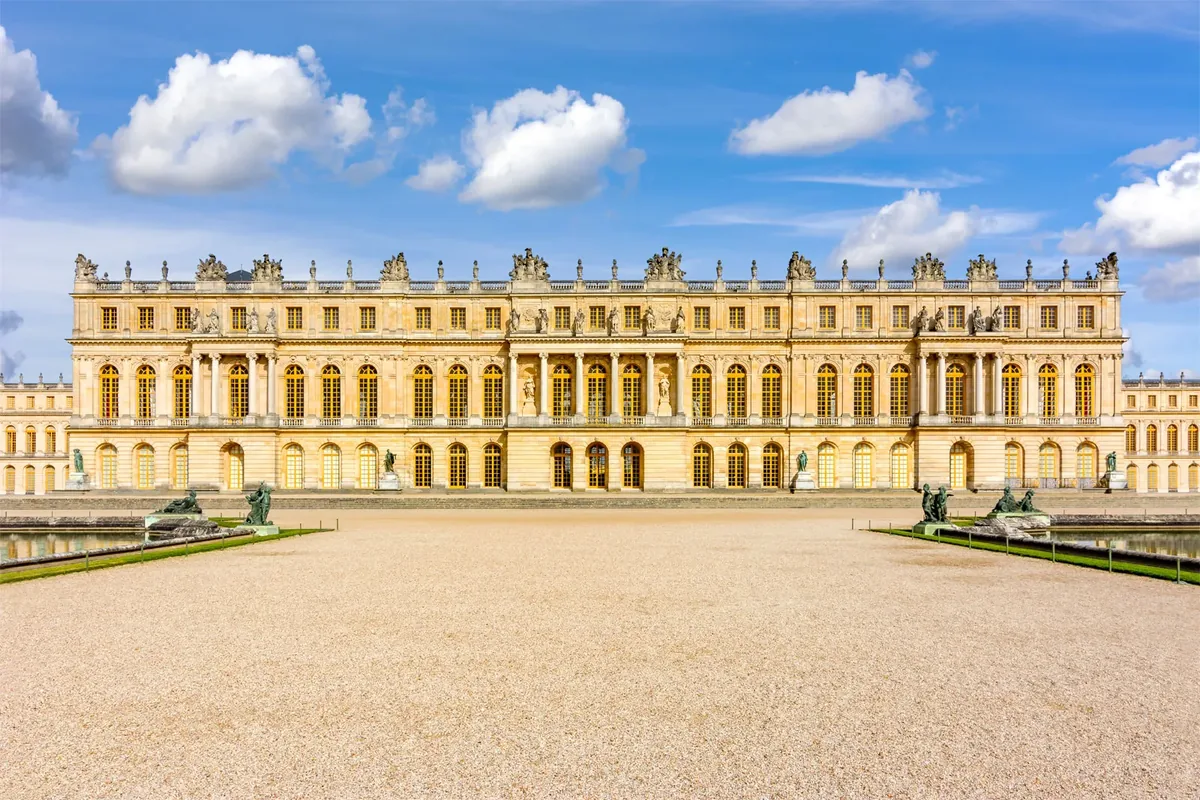
The Palace of Versailles was the seat of French royal power from 1682, when Louis XIV moved the court here from Paris, until the Revolution in 1789. The palace and its formal gardens cover an area of about 800 hectares, the main palace building alone has 2,300 rooms, and the ensemble represents the most complete surviving expression of seventeenth-century absolutist political aesthetics in Europe. The Hall of Mirrors, the gardens designed by André Le Nôtre, and the Grand and Petit Trianon palaces in the park are each individually significant.
Louis XIV's decision to move the court to Versailles was partly practical, Paris felt dangerously close to the mob, and partly a political project of cultural dominance. By requiring the French nobility to live at Versailles under royal observation, he neutralized their independent political power. The building campaigns under Louis XIV, XV, and XVI transformed what had been a hunting lodge into the most imitated palace in Europe, whose influence is visible in palaces from Schönbrunn to Peterhof. The Revolution began, in a sense, at Versailles: the Estates-General met here in May 1789, and the October 1789 March of the Women from Paris to Versailles forced Louis XVI and Marie Antoinette to return to the Tuileries.
The Hall of Mirrors, 73 metres long , with 357 mirrors facing 17 arched windows overlooking the gardens, is the palace's most famous room and the most crowded. The apartments of Louis XIV and the queen's apartments repay slower attention; the detail of the painted ceilings and the quality of the furniture is apparent at closer range than the Hall allows. The gardens, designed on an east-west axis extending nearly three kilometres from the palace facade, have fountains that operate only on specific days (the Grandes Eaux Musicales) when the Baroque water engineering is demonstrated. The Grand Trianon, a pink marble palace in the park built by Louis XIV as a private retreat, is considerably less visited and architecturally more intimate than the main palace. Versailles is 20 kilometres southwest of Paris, reachable by RER C train (about 35 minutes from Paris Austerlitz). The Versailles Rive Gauche station is closest to the main palace entrance. Pre-booking online is essential, the palace does not accept walk-up entry.
The Experience
Walk the Hall of Mirrors with its 357 mirrors facing garden windows, spend extended time in the royal apartments where ceiling detail rewards close attention, visit the Grandes Eaux Musicales fountain display on designated days, and find the Grand Trianon pink marble palace for a less-crowded architectural counterpoint.
Why It Matters
The defining monument of French royal absolutism and the most influential palace design in European history, a UNESCO World Heritage Site whose political, cultural, and historical weight exceeds any single royal building in France.
Why Visit
The Grand Trianon is the experience most visitors miss, a pink marble palace in the park designed by Louis XIV as a private retreat from his own palace, with a fraction of the main palace's visitors and considerably more architectural elegance.
✦ Photo Gallery
Best Season
🌤 April through June and September through October. Summer is the most crowded period; the Grandes Eaux Musicales fountain display runs on weekends April through October, check the schedule for current dates.
Quick Facts
Entry
Around 21 EUR for the palace, or around 32 EUR for a passport ticket covering the estate; gardens are often free except on fountain-show days.
Opening hours
Open daily except Mondays, roughly 9am to 6:30pm, with the estate open longer.
Time needed
A full day to see the palace and gardens.
Best time to visit
April through June and September through October. Summer is the most crowded period; the Grandes Eaux Musicales fountain display runs on weekends April through October, check the schedule for current dates.
Getting there
In Versailles outside Paris; the RER C train to Versailles Chateau Rive Gauche, then a short walk.
Location
Versailles, France
Type
attraction
Insider Tips
- 1
Pre-book the palace ticket online, walk-up entry is not available and the queue for collection is itself long.
- 2
The Grandes Eaux Musicales weekend fountain display requires a separate garden ticket on those days, book both together.
- 3
The Grand Trianon and Marie Antoinette's Hameau de la Reine hamlet are included in the passport ticket; most visitors miss them entirely.
- 4
Arriving at opening (9am) on a Tuesday, the quietest weekday, produces the most manageable Hall of Mirrors experience.