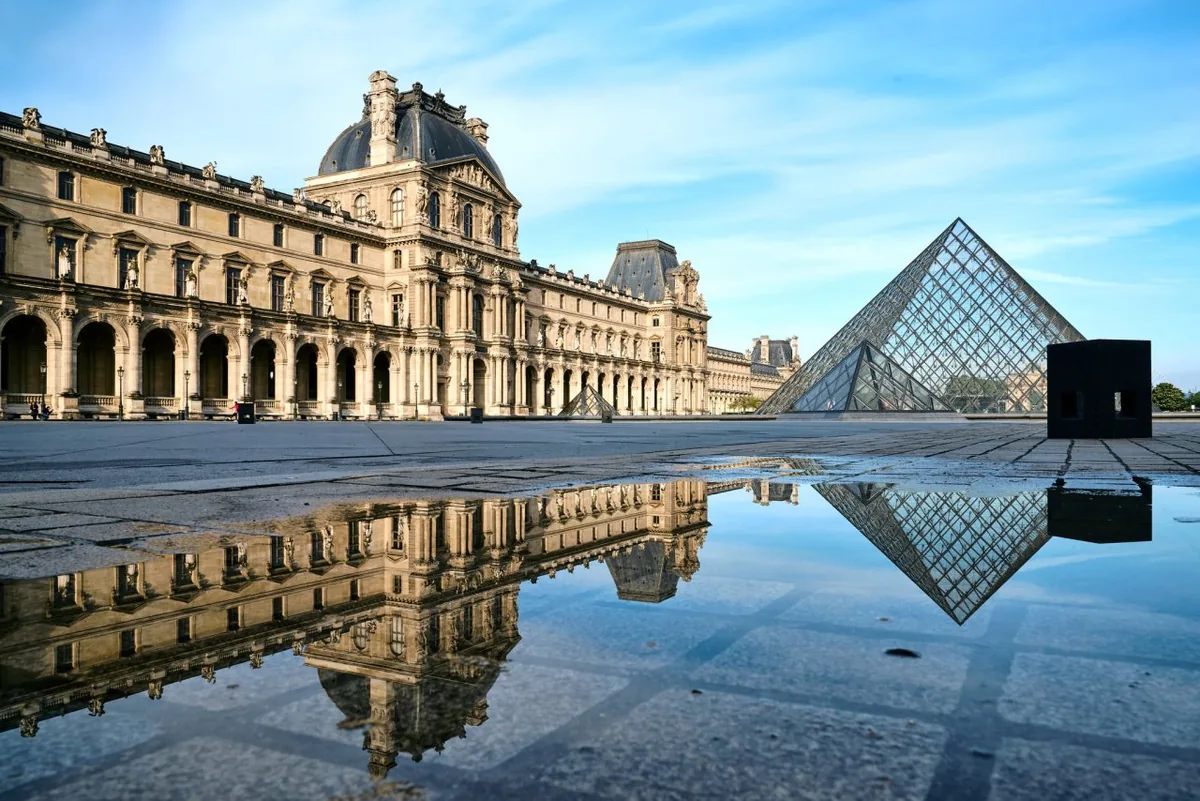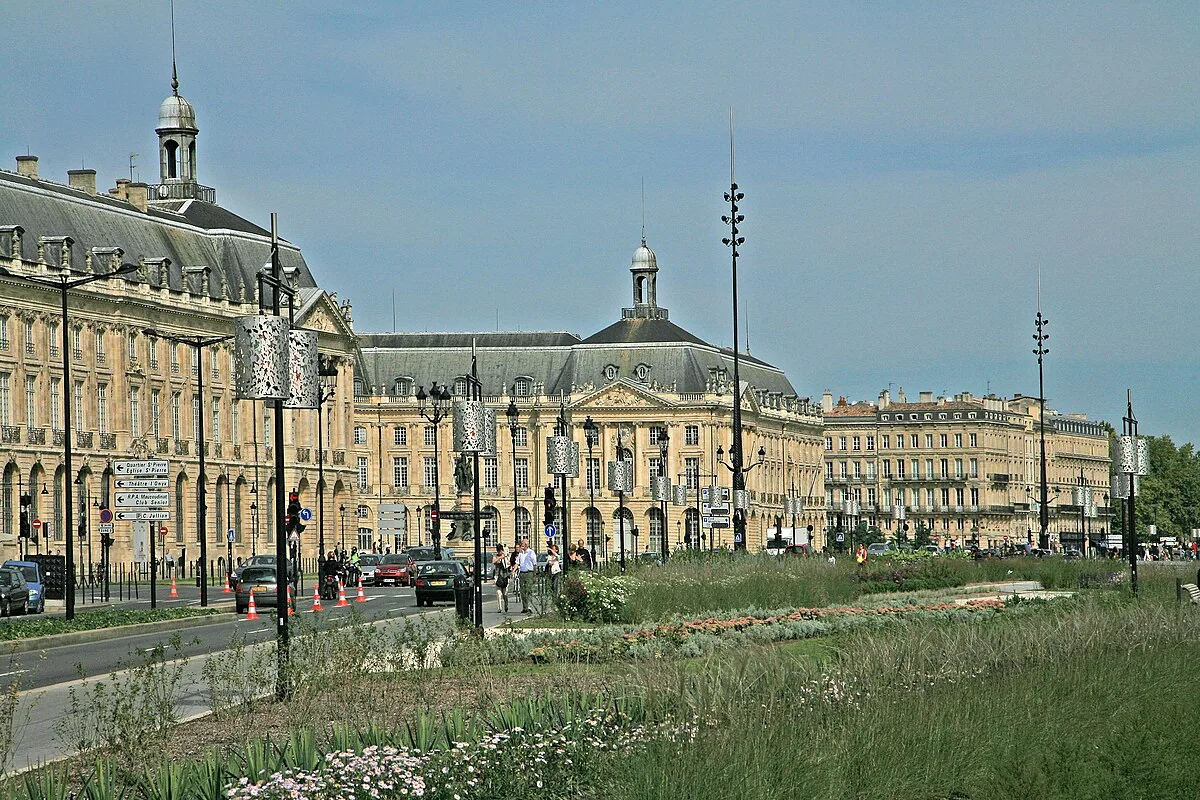
An eighteenth-century neoclassical square built on colonial trade wealth faces the Garonne River across the world's largest reflecting pool, installed in 2006, the Miroir d'Eau has become France's most photographed contemporary public space.
About Place de la Bourse
Designed by Jacques and Ange-Jacques Gabriel between 1730 and 1775 to present Bordeaux as a city of European consequence, Place de la Bourse was financed by the colonial trade wealth, wine, slaves, Caribbean commerce, that made Bordeaux one of France's wealthiest cities. The Miroir d'Eau was added in 2006.
Place de la Bourse
Place de la Bourse is the neoclassical centerpiece of Bordeaux's eighteenth-century waterfront, a formally composed square facing the Garonne River with the Palais de la Bourse, the former stock exchange, and matching commercial buildings framing a central fountain. The Miroir d'Eau, a reflecting pool installed in 2006 in the open space between the square and the river, is 3,450 square metres of alternating water sheet and mist, the largest reflecting pool in the world, producing a reflection of the Palais de la Bourse that has become one of France's most photographed contemporary public spaces.
Bordeaux rebuilt its waterfront in the eighteenth century on the wealth generated by colonial trade, wine exports, the slave trade, and commerce with the French Caribbean colonies. The Place Royale (now Place de la Bourse) was designed by Jacques Gabriel and his son Ange-Jacques Gabriel between 1730 and 1775, replacing the medieval port infrastructure with a formal urban composition intended to present Bordeaux as a city of European importance. The Palais de la Bourse was a commercial exchange for Bordeaux's merchant class, and the wealth concentrated here was enormous. The Miroir d'Eau was added by designers Michel Corajoud and Jean-Max Llorca as part of a broader waterfront reclamation; it has since become the city's most popular public gathering space.
The square itself is best seen from the riverside, where the full Gabriel composition, Palais de la Bourse flanked by symmetric commercial facades, framed by the river, reads as intended. The Miroir d'Eau operates on a fifteen-minute cycle: the water sheet covers the stone surface, children wade in the shallow reflection, then the mist phase replaces the water, obscuring the feet of the people standing in it. At dusk, the lit Palais de la Bourse reflected in the water produces one of the most consistently impressive urban images in France. The Rue Sainte-Catherine shopping street extends directly north from the square into the city center.
Place de la Bourse
Place de la Bourse is on the Bordeaux waterfront in the city center, accessible by tram line C (Bourse stop). Bordeaux is two hours from Paris on the TGV. The square is the natural starting point for a waterfront walk north toward the Chartrons neighborhood.
The Experience
View the Gabriel composition from the riverside for its intended perspective, stand in the Miroir d'Eau's water sheet phase, watch the fifteen-minute mist cycle from the square side, and stay for the dusk reflection of the lit Palais de la Bourse in the water.
Why It Matters
The finest surviving expression of Bordeaux's eighteenth-century mercantile wealth and one of the most successful contemporary public space interventions in France, the Miroir d'Eau transformed a formal historic square into a living gathering place.
Why Visit
The dusk view, the lit Palais de la Bourse reflected in the Miroir d'Eau's still water, is one of the genuinely outstanding urban images in France. The reflecting pool's mist cycle, which fills the space between the buildings with low cloud, is an experience that photographs don't fully communicate.
✦ Photo Gallery
6 photos of Place de la Bourse · click to enlarge
Best Season
🌤 May through October for the Miroir d'Eau in full operation. The pool is drained in winter. Summer evenings when families gather in the water sheet phase are the most socially vivid time.
Quick Facts
Best time to visit
May through October for the Miroir d'Eau in full operation. The pool is drained in winter. Summer evenings when families gather in the water sheet phase are the most socially vivid time.
Getting there
In Bordeaux, France; reach Bordeaux first, then continue to the site.
Location
Bordeaux, France
Type
attraction
Coordinates
44.8415°, -0.5700°
Insider Tips
- 1
The Miroir d'Eau is drained in winter, confirm it's operating before planning a visit specifically around it.
- 2
The dusk light (roughly one hour after sunset) with the Palais illuminated in the water is the strongest photographic moment.
- 3
The Chartrons antiques and wine market neighborhood is a twenty-minute walk north along the waterfront, worth combining.
- 4
Bordeaux's tram system is efficient; tram line C connects the waterfront to the main train station and the university area.