“France's first marine national park, designated in 1963, protects an island off the Côte d'Azur where no roads or private vehicles are permitted, and the surrounding sea to 90 metres depth contains some of the most intact seagrass meadows in the western Mediterranean.”
About Port-Cros National Park
Port-Cros was a private estate before the Fournier family donated part of it to the state on condition of permanent protection. The 1963 marine park designation was an early recognition that Mediterranean ecosystems required sub-surface legal protection, not just coastal management.
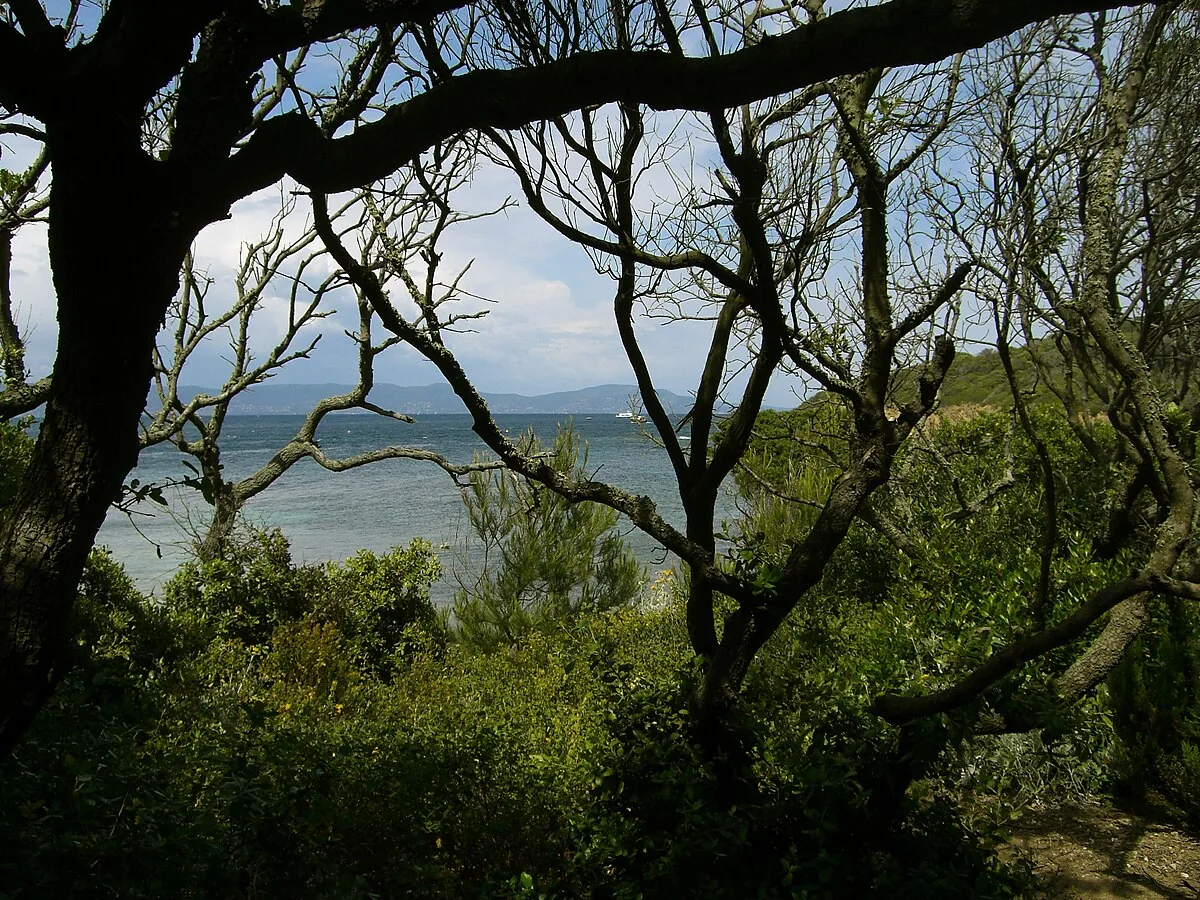
Port-Cros is an island national park in the Var department on the French Riviera, one of the Îles d'Hyères, three islands off the Côte d'Azur that escaped the resort development that transformed the mainland coast in the twentieth century. The smallest of the three main islands at about 700 hectares, Port-Cros was designated France's first marine national park in 1963, protecting both the island landscape and the surrounding sea to a depth of 90 metres. Private vehicles are prohibited; the island has no permanent roads, and the maritime zone contains some of the most intact Posidonia seagrass meadows in the western Mediterranean.
Private vehicles are prohibited; the island has no permanent roads, and the maritime zone contains some of the most intact Posidonia seagrass meadows in the western Mediterranean.
The Îles d'Hyères remained relatively undeveloped through the nineteenth and early twentieth centuries despite their proximity to Toulon, the navy maintained facilities on some islands, and the others were difficult to access without specialized boats. Port-Cros was a private estate before its national park designation, and the family that owned it, the Fournier family, agreed to donate part of the island to the state on the condition that it remain protected. The marine park's creation in 1963 was an early recognition that Mediterranean ecosystems were being severely damaged by tourism development, fishing, and anchoring, and that meaningful protection required legal restriction of human activity below as well as above the waterline.
Ferries from Hyères and Le Lavandou bring day visitors to the island's single pier. From there, walking trails cover the island's interior forest, a landscape of maritime pine, holm oak, and maquis scrub that has recovered significantly since the national park's creation. The snorkelling trail, marked by buoys in the bay beside the pier, passes through a Posidonia seagrass meadow where the diversity of fish species is unusual for the Riviera coast. The island's nineteenth-century fort and the smaller Ile Bagaud, a research station off-limits to visitors, complete the landscape. The sea around the island is among the clearest on the French Riviera.
Ferries run from Hyères (Tour Fondue) and Le
Lavandou year-round, with increased frequency in summer. The crossing takes about thirty minutes from Tour Fondue. Camping is prohibited on the island; accommodation is limited to one hotel within the national park boundary.
Lavandou year-round, with increased frequency in summer.
The Experience
Walk the vehicle-free island trails through recovered maritime pine and maquis forest, snorkel the marked buoy trail over the Posidonia seagrass meadow, swim in some of the clearest water on the French Riviera, and visit the nineteenth-century fort on the island's eastern promontory.
Why It Matters
France's first marine national park and one of the western Mediterranean's most protected marine ecosystems, an island that rejected the development path of the surrounding Riviera coast.
Why Visit
The combination of clear Riviera water, intact underwater seagrass, a forest that has been recovering for sixty years without vehicles or development, and an island where the only sound is the wind and the sea, Port-Cros provides what the developed Côte d'Azur cannot.
✦ Insider Tips
- 1
The snorkelling trail buoys mark the best seagrass meadow; a mask and snorkel are worth bringing from the mainland as rental on the island is limited.
- 2
The island has one hotel, book months ahead for summer nights; day visits from the mainland are the standard approach.
- 3
Anchoring within the marine park is restricted to designated buoy zones; boat visitors must use the provided moorings.
- 4
Bring all food and water you need, the island has minimal facilities and the single cafe operates limited hours.