“A hospital for ergotism patients commissioned the most physically confrontational Crucifixion in Northern Renaissance painting, designed so that patients could see their own symptoms of distorted limbs and discolored skin reflected in Christ's suffering.”
About Unterlinden Museum
Painted by Matthias Grünewald 1512-1516 for an Antonite monastery hospital treating ergotism, the Isenheim Altarpiece depicted Christ's suffering in terms that mirrored patients' physical symptoms, understood as spiritual medicine. Acquired by Colmar after the Revolution, it has been housed here since.
What Unterlinden Museum is
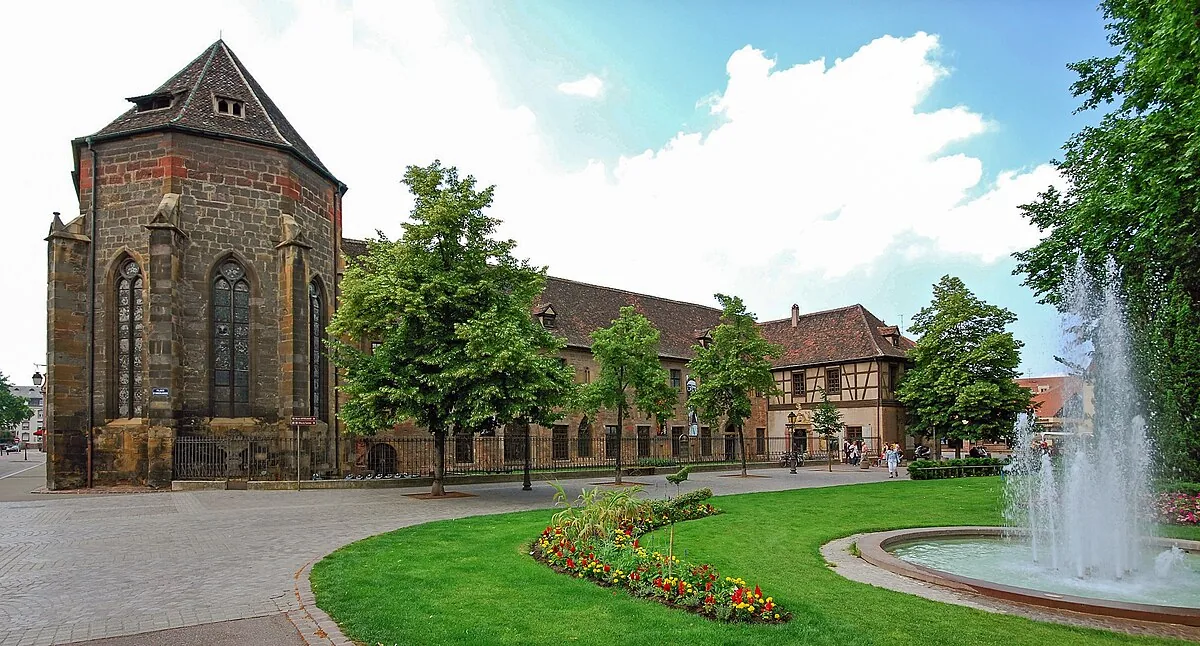
The Unterlinden Museum in Colmar, in Alsace, holds the Isenheim Altarpiece, a polyptych altarpiece painted by Matthias Grünewald between approximately 1512 and 1516 for the Antonite monastery at Isenheim, and considered by many art historians to be the most powerful work of Northern Renaissance painting. The altarpiece, designed to open across multiple panels to reveal different scenes depending on the liturgical season, depicts the Crucifixion in terms of physical suffering of an intensity and specificity that no contemporary altarpiece approaches. The museum's expansion by Herzog & de Meuron, opened in 2016, provides the altarpiece with a dedicated space of appropriate scale.
The museum's expansion by Herzog & de Meuron, opened in 2016, provides the altarpiece with a dedicated space of appropriate scale.
The Isenheim monastery was a hospital specializing in ergotism, a horrific disease caused by a rye fungus that causes burning, gangrene, and hallucinations. The patients who came to the monastery for care were shown the altarpiece's Crucifixion panel specifically because Grünewald depicted Christ with symptoms that mirrored their own condition: the distorted limbs, the discolored skin, the evidence of extreme physical suffering. The painting was understood as a form of spiritual medicine, you were not alone in your suffering because Christ had suffered as visibly and as completely. The altarpiece was acquired by Colmar after the French Revolution and has remained in the city ever since.
The altarpiece is housed in the former Dominican convent chapel that forms the museum's historic core. The Crucifixion panel, the closed altarpiece state, what monks and patients saw most of the time, shows Christ on the cross with a contorted body, discolored flesh, and crown of thorns from which blood runs in visible detail. Opening the first set of wings reveals the Annunciation, the Concert of Angels, the Nativity, and the Resurrection; the second opening reveals carved wooden figures of Saints Anthony and Augustine with Sebastian. The altarpiece stands 3 metres tall in its closed state and over 6 metres wide when fully opened. The wider museum collection includes significant Rhenish late Gothic and early Renaissance work.
Colmar is in Alsace, 75 kilometres south of Strasbourg, reachable by frequent regional trains (30 minutes). The museum is in Colmar's town center, a five-minute walk from the main square.
Colmar is in Alsace, 75 kilometres south of Strasbourg, reachable by frequent regional trains (30 minutes).
The Experience
Stand before the closed Crucifixion panel and study its unflinching physical detail, watch the altarpiece opened through its two sets of wings from the Concert of Angels to the carved wooden saints, and continue into the wider museum collection of Rhenish Gothic and early Renaissance work.
Why It Matters
The Isenheim Altarpiece is considered the most powerful work of Northern Renaissance painting, a hospital devotional image that turned extreme physical suffering into a theological argument of remarkable psychological force.
Why Visit
The altarpiece is more affecting than any reproduction suggests. The Crucifixion panel's specific physical detail, the extent of the suffering depicted, the quality of the darkness, requires time standing in front of the actual work to appreciate why it was considered the most powerful painting in northern Europe.
✦ Insider Tips
- 1
Allow ninety minutes minimum in the altarpiece chapel, the multiple panel states need to be understood sequentially.
- 2
The altarpiece is opened progressively; ask at the museum entrance about the current display state and whether an opening demonstration is scheduled.
- 3
Colmar's old town (the Petite Venise canal quarter) is worth an hour after the museum, the Alsatian half-timbered streetscape is well-preserved.
- 4
The wider museum collection of Rhenish Gothic work is significant and often ignored by visitors focused entirely on the altarpiece, budget time for it.