Napoleon took the chariot off the top of this gate to Paris in 1806. It was returned after his defeat. The Berlin Wall ran directly in front of it from 1961 to 1989. When the Wall fell, this was where the crowds went.
About Brandenburger Tor
Built 1788–1791 by Langhans for Frederick William II as a symbol of peace. Appropriated by Napoleon, then by the Nazi regime. Stranded in no-man's-land during Berlin's division 1961–1989. The site of the most visible moment of the Wall's fall in November 1989.
About Brandenburger Tor
The Brandenburg Gate, Brandenburger Tor, is an eighteenth-century neoclassical triumphal arch at the western end of Unter den Linden in Berlin, the city's former royal boulevard. Built between 1788 and 1791 by Carl Gotthard Langhans for Frederick William II of Prussia, the gate has was the backdrop for every major political event in German history since Napoleon marched through it in 1806. No other structure in Germany carries this density of historical superimposition.
The gate was designed as a symbol of peace, the Quadriga on top depicts the goddess of victory driving a chariot, but its actual history has been one of appropriation by power. Napoleon took the Quadriga to Paris in 1806; it was returned after his defeat. The gate became the main stage of Nazi propaganda rallies in the 1930s. After Berlin was divided in 1961, the Wall ran directly in front of it, and the gate stood in a no-man's-land inaccessible from either side, visible from both, belonging to neither. When the Wall fell on November 9, 1989, crowds surged through the gate in the most televised moment of twentieth-century European history. Since reunification it has been the physical center of state ceremonies and mass celebrations.
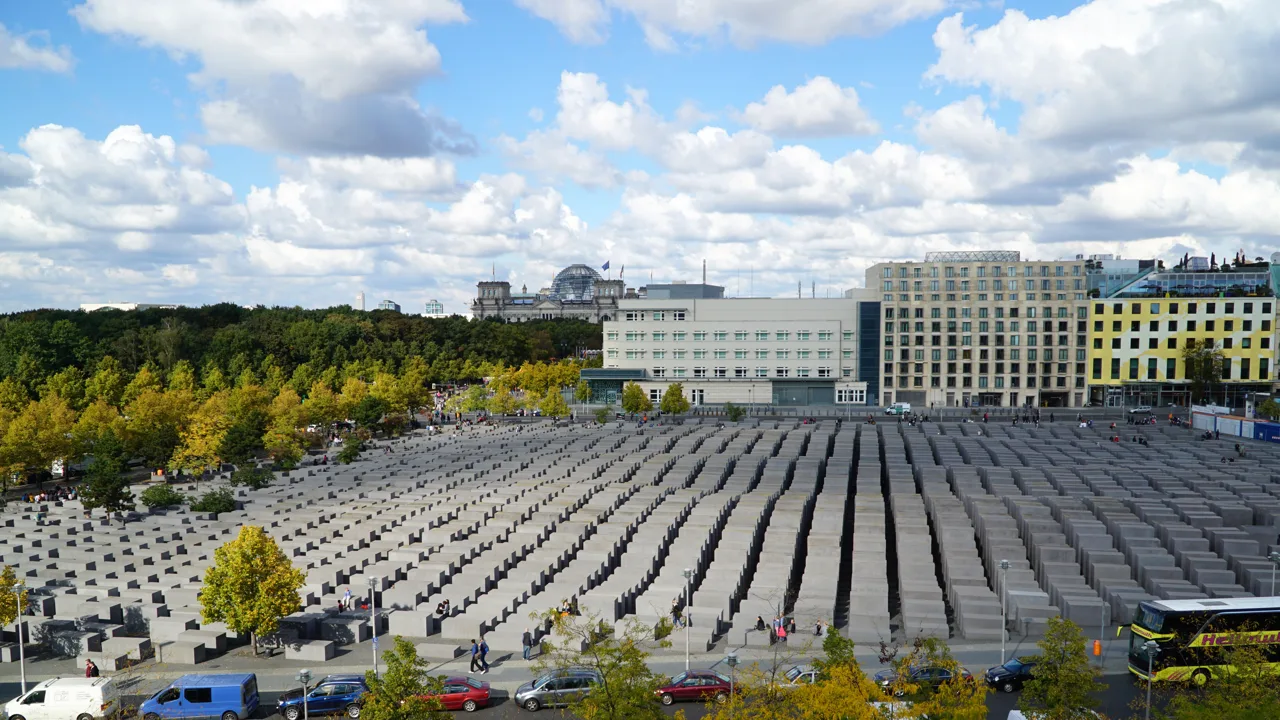
The gate is pedestrianized on both sides and can be walked through at any hour. The Room of Silence, a small chamber in the north wing, offers a quiet space for reflection in contrast to the tourist concentration outside. At night, the lit gate and the Pariser Platz square around it are considerably more atmospheric than in the midday density. The Holocaust Memorial is a short walk to the south; the Reichstag is a short walk north.
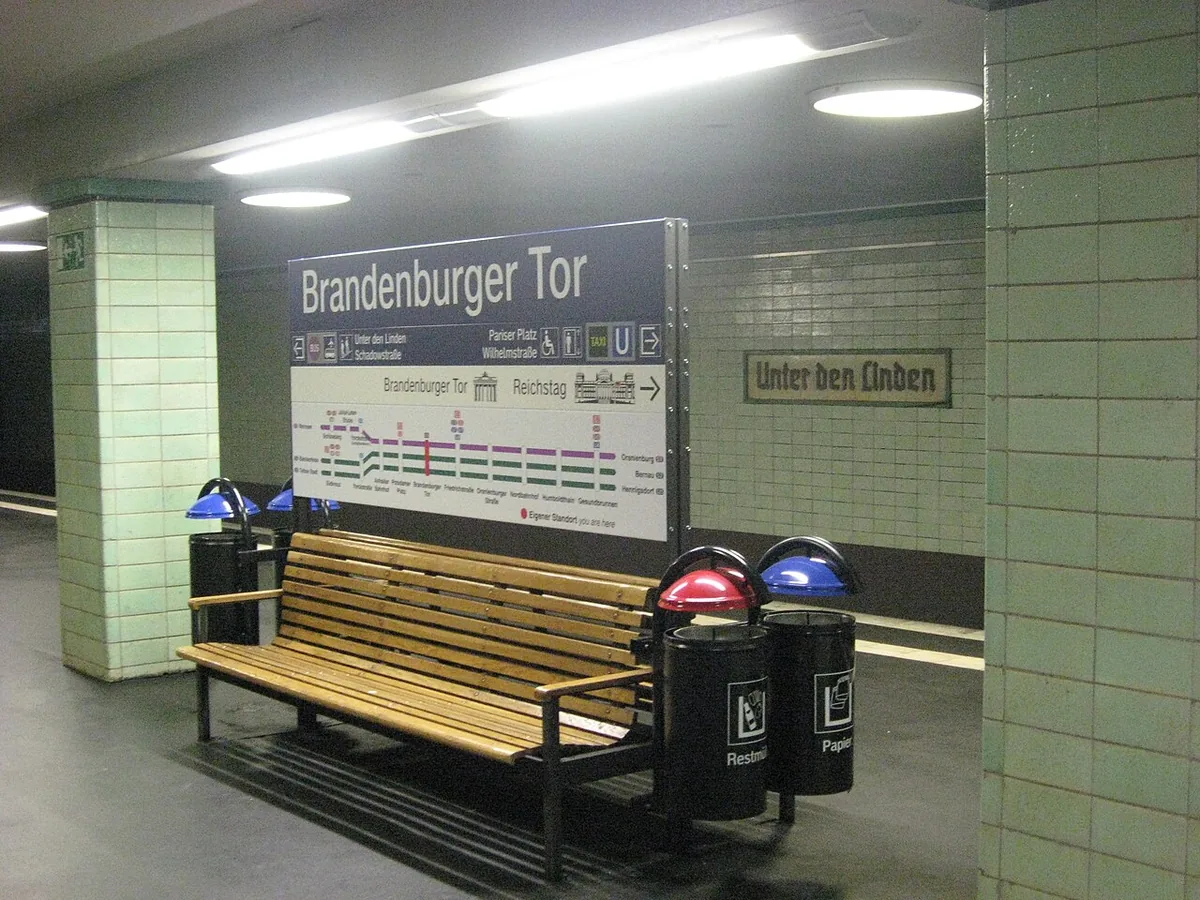
Metro U5 or S-Bahn S1/S2/S25/S26 to Brandenburger Tor station. The gate is at the western end of Unter den Linden and the eastern edge of the Tiergarten.
The Experience
A pedestrian triumphal arch walkable at any hour, with a Room of Silence in the north wing and a Pariser Platz context that is most atmospheric at night when the crowds thin.
Why It Matters
The Brandenburg Gate is the physical address of German history, Napoleon's entry, Nazi propaganda rallies, Cold War division, and the night the Wall fell have all been enacted at this single point.
Why Visit
The gate is less impressive as architecture than as historical palimpsest, standing in the passage, it is possible to run through two centuries of German political history in the space it has occupied. The night visit is the better experience.
✦ Photo Gallery
Best Season
🌤 Year-round. New Year's Eve brings the largest crowd event in Germany; the December Christmas atmosphere is strong but very crowded.
Quick Facts
Entry
Free; it is an open public monument with no admission.
Opening hours
Accessible at any time, day or night, in its public square.
Time needed
About 20 to 40 minutes.
Best time to visit
Year-round. New Year's Eve brings the largest crowd event in Germany; the December Christmas atmosphere is strong but very crowded.
Getting there
In central Berlin at Pariser Platz; the Brandenburger Tor S-Bahn and U-Bahn station is right beside it.
What's nearby
Memorial to the Murdered Jews of Europe, Reichstag and Museumsinsel are also in the area.
Location
Berlin, Germany
Type
attraction
Coordinates
52.5164°, 13.3808°
Insider Tips
- 1
Visit after 9pm when the tourist concentration drops and the lit gate is the most photogenic.
- 2
The Room of Silence in the north colonnade is easy to miss and worth finding for the contrast it offers.
- 3
Walk east on Unter den Linden immediately after, the boulevard from the gate to the Museumsinsel is the original Prussian royal axis.