“A theater set designer built this castle for a king who wanted to live inside Wagner operas. Ludwig lived there 172 days total, was declared mentally unfit, and was found drowned in a lake six weeks later. The unfinished rooms opened to tourists three days after his death.”
About Schloss Neuschwanstein
Built 1869–1886 for Ludwig II by theater set designer Christian Jank. Never completed; Ludwig died in 1886 after being deposed. The castle opened to paying visitors in 1886 and has been the most visited historic building in Germany ever since.
Commissioned by King Ludwig
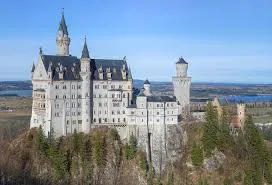
Neuschwanstein Castle rises from a rock spur above the Pöllat Gorge in the Bavarian Alps, 120 kilometers southwest of Munich. Built between 1869 and 1886 for King Ludwig II of Bavaria as a personal retreat and homage to the operas of Richard Wagner, the castle is the most visited historic building in Germany and the visual template for the Disney castle logo. It was never fully completed; Ludwig died in mysterious circumstances in 1886, six weeks after being deposed, and the unfinished rooms were opened to paying visitors three days after his death.
Neuschwanstein Castle rises from a rock spur above the Pöllat Gorge in the Bavarian Alps, 120 kilometers southwest of Munich.
Ludwig II, the Dream King, built
Neuschwanstein, Herrenchiemsee, and Linderhof as private fantasy palaces funded from his personal fortune rather than the Bavarian state budget. Neuschwanstein was designed not by a trained architect but by theater set designer Christian Jank, which explains the visual quality of the result: it looks like a stage set because it began as one, with Ludwig directing revisions based on watercolor sketches. The castle was designed to embody the world of Wagner's operas, specific rooms correspond to scenes from Lohengrin, Tannhäuser, and Parsifal. Ludwig lived in the castle for a total of 172 days. His government declared him mentally unfit to rule in 1886; he was found drowned in a lake the following day.
Guided tours move through the castle in groups of 60 to 70, covering about half the rooms, many remain unfinished. The Throne Room, designed to recall a Byzantine chapel but never receiving its throne, and the Singers' Hall, used by Ludwig for private Wagner concerts, are the tour highlights. The view from the Marienbrücke bridge above the Pöllat Gorge is the most reproduced view of the castle exterior. The surrounding Alpine landscape, Alpsee, Forggensee, and the Zugspitze in the distance, adds a context the castle's theatrical setting requires.
Füssen is the gateway town, accessible by direct train from Munich (2 hours). Buses and horse-drawn carriages run from Füssen to the castle entrance; the Marienbrücke is a 15-minute walk above.
Füssen is the gateway town, accessible by direct train from Munich (2 hours).
The Experience
Guided tours through approximately half the rooms, the unfinished Throne Room and the Singers' Hall, followed by the view from Marienbrücke above the gorge, which gives the exterior its defining Alpine context.
Why It Matters
Neuschwanstein is simultaneously the most influential castle in visual culture, the Disney template, and the most specific document of romantic nineteenth-century fantasy: a real building designed to replicate an imagined medieval world that was never medieval.
Why Visit
The castle is exactly what it appears to be, theatrical, excessive, and genuine in its obsessive commitment to the fantasy. The unfinished rooms, the strange biography of its builder, and the Alpine setting together make it more interesting than its tourist volume suggests.
✦ Insider Tips
- 1
Book timed entry tickets online in advance, same-day tickets involve long queues that can result in not entering at all.
- 2
Walk to Marienbrücke for the exterior view before or after the tour, it is the image the castle is known for.
- 3
Hohenschwangau Castle directly below is also worth visiting; Ludwig's childhood and his relationship with his father's castle explains Neuschwanstein's iconography.