Construction began in 1248. The crane on the unfinished tower was on the city coat of arms. The spires were finally completed in 1880, making it, briefly, the tallest structure on earth. The reliquary that started it all is still inside.
About Kölner Dom
Construction begun 1248 to house the relics of the Three Magi, brought to Cologne in 1164. Stalled in the late medieval period; resumed as a German nationalist project in 1842 and completed 1880. UNESCO World Heritage Site 1996.
What Kölner Dom is
Cologne Cathedral, Kölner Dom, is the largest Gothic church in Northern Europe and the most visited landmark in Germany, drawing over six million visitors a year. Construction began in 1248 and continued, with interruptions, for 632 years, the spires were finally completed in 1880. The cathedral holds the Shrine of the Three Kings, a twelfth-century gold reliquary that is the largest surviving medieval reliquary in the Western world. UNESCO recognised it a World Heritage Site in 1996.
“Cologne Cathedral, Kölner Dom, is the largest Gothic church in Northern Europe and the most visited landmark in Germany, drawing over six million visitors a year.”
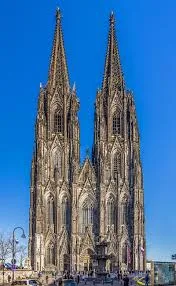
Kölner Dom, Germany
The impetus for the cathedral was the arrival in Cologne in 1164 of the relics of the Three Magi, brought from Milan by Frederick Barbarossa. Cologne became the most important pilgrimage destination north of the Alps almost overnight, and the existing church was inadequate for the pilgrimage traffic. The new cathedral was designed to the most ambitious Gothic specifications of the time: a five-aisled nave, a choir with flying buttresses on the French model, and twin spires intended to be the tallest structures in the world. Construction stalled in the late medieval period and the cathedral stood for 300 years as an unfinished ruin with a wooden crane above the south tower, a feature so long-standing it appeared on Cologne's city coat of arms. Nineteenth-century German nationalism adopted the completion of the cathedral as a patriotic project; funding and construction resumed in 1842 and the spires were finished in 1880, the year the completed cathedral briefly became the world's tallest structure.
The south tower is climbable via 533 steps to a gallery at 97.25 meters, with views across Cologne and the Rhine. The treasury contains the Shrine of the Three Kings and other medieval goldsmith work. The cathedral interior, 144 meters long, 86 meters wide, vaulted at 43 meters, is best experienced on a clear day when the medieval stained glass in the choir windows and the 2007 Gerhard Richter abstract window in the south transept are both illuminated.
Dom/Hauptbahnhof station (S-Bahn and regional trains) is directly adjacent to the cathedral's north facade. The cathedral square is the exit point for Cologne's main station.
“Dom/Hauptbahnhof station (S-Bahn and regional trains) is directly adjacent to the cathedral's north facade.”
The Experience
A 533-step south tower climb to 97 meters, a treasury with the largest medieval reliquary in the Western world, and a 144-meter nave with medieval choir glass and a 2007 Gerhard Richter abstract window in the same building.
Why It Matters
Cologne Cathedral is both the supreme surviving example of High Gothic ambition, a building whose specifications drove the engineering frontier of its century, and the physical symbol of nineteenth-century German national identity.
Why Visit
The interior scale is genuinely overwhelming in a way that photographs don't capture, 144 meters of nave, 43 meters of vault, and the coexistence of the medieval choir glass with the Richter window is one of the better arguments in European architecture for contemporary art in historic buildings.
Insider Tips
- 1
Climb the south tower, the intermediate gallery at 97 meters gives the best view of the surrounding city and the Rhine.
- 2
Visit the treasury separately from the cathedral tour; the Shrine of the Three Kings requires time to read properly.
- 3
The Gerhard Richter window in the south transept is best viewed from the central nave, take a position mid-nave for the full pixel grid effect.