“Five world-class museums on a single Berlin island hold the Pergamon Altar, the Ishtar Gate of Babylon, and the bust of Nefertiti. The building that holds Nefertiti was bombed in WWII and reopened in 2009 with the shrapnel marks deliberately preserved.”
About Museumsinsel
Developed 1830–1930 under Prussian royal patronage as a unified cultural complex. The founding Altes Museum (1830) was one of the world's first purpose-built public museums. The island was heavily damaged in WWII; the Neues Museum reopened in 2009 with bomb damage preserved by architect David Chipperfield. UNESCO World Heritage Site 1999.
Museumsinsel, Museum Island, is a small island in the Spree River in central Berlin that holds five of the world's great museums within a UNESCO World Heritage complex: the Pergamon Museum, the Altes Museum, the Altes Nationalgalerie, the Bode Museum, and the Neues Museum. Developed between 1830 and 1930, the island was conceived by the Prussian royal house as a cultural complex that would concentrate the empire's art and archaeological collections in a single architecturally unified space.
Origins
The Altes Museum, designed by Karl Friedrich Schinkel and opened in 1830, was the founding building, the first public museum in Prussia and one of the first in the world to be purpose-built for public access to royal collections. The subsequent museums followed on the adjacent plots over a century, each housing different categories of collection: classical antiquities, Egyptian artifacts, Greek and Roman sculpture, medieval art, paintings. The island was heavily bombed in World War II; reconstruction and restoration continued into the twenty-first century. The Neues Museum reopened in 2009 after a 65-year closure, with the British architect David Chipperfield's restoration retaining the bomb damage as part of the building's visible history, scarred walls and shrapnel marks preserved alongside the ancient Egyptian collection.
The Pergamon Museum houses the reconstructed
Pergamon Altar (2nd century BCE) and the Ishtar Gate of Babylon (575 BCE), both architectural reconstructions of entire ancient monuments within museum spaces. The Neues Museum holds the bust of Nefertiti, the most famous object in German museum collections. The Altes Nationalgalerie has the strongest collection of nineteenth-century German painting. A single-day visit to all five museums is not practically possible, the island warrants at least two full days.
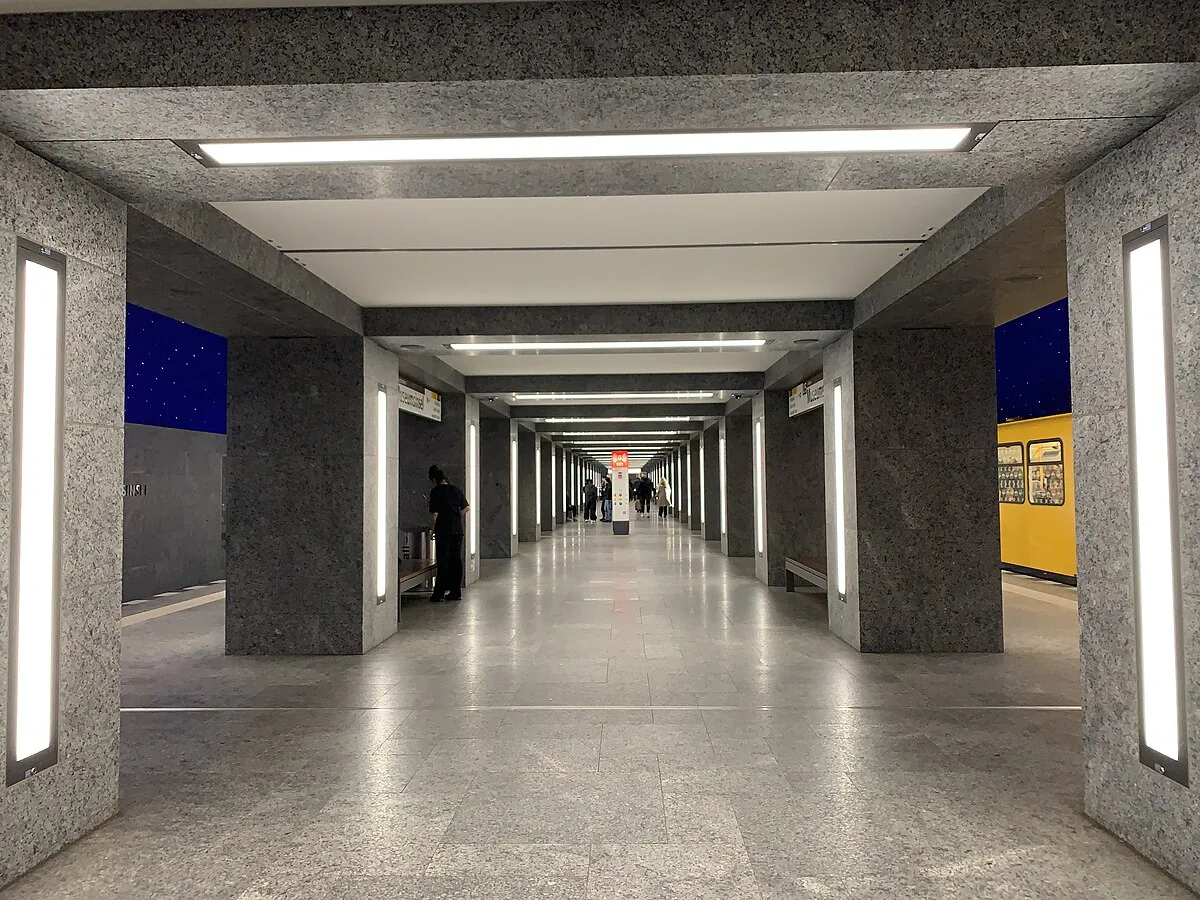
S-Bahn S3/S5/S7/S9 to Hackescher Markt, then a 10-minute walk. Metro U2 to Hausvogteiplatz. Tram M2 to Lustgarten. The island is in central Berlin between the Hackesche Höfe area and Unter den Linden.
S-Bahn S3/S5/S7/S9 to Hackescher Markt, then a 10-minute walk.
The Experience
The Pergamon Altar and Ishtar Gate reconstructed at full scale in museum halls, the bust of Nefertiti in the Neues Museum's preserved-damage interior, and the Schinkel-designed Altes Museum rotunda, minimum two full days for the island.
Why It Matters
Museumsinsel is the largest museum complex in Central Europe and the physical record of Prussian cultural ambition, a state's decision to concentrate the world's greatest ancient objects in its capital as an act of civilizational declaration.
Why Visit
The Pergamon Altar at full scale inside a museum is an experience that the photographs genuinely fail to convey, the scale of the object within the room is architectural rather than decorative. The Neues Museum's preserved bomb damage makes the building as interesting as its contents.
✦ Insider Tips
- 1
Check current Pergamon Museum access before booking, the renovation schedule affects which halls are open.
- 2
The bust of Nefertiti requires a timed reservation in peak season, book the Neues Museum slot specifically.
- 3
The Altes Museum rotunda is Schinkel's masterpiece of museum design; spend time there before the collection.