“An American scientist who served in the British and Bavarian armies designed Munich's park in 1789. The beer garden beneath the Chinese tower has been operating since 1791. The surf wave in the river channel beneath a bridge has been in use since the 1970s and was only legalized in 2010.”
About Englischer Garten
Designed 1789 by Benjamin Thompson (Count Rumford) as a military recreation ground; expanded by Friedrich Ludwig von Sckell in the Romantic English landscape style. Beer gardens developed under chestnut canopy from 1791. The Eisbach surfing wave legalized 2010.
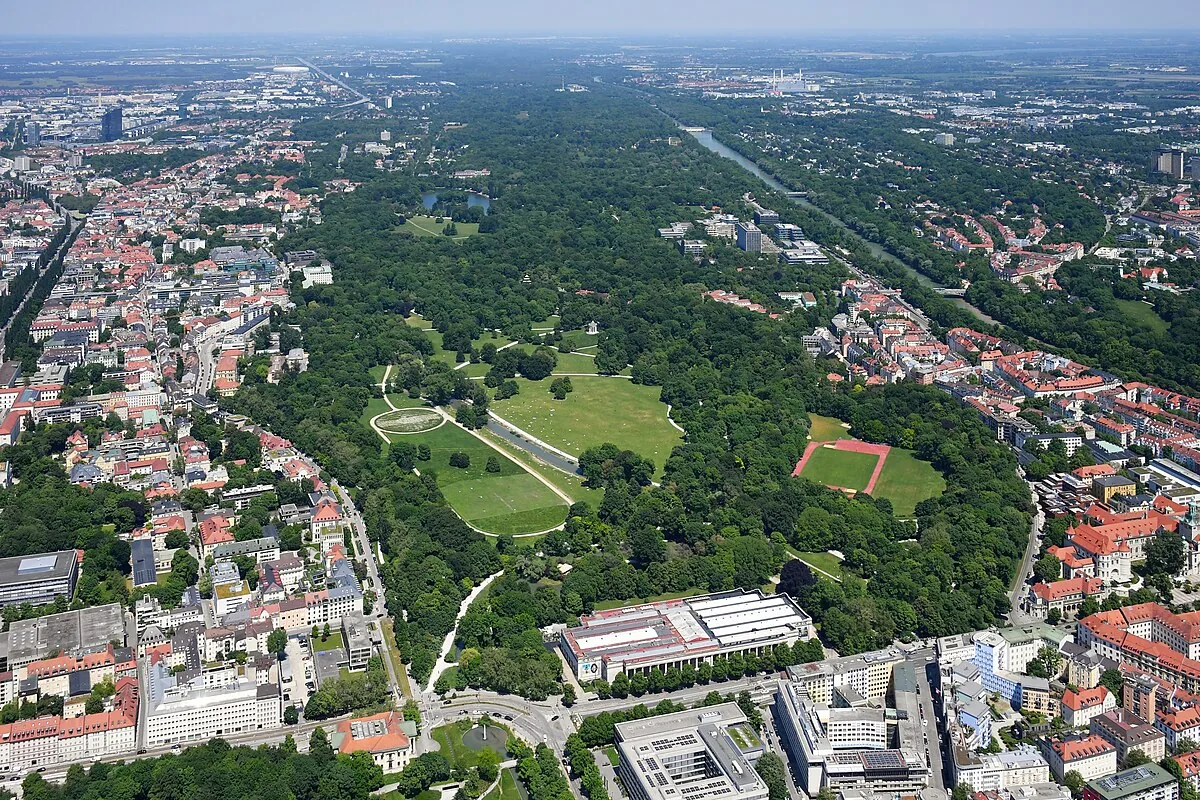
The Englischer Garten in Munich is larger than Central Park in New York at 3.7 square kilometers and has been Munich's primary public park since 1789. The park runs along the Isar River from the city center northward and contains beer gardens, a Japanese tea house, a Chinese pagoda, a Greek temple, a surfable standing wave, and meadows that are used for nude sunbathing without comment from other park users. On any warm day it holds more people than any other park in Germany.
7 square kilometers and has been Munich's primary public park since 1789.
park was designed, 1789
The park was designed in 1789 by Benjamin Thompson, Count Rumford, an American-born scientist and soldier who had served in both the British and Bavarian armies and somehow ended up as Bavaria's minister of war. Thompson's original design was a military recreation ground; Friedrich Ludwig von Sckell later expanded it as a Romantic English landscape garden, informally designed meadows, winding paths, and pastoral views in the style then fashionable across Europe. The beer gardens that developed within the park followed from the Bavarian tradition of cooling beer barrels under chestnut trees, whose canopy provided the right temperature for lagering, the tree canopy at the Chinesischer Turm garden has been shading beer drinkers since 1791. The surf wave at the Eisbach channel beneath the Prinzregentenstrasse bridge has been in continuous use since the 1970s and was officially legalized in 2010.
The Chinesischer Turm beer garden, the second-largest in Munich, seating 7,000, is the park's social center on summer afternoons and evenings. The Eisbach surfers provide a continuous performance at the bridge; the wave is consistent enough for extended runs. The Monopteros Greek temple on a small hill gives the best elevated view across the meadow to the distant Munich skyline. In spring and summer, the nude sunbathing meadows north of the city center are in active use by a cross-section of Munich that finds the practice entirely unremarkable.
Multiple entry points from the Munich city center . U-Bahn U3/U6 to Universität for the southern end; U6 to Münchner Freiheit for the middle section. The Eisbach wave is directly beside the Haus der Kunst on Prinzregentenstrasse.
U-Bahn U3/U6 to Universität for the southern end; U6 to Münchner Freiheit for the middle section.
The Experience
A 3.7-square-kilometer park with the 7,000-seat Chinesischer Turm beer garden, a continuous surf wave in the river channel, a Greek temple viewpoint, and nude sunbathing meadows, all in active simultaneous use on any warm day.
Why It Matters
The Englischer Garten is the oldest large urban public park in Germany and the model for the English landscape garden style in Bavarian city planning. The democratic character of the park, where beer gardens, surfers, nude sunbathers, and tourists coexist without zoning, is its defining quality.
Why Visit
The Englischer Garten is the best evidence that Munich knows how to be a city, the park functions as a genuine public space rather than a tourist attraction, and the beer garden culture that animates it on summer afternoons is the most accessible version of Bavarian social life.
✦ Insider Tips
- 1
Visit the Eisbach wave first thing in the morning when surfers are fewest and the light is best.
- 2
The Chinesischer Turm beer garden requires ordering at the counter and finding your own table, bring your own food if you prefer.
- 3
Walk north from the Chinesischer Turm toward the Kleinhesseloher See lake for the quieter, less-visited part of the park.