“Karl Benz patented the first automobile in January 1886. Gottlieb Daimler independently built one in the same year, 100 kilometers away. Their companies merged in 1926. The museum that tells this story is inside a double-helix building that is as architecturally serious as its contents.”
About Mercedes-Benz Museum
Karl Benz patented the Patent-Motorwagen January 29, 1886; Daimler developed an independent motorized vehicle the same year. Daimler-Benz formed through merger in 1926. The UN Studio double-helix museum building opened 2006.
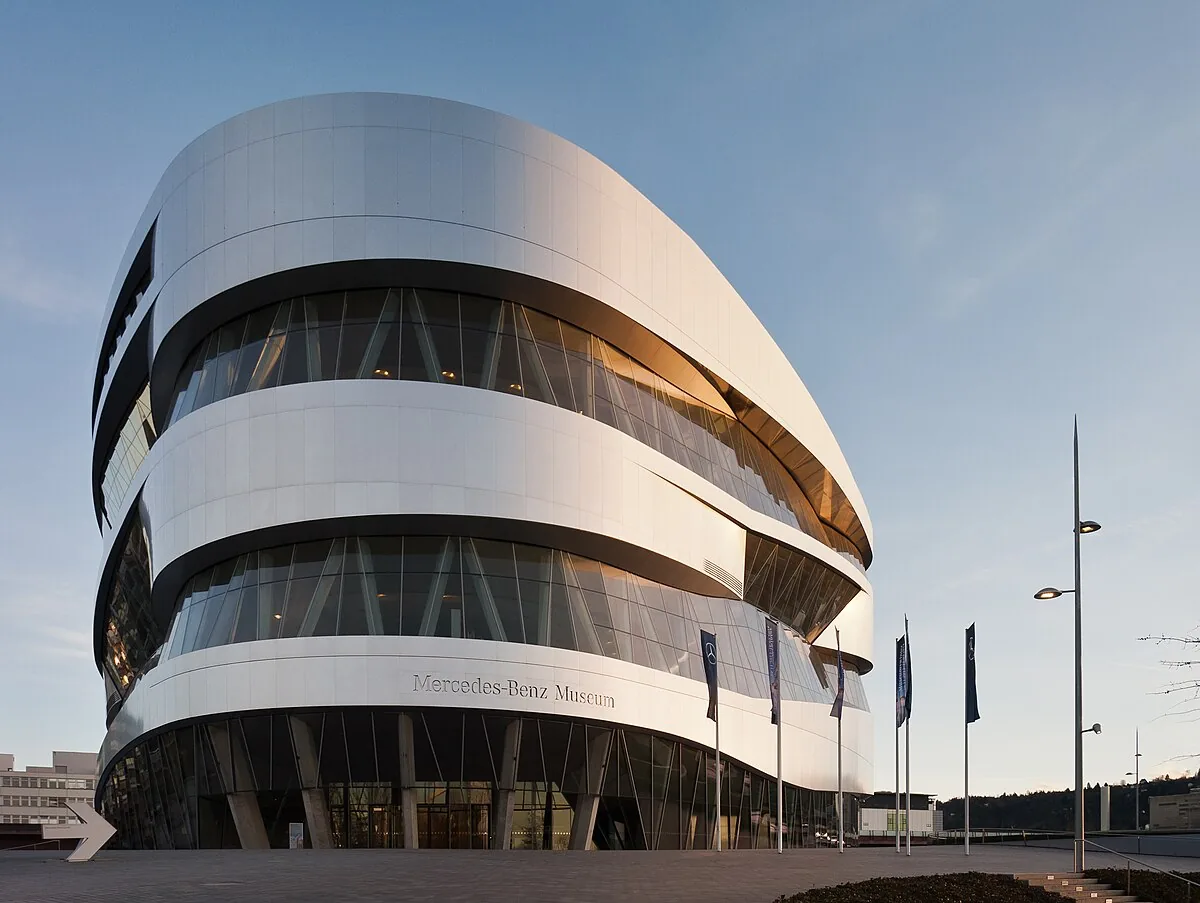
The Mercedes-Benz Museum in Stuttgart is housed in a 2006 building by UN Studio architects, a double-helix ramp structure that winds visitors through nine levels covering 130 years of Mercedes-Benz history, from Gottlieb Daimler and Karl Benz's 1886 inventions to contemporary Formula One machinery. The building's structural innovation and the depth of the collection make it the strongest automotive museum in the world, and one of the best museum architecture cases of the early twenty-first century.
Karl Benz received the patent for the world's first automobile, the Benz Patent-Motorwagen, on January 29, 1886. Gottlieb Daimler independently developed a motorized carriage in the same year in Stuttgart, 100 kilometers from Benz's Mannheim workshop. The two companies merged in 1926 to form Daimler-Benz. The museum covers not just the vehicles but the social and technological history of the automobile, the development of the internal combustion engine, the world wars in which Mercedes-Benz manufactured military vehicles (a history the museum does not avoid), the postwar recovery, and the racing program that made the brand synonymous with motorsport success. The UN Studio building uses a double-helix ramp design that allows visitors to follow either the main collection or branch off into themed side galleries without retracing steps.
The collection includes the 1886 Patent-Motorwagen , the 1954 W196 Silver Arrow Formula One car in which Juan Manuel Fangio won two world championships, Adenauer's Chancellor Mercedes, and the experimental and concept vehicles of the current program. The ramp descent through nine levels takes two to three hours at a reasonable pace. The building's silver exterior, the spiraling interior ramp, and the 360-degree view of the vehicle collection from the ramp level are themselves a substantial architectural experience. S-Bahn S1 to Gottlieb-Daimler-Stadion station (15 minutes from Stuttgart Hauptbahnhof). The museum entrance is adjacent to the Mercedes-Benz Arena in Stuttgart-Bad Cannstatt.
The Experience
Nine ramp levels through 130 years of automotive history, the 1886 Patent-Motorwagen, Fangio's 1954 Silver Arrow, wartime military vehicles honestly documented, and the racing program, in an architecturally significant building whose double-helix ramp is itself a spatial experience.
Why It Matters
The Mercedes-Benz Museum is simultaneously the definitive record of automotive history from its origin and the most architecturally sophisticated purpose-built car museum in the world, a building whose design serves the collection's chronological logic.
Why Visit
The museum does not sanitize the company's wartime manufacturing history, which gives the full collection more credibility and the experience more intellectual weight than a purely celebratory automotive display. The 1954 Silver Arrow Formula One car is extraordinary.
✦ Insider Tips
- 1
Start at the top level and descend the ramp, the chronological flow works forward in time, from the Patent-Motorwagen downward.
- 2
Budget three hours minimum, the themed side galleries off the main ramp contain the most interesting individual stories.
- 3
Combine with the Porsche Museum 20 minutes away by S-Bahn for a full Stuttgart automotive day.