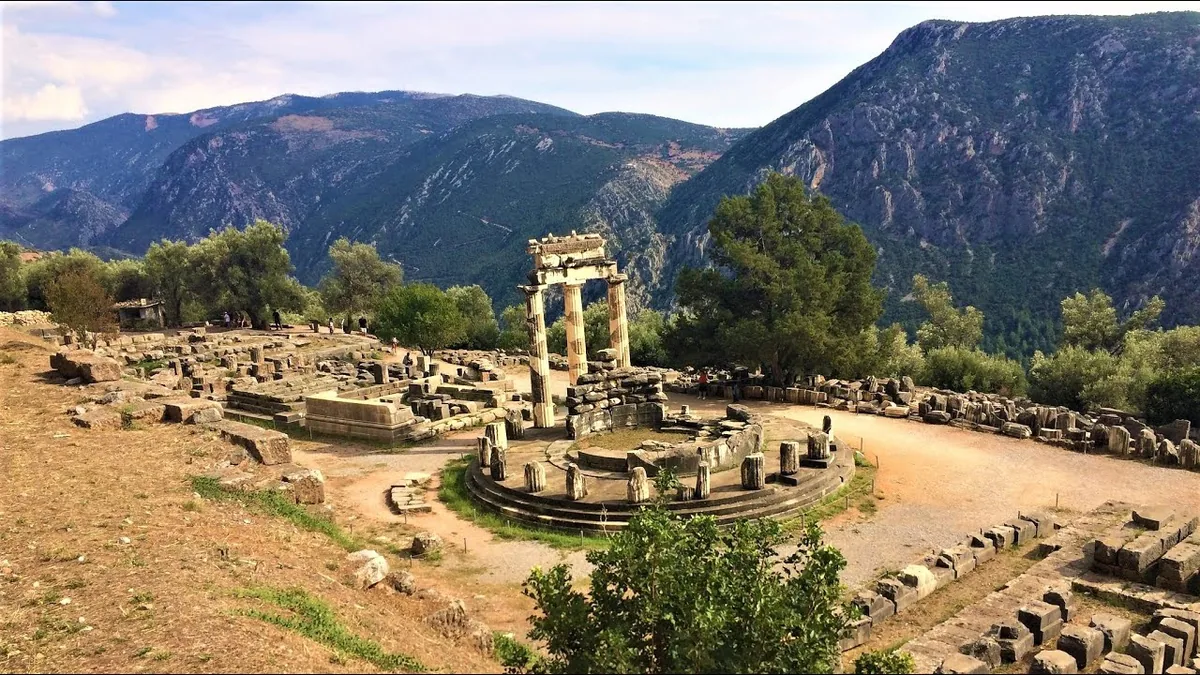
“The Olympic Games ran for eleven hundred years until a Christian emperor banned them in 393 CE, then two rivers flooded the site for centuries, accidentally preserving everything beneath metres of silt.”
About Archaeological Site of Olympia
The sanctuary of Zeus at Olympia predates the games it made famous. Religious activity at the site dates to the tenth century BCE; the games themselves were formalised in 776 BCE and ran without interruption for over a millennium. The Temple of Zeus, completed around 456 BCE, housed one of the Seven Wonders of the ancient world: a forty-foot chryselephantine statue of the god by Pheidias, whose workshop has been excavated adjacent to the temple. Theodosius I abolished the games in 393 CE as pagan practice; Theodosius II ordered the temple demolished thirty years later. Earthquakes flattened what remained, and the rivers buried the ruins under deep alluvium, a geological accident that preserved the site from subsequent quarrying. Systematic excavation began in 1875 under a German and Greek team. The parabolic mirror flame lighting ceremony, initiated in 1936, connects the site to the modern games.
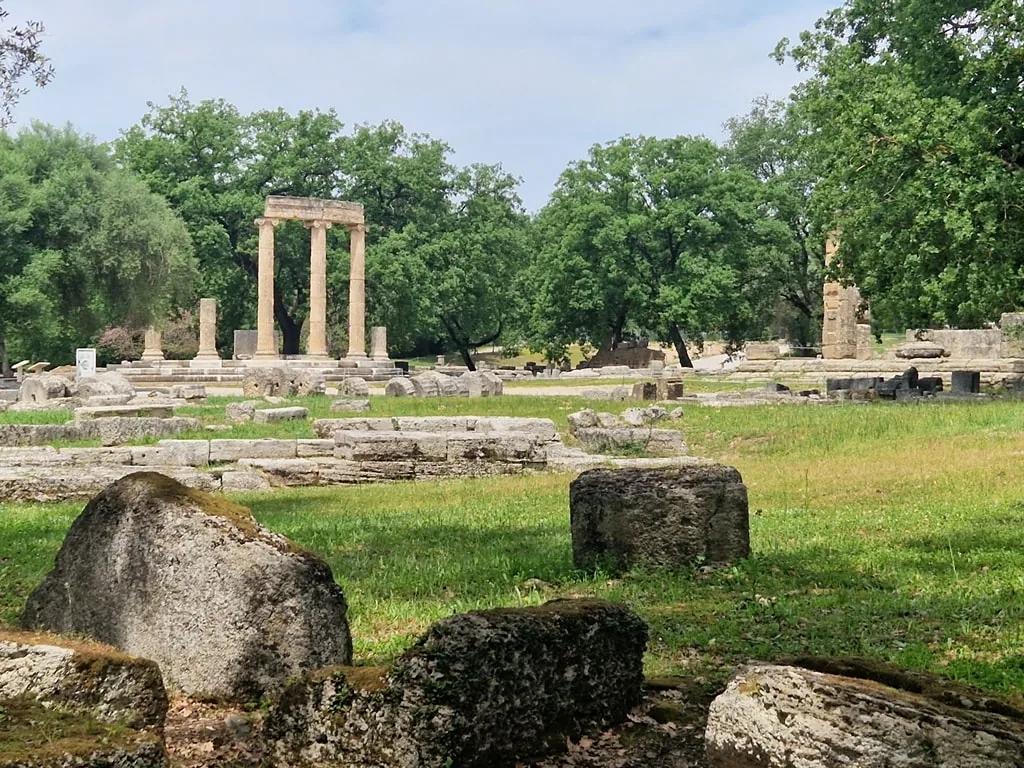
Archaeological Site of Olympia in Greece
Olympia does not look like a place that held the ancient world's most important athletic festival. The valley floor where the Alpheus and Cladeus rivers meet is flat and wooded, shaded by pines, with none of the dramatic elevation that characterises Delphi or the Acropolis. The sanctuary of Zeus occupied this unassuming ground for over eleven hundred years, hosting the Olympic Games every four years from 776 BCE until the Christian emperor Theodosius I abolished them in 393 CE as pagan practice. The flame lighting ceremony for the modern games still takes place here, using a parabolic mirror to focus sunlight.
Olympia does not look like a place that held the ancient world's most important athletic festival.
Getting there
Theodosius II ordered the Temple of Zeus demolished around 426 CE. Earthquakes in the fifth and sixth centuries toppled whatever remained. Then the two rivers did the rest: successive floods deposited metres of alluvium over the entire site, burying columns, statuary, and the sacred precinct under soil that preserved them from both looting and weather. When systematic excavation began in the 1870s under joint Greek and German archaeological direction, a collaboration that continues to this day, the buried material was in better condition than almost anywhere else in the ancient world. The site had been effectively sealed by the same geography that once hosted the games.
The fallen columns of the Temple of Zeus lie where they fell during the ancient earthquakes, not re-erected. Olympia offers a rawer, less curated experience than sites where columns have been restored to vertical. The ancient stadium, separated from the sanctuary by a vaulted stone tunnel, is intact: the starting and finishing lines are still in place, and visitors can walk the track. The Archaeological Museum holds the pediment sculptures from the Temple of Zeus and the Hermes of Praxiteles, if the attribution is correct, the only original sculpture by a named classical Greek master to survive.
Olympia is in the western Peloponnese , approximately 300 kilometres from Athens. The nearest city is Pyrgos, connected to Olympia by local bus or taxi. People generally arrive by car as part of Peloponnese road trips; the site is most conveniently combined with Nafplio and Mystras.
Olympia is in the western Peloponnese , approximately 300 kilometres from Athens.
The Experience
Walking through the Altis, the sacred precinct, with the fallen column drums of the Temple of Zeus lying in their original pattern on the ground, gives the site a different quality from Delphi or Athens. No columns have been returned to vertical. The ruins are horizontal, which is somehow more affecting. The stadium is reached through a stone tunnel, emerging at the east end of the track. The starting line is a stone sill with carved grooves for the athletes' feet. Standing at it, looking west along 192 metres of compacted earth to the far end, with no barriers between you and the original surface, is one of the more direct physical experiences the ancient world offers.
Why It Matters
Olympia was the one place in the Greek world where a universal truce applied: the ekecheiria suspended hostilities across the Greek world for the duration of the games, allowing athletes and spectators to travel safely. For over a thousand years this institution held, making Olympia the closest the ancient Mediterranean came to a genuinely neutral ground. The modern games, whatever their politics, carry that memory.
Why Visit
The stadium is the reason. Not the ruins of the sanctuary, which are extensive and rewarding, but the moment you walk through the stone tunnel and emerge at the east end of the ancient track with the starting line at your feet. No interpretation required. It is immediately and completely clear what happened here.
✦ Insider Tips
- 1
Buy the combined ticket covering both the archaeological site and the museum, the museum holds the pediment sculptures and the Hermes, which are essential context for the ruins.
- 2
The stadium can be entered through the vaulted tunnel used by the ancient athletes; use the tunnel entrance, not the modern side access.
- 3
Visiting early morning allows the site before the tour bus arrivals, which typically come between 10am and 1pm.
- 4
The workshop of Pheidias, excavated adjacent to the Temple of Zeus, is marked but rarely explained by guides, it is where the chryselephantine statue was assembled.