Mount Athos sets noon at sunset, clocks shift relative to civil time throughout the year, and has restricted entry to men only for over a thousand years, making it an autonomous theocratic state within European Union borders.
About Autonomous Monastic State
The monk Athanasios founded the Great Lavra in 963 CE with imperial Byzantine backing, establishing the institutional model for the monasteries that followed. Over the succeeding centuries, communities representing every major Orthodox nation established foundations: the Iviron monastery was Georgian, Chilandari Serbian, Zographou Bulgarian, Saint Panteleimon Russian. The peninsula became the intellectual and artistic centre of Orthodox civilisation, producing icon-painting traditions that influenced religious art across the Balkans and Russia. Ottoman suzerainty from the fifteenth century was accommodated through negotiated autonomy, the monasteries paid tribute and kept their holdings. The arrangement worked well enough that the libraries and treasuries survived largely intact. Athos joined the Greek state in 1913 following the Balkan Wars but retained its autonomous status under a special constitutional arrangement that remains in force. The prohibition on women, technically on female animals of most species, was codified progressively through medieval imperial edicts.
What Autonomous Monastic State in Greece
Mount Athos operates on Byzantine time. Noon is set at sunset, which means the clocks at every monastery shift relative to civil time throughout the year, and this is not a quirk but a statement of priority. The Autonomous Monastic State of the Holy Mountain occupies the easternmost peninsula of Chalkidiki in northern Greece, administered separately from the Greek state under shared sovereignty between the Greek government and the Ecumenical Patriarchate of Constantinople. Twenty ruling monasteries, some founded in the tenth century, govern the territory collectively. Women have been prohibited from entering for over a thousand years. Men require a diamonitirion, a special entry permit, limiting access to ten Orthodox and five non-Orthodox male visitors per day.
Background
The first organised monastic community on Athos dates to 963 CE, when the monk Athanasios founded the Great Lavra with financial support from the Byzantine emperor Nikephoros II Phokas. Further monasteries followed over the succeeding centuries, each associated with a different Orthodox nation: Serbian, Bulgarian, Russian, Georgian, and Greek communities all built major foundations. At the height of Athonite monasticism in the sixteenth century, the peninsula supported around forty thousand monks. That number has shrunk to approximately two thousand today. The monasteries accumulated libraries, icon collections, and treasuries of Byzantine material across a millennium, surviving the Ottoman period under a negotiated autonomy that protected their holdings.
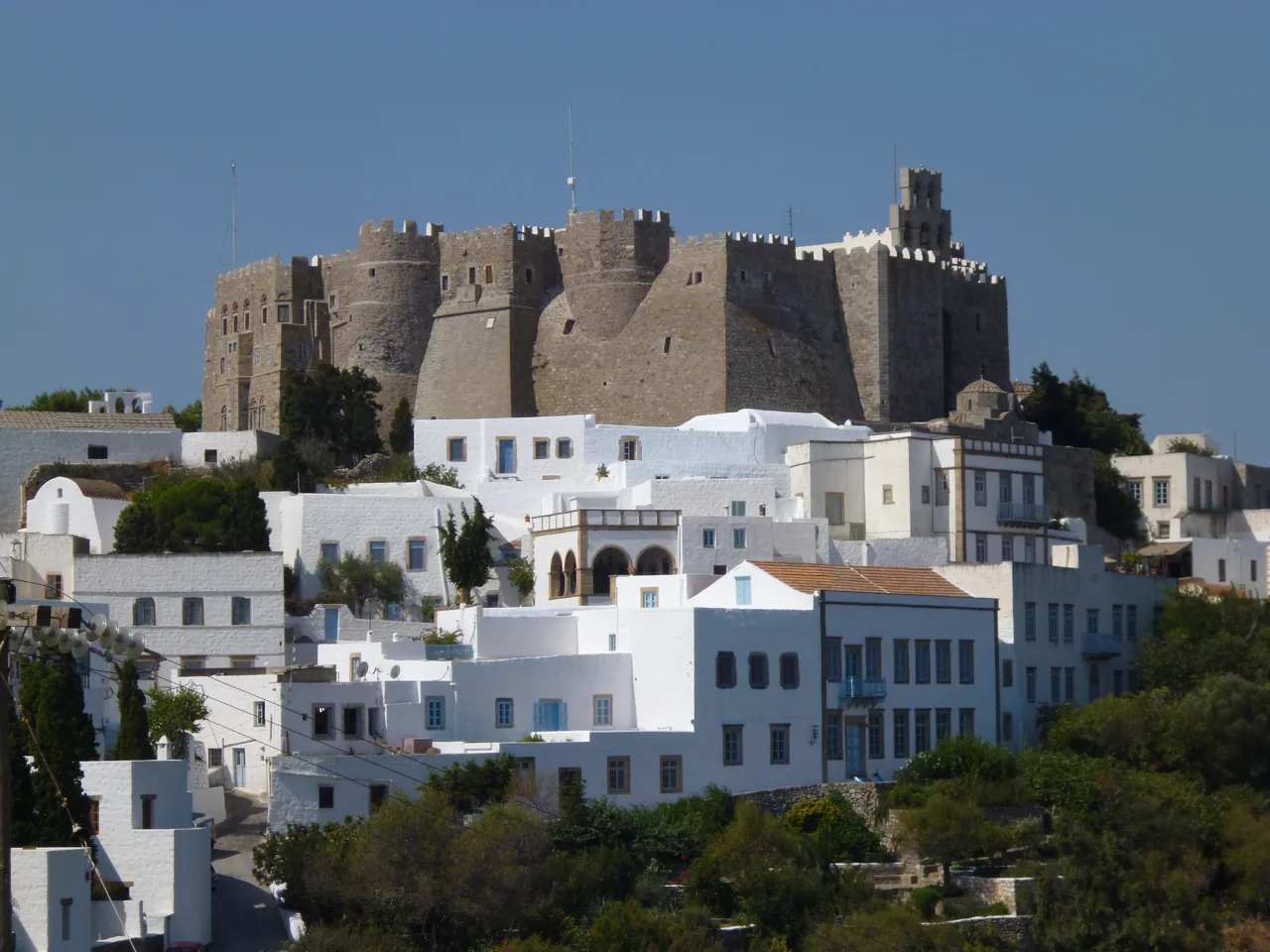
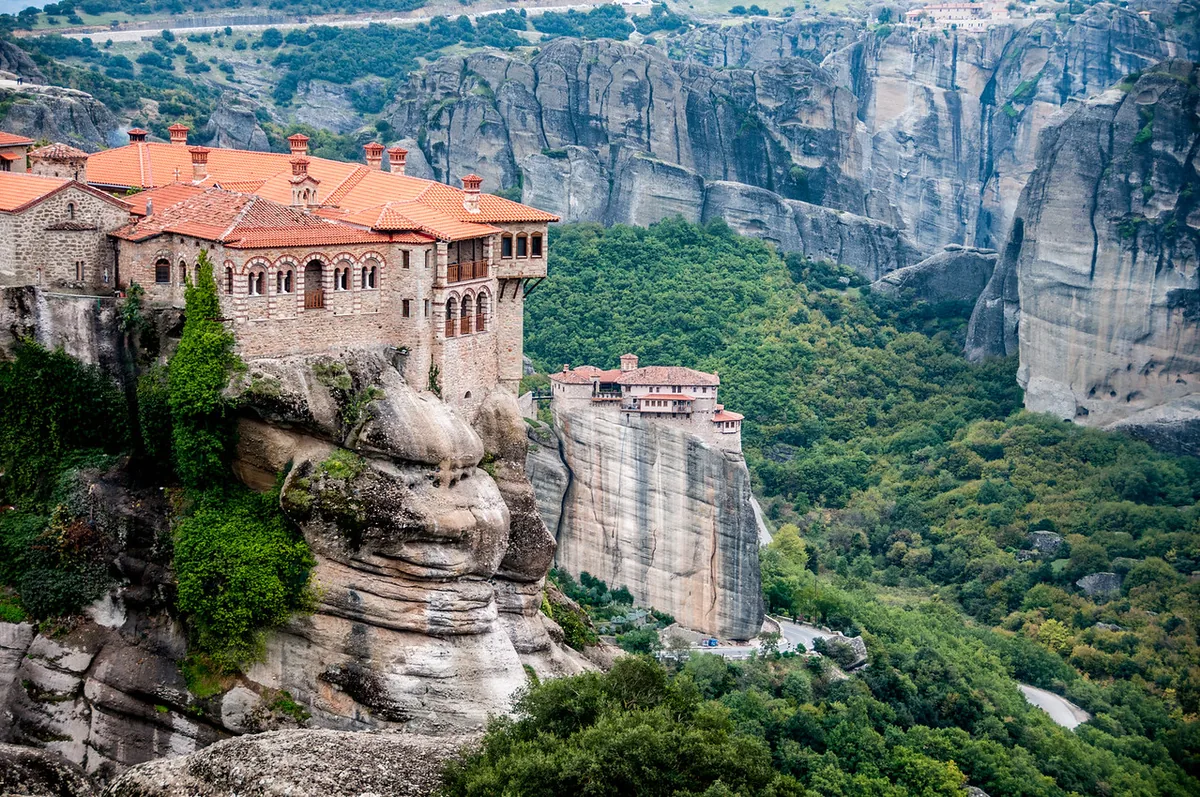
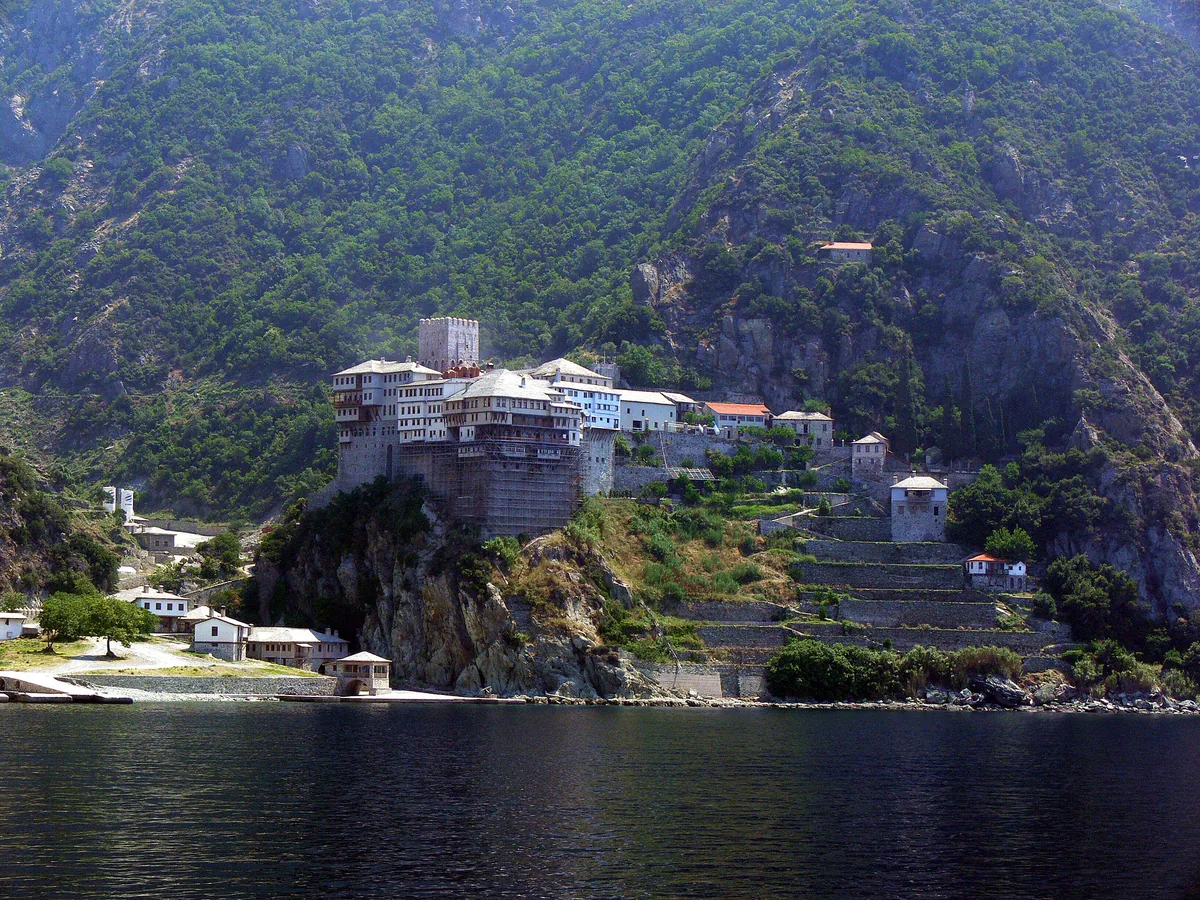
The twenty monasteries range from communities that resemble small fortified towns to cliff-hanging hermitages barely accessible by path. The interior frescoes, icon screens, and church furnishings at Great Lavra, Vatopedi, and Iviron are among the finest surviving examples of Byzantine art anywhere. Daily life is structured entirely by the liturgical calendar, with services beginning before midnight and continuing through the early hours. Visitors stay in monastery guesthouses as guests of the community, eating in the refectory at the community's hours. Access is from Ouranoupolis, reachable by road from Thessaloniki. Boats cross to the administrative centre of Dafni. Permits are applied for through the Pilgrim's Bureau of Mount Athos; non-Orthodox applicants should apply months in advance and expect limited availability.
The Experience
The first morning on Athos is disorienting in a productive way. You have arrived somewhere operating on different time, a different calendar (the Julian calendar is still used), and a different set of priorities. The monastery's hospitality is genuine but conditional on observing the community's rhythm, meals at the refectory, silence during services, presence at the evening liturgy. The quality of the art is extraordinary. The frescoes in the churches of Great Lavra and Vatopedi, painted by masters working in the Macedonian and Palaeologan styles, represent the peak of Byzantine religious painting in conditions closer to their original context than any museum display. Standing in a tenth-century church at 3am during the Divine Liturgy, with incense and chanting and candlelight, is an experience without equivalent.
Why It Matters
Mount Athos is the largest surviving repository of Byzantine art and manuscript culture in the world. Its twenty monasteries hold collections, icons, manuscripts, liturgical objects, accumulated over more than a millennium, many never formally catalogued. As a functioning theocratic state within the European Union, subject to its own laws and calendar, it is also the most coherent surviving example of medieval Orthodox institutional life.
Why Visit
Access is genuinely restricted, the permit system, the boat, the absence of roads, the requirement to stay in monastery accommodation, the prohibition on half the human population, and these restrictions define the experience. Athos exists outside the normal conditions of travel. For the men who can go, the combination of extraordinary art, extreme historical continuity, and total removal from ordinary life has no equivalent in Europe.
✦ Photo Gallery
Best Season
🌤 May through June and September through October offer mild temperatures and the most stable boat crossings from Ouranoupolis.
Quick Facts
Best time to visit
May through June and September through October offer mild temperatures and the most stable boat crossings from Ouranoupolis.
Getting there
In Mount Athos, Greece; reach Mount Athos first, then continue to the site.
Location
Mount Athos, Greece
Type
attraction
Insider Tips
- 1
Apply for the non-Orthodox diamonitirion at least three to four months in advance; availability is extremely limited and not guaranteed.
- 2
Each monastery has its own guesthouse capacity; contact specific monasteries directly after receiving the permit to arrange overnight stays.
- 3
The dress code is strict, long trousers and covered arms at all times on the peninsula, not just inside churches.
- 4
The boat from Ouranoupolis to Dafni passes all the coastal monasteries; sit on the correct side for the approach to the Great Lavra.