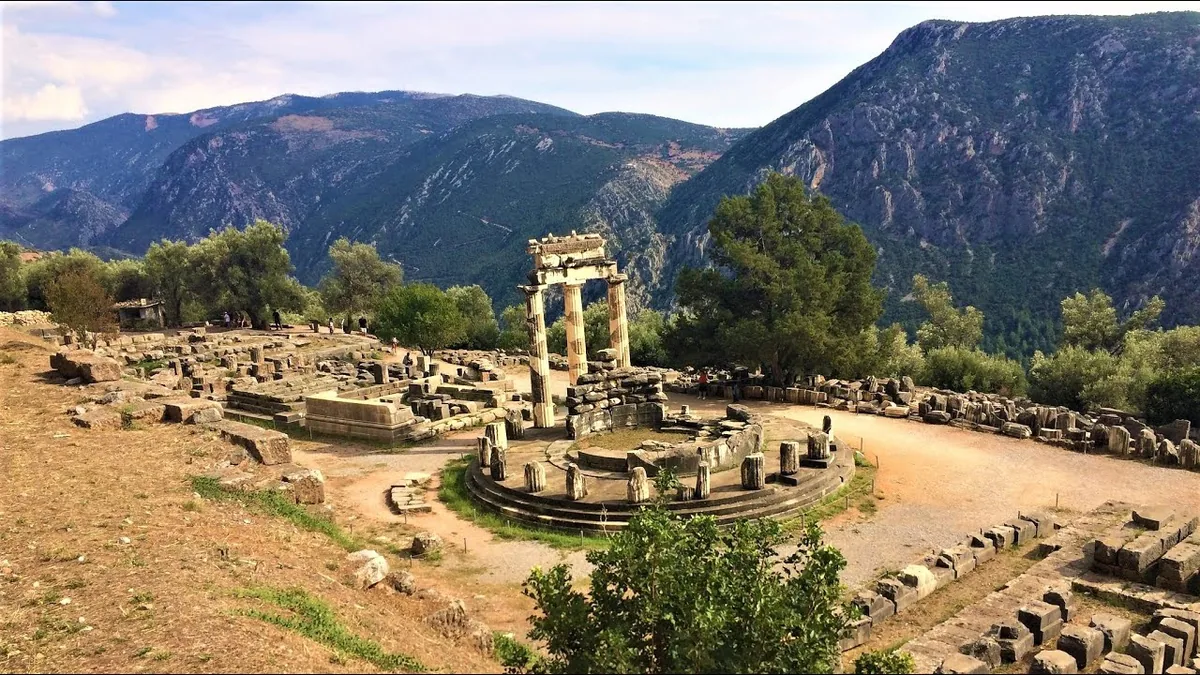
“Delos forbade anyone from being born or dying on its sacred soil, yet thirty thousand people lived and worked there at its peak, until a single day in 88 BCE when twenty thousand of them were killed.”
About Delos
The island's religious significance preceded the historical record: sanctuary activity dates to the third millennium BCE. The formalised cult of Apollo from the eighth century BCE made Delos the acknowledged centre of the Cyclades and a site that no Greek city-state could attack without risking enormous religious consequences. This safety made it a natural neutral ground for trade. The Delian League treasury moved to Athens in 454 BCE, reducing Delos's political significance while its commercial role expanded. Ceded by Rome to Athens as a free port in 166 BCE, it became the eastern Mediterranean's primary slave market and a hub for Italian business interests. The massacre of 88 BCE, in which Mithridates VI targeted the Italian merchant community as part of his war against Rome, killed an estimated twenty thousand people in a day and permanently ended the island's commercial life. French archaeologists have excavated the site continuously since 1872.
What Delos actually is
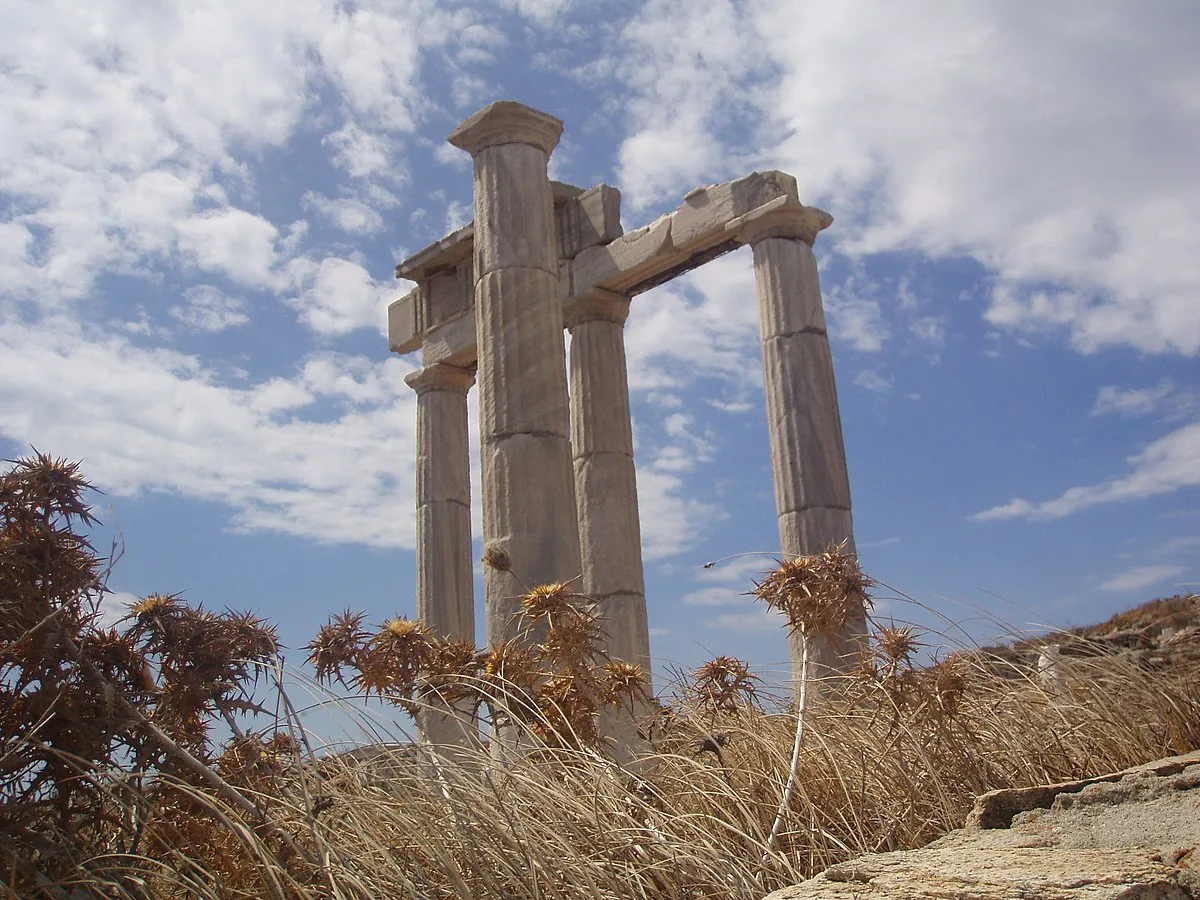
Delos is 3.5 square kilometres of exposed Aegean rock, treeless and windswept, with no permanent residents. The island sits at the centre of the Cyclades and has not been permanently inhabited since the first century BCE, when twenty thousand people, most of them Italian merchants, were massacred in a single day. Before that, it was one of the most sacred sites in the Greek world and one of the busiest commercial ports in the Mediterranean simultaneously. No one was permitted to be born or to die on Delos; the island was twice 'purified' by removing bodies from its soil. The archaeological site now covers most of the island.
5 square kilometres of exposed Aegean rock, treeless and windswept, with no permanent residents.
What it represents
The island's sacred status derived from its identification as the birthplace of Apollo and Artemis. Religious activity at the site dates to the third millennium BCE; the sanctuary of Apollo was formalised from the eighth century BCE and became the treasury of the Delian League, the Athenian-led alliance that controlled the Aegean after the Persian Wars. Delos became a free port in 166 BCE when Rome ceded it to Athens, eliminating the transit tax; within decades, its population reached an estimated thirty thousand. The Pontic king Mithridates VI organised the massacre of 88 BCE as part of his conflict with Rome, targeting primarily Italian merchants. Subsequent pirate raids completed the depopulation. French excavation has continued here since 1872.
Visiting Delos
Boats from Mykonos reach Delos in thirty minutes, with morning departures and afternoon returns that allow four to five hours on the island. The site is entirely open-air, exposed on all sides to the Meltemi wind in summer, with minimal shade. The Terrace of the Lions, five surviving Naxian marble lion guardians from an original sequence of nine or more, is the most immediately striking image on the site. The House of Dionysus and the House of the Masks contain floor mosaics in their original positions, including the famous mosaic of Dionysus riding a panther.
All access is from Mykonos Old Port . Scheduled boat services run seasonally with morning and afternoon crossings. No overnight accommodation exists on the island; all visitors return the same day.
Scheduled boat services run seasonally with morning and afternoon crossings.
The Experience
The Terrace of the Lions stops most visitors immediately: five archaic Naxian marble guardians, their heads raised, positioned along the north side of the Sacred Lake in a line that once had nine or more figures. The originals were replaced with casts in the 1990s; the originals are in the site museum. The difference between cast and original is apparent in person. The House of Dionysus mosaic floor requires finding a specific building in the residential quarter east of the sanctuary, slightly off the main circuit but worth locating. The image of Dionysus astride a panther, executed in polychrome stone tesserae around 130 BCE, survives in near-complete condition in its original domestic setting. The combination of artistic quality and domestic context is unlike anything in the main sanctuary area.
Why It Matters
Delos is the physical evidence of the ancient Aegean's commercial and religious integration in the same space. The island's simultaneous functions, sacred neutral ground, slave market, free port, financial centre, reflect the complexity of the Hellenistic Mediterranean more honestly than any single-purpose site. The absence of modern inhabitation since 88 BCE means the ancient street plan survives beneath a thin layer of excavation rather than centuries of urban overlay.
Why Visit
Most visitors to the Cyclades skip Delos because it requires effort, an early boat from Mykonos, a full morning in direct sun, a return before the afternoon boats stop. What they miss is one of the few places in the Aegean where an ancient city exists at ground level, in its original geography, without modern construction above it. The Terrace of the Lions, the floor mosaics, the scale of the ancient commercial district, these require the body present.
✦ Insider Tips
- 1
Carry significant water, there is nothing to buy on the island and the sun is unfiltered on the exposed site.
- 2
The site museum on the island holds the original Terrace of the Lions figures; compare them with the casts now in position outside.
- 3
The residential district east of the main sanctuary circuit, with the intact mosaic floors, is covered by the same entrance ticket and often less crowded than the sanctuary itself.
- 4
Take the first boat from Mykonos to have the site to yourself for the first hour; the last boat back is timed, so do not lose track of the departure schedule.