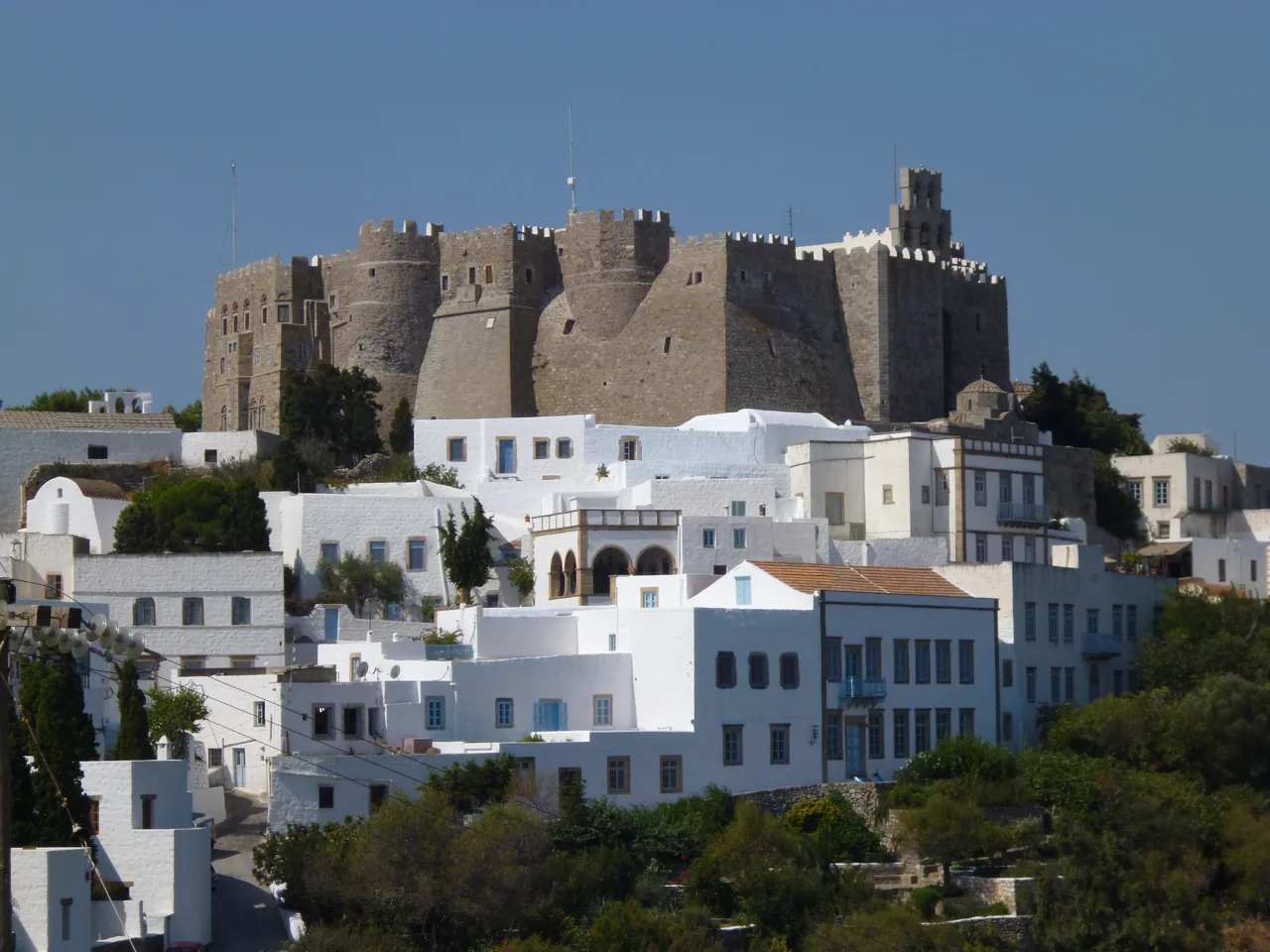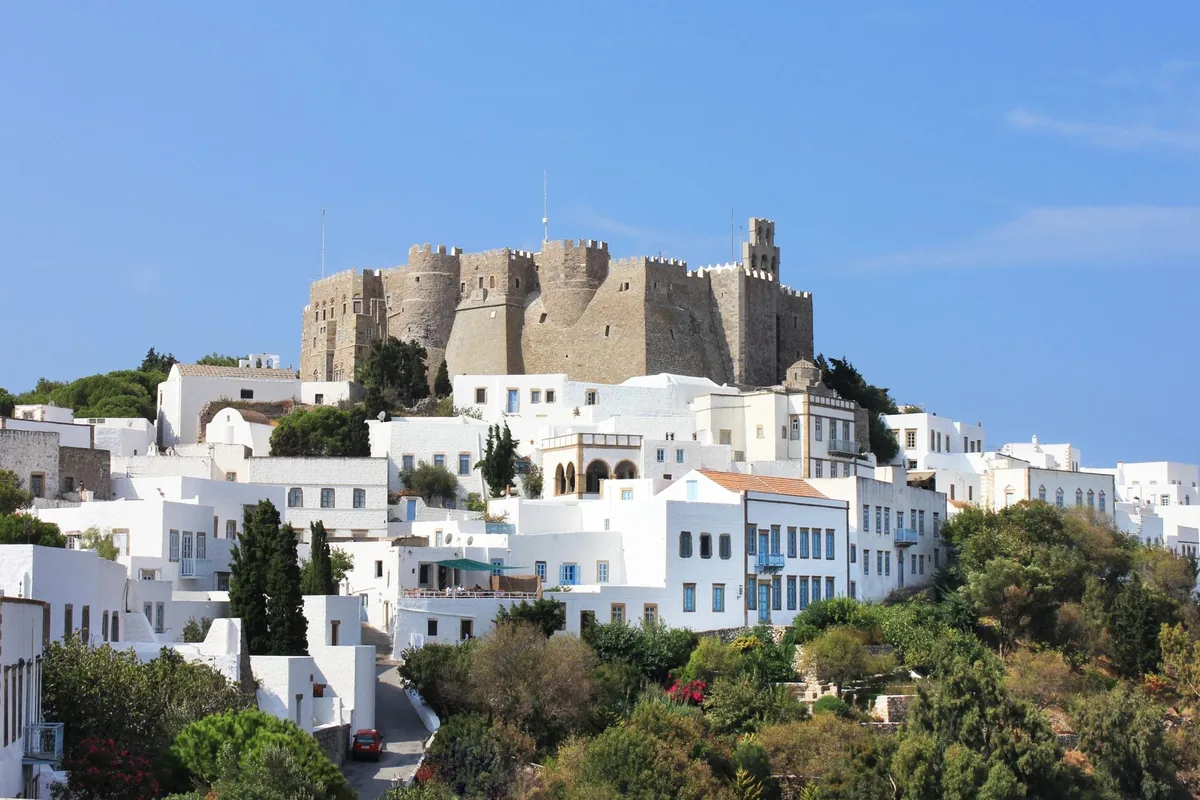
The cave where the Book of Revelation was supposedly written is halfway up a hill on a small Greek island, and the monastery above it was built to look like a fortress to keep pirates out.
About Monastery of Saint John the Theologian
John was exiled to Patmos around 95 AD according to tradition. The monastery was founded in 1088 by the Blessed Christodoulos with an imperial Byzantine charter. The fortified design reflects centuries of pirate threat in the Aegean. The monastery and Cave of the Apocalypse were inscribed as a UNESCO World Heritage Site in 1999.
What this is
The Monastery of Saint John the Theologian sits on the hilltop of Patmos, a small Greek island in the Dodecanese. Founded in 1088, it is built around the Cave of the Apocalypse, where tradition holds that John the Apostle received the visions recorded in the Book of Revelation. The monastery functions as a fortress, a library, a pilgrimage site and an active Orthodox community, and the island of Patmos holds UNESCO World Heritage status.
Where the Book of Revelation Was Written
According to Christian tradition, the Roman emperor Domitian exiled John to Patmos around 95 AD, and in a cave halfway up the hill, John dictated the Book of Revelation to his disciple Prochorus. The cave is now enclosed in a chapel, with a silver frame marking the fissure in the rock from which the divine voice supposedly spoke. The monastery above, founded by the Blessed Christodoulos in 1088 with a charter from the Byzantine emperor Alexios I, looks more like a medieval fortress than a religious house: thick grey stone walls, battlements and a single narrow entrance designed to resist pirate attack. Inside, the treasury holds Byzantine manuscripts, 6th-century codices and icons of exceptional quality. The morning liturgy draws both monks and pilgrims, and the chanting in the small chapel carries a resonance that the acoustics of stone amplify.
The Experience
The path from the harbour to the monastery climbs through the whitewashed village of Chora and reaches the heavy wooden gate in the fortress wall. Inside, the chapel is small and dark, with icons lit by candle. The treasury is one of the richest small collections in Greece, with manuscripts and codices dating to the 6th century. The Cave of the Apocalypse, reached by a separate path, is marked by silver frames around the crevices in the rock. The view from the monastery walls takes in the entire island and the surrounding Aegean.
Why It Matters
The Monastery of Saint John the Theologian is one of the most important Christian pilgrimage sites in the world and houses one of the richest collections of Byzantine manuscripts outside Mount Athos. The Cave of the Apocalypse beneath gives Patmos a significance that far exceeds its small size.
Why Visit
A fortress-monastery on a Greek island that guards the cave where the Book of Revelation was written, with a Byzantine manuscript treasury and active Orthodox services.
✦ Photo Gallery
Best Season
🌤 Late spring and early autumn for warm weather without peak summer crowds. Easter is the most important religious period on Patmos. Ferries run from Piraeus and other Dodecanese islands.
Quick Facts
Best time to visit
Late spring and early autumn for warm weather without peak summer crowds. Easter is the most important religious period on Patmos. Ferries run from Piraeus and other Dodecanese islands.
Getting there
In Patmos, Greece; reach Patmos first, then continue to the site.
What's nearby
Delos is also close by.
Location
Patmos, Greece
Type
attraction
Coordinates
37.3092°, 26.5481°
Insider Tips
- 1
Attend a morning liturgy in the monastery chapel.
- 2
Visit the Cave of the Apocalypse separately; it is on the path below.
- 3
The treasury manuscripts are exceptional; ask if viewing is possible.
- 4
Patmos is reached by ferry; plan connections from Kos or Rhodes.