“During the German occupation of Athens, museum staff secretly buried the collection's most valuable objects in sand beneath the building, and the entire operation succeeded, with nothing lost.”
About National Archaeological Museum
The collection was assembled over the second half of the nineteenth century as modern Greece established its national archaeological institutions. Excavations at Mycenae in 1876 by Heinrich Schliemann contributed the shaft grave treasures; subsequent work at Olympia, Athens, and Santorini added material that would fill a dozen specialist museums elsewhere. The museum's neoclassical building on Patision Street opened in 1889 and has been extended repeatedly. The German occupation of 1941 to 1944 forced a covert preservation operation: staff buried the most significant objects in sand-filled crates beneath the building, hid others in mountain locations, and maintained the fiction of a normal institution above. Nothing was lost. The Antikythera Mechanism, recovered from a first-century BCE shipwreck in 1901, remained here while being gradually decoded across the twentieth century, a process still ongoing.
Overview
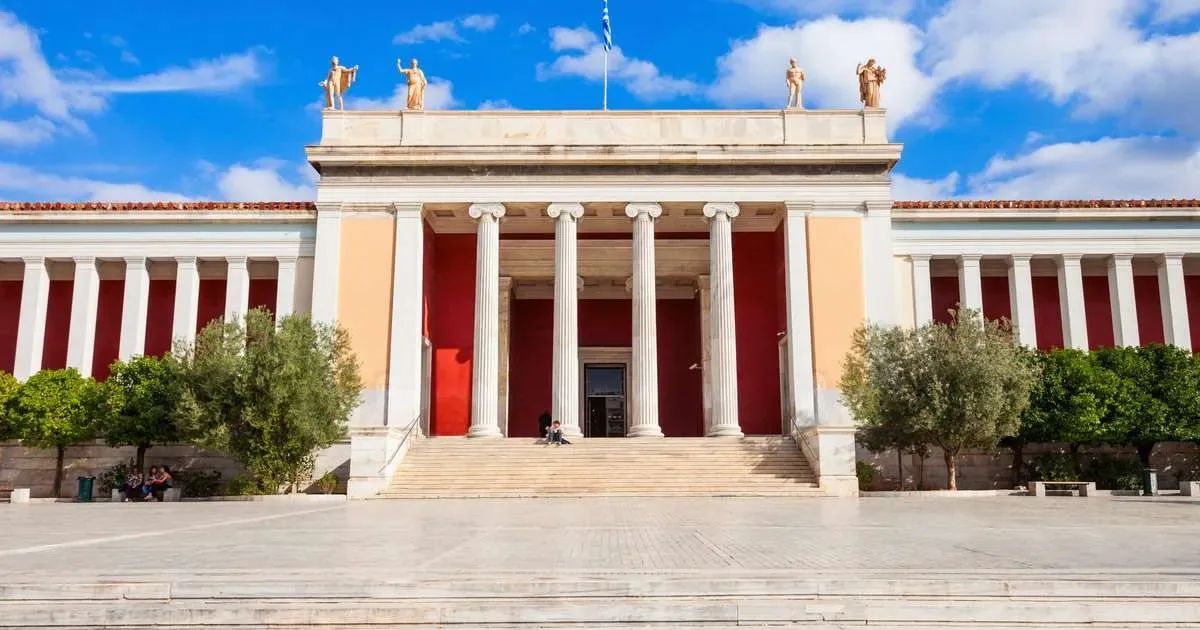
The National Archaeological Museum in Athens holds the largest collection of ancient Greek artefacts in the world, approximately eleven thousand objects across galleries that run from Neolithic prehistory through late antiquity. The building, completed in 1889 on Patision Street, was designed to absorb the accelerating output of Greek archaeological excavations throughout the nineteenth century. No single site concentrates comparable range: Mycenaean goldwork, Archaic kouroi, classical bronzes, Hellenistic portrait sculpture, and Egyptian antiquities from Greek-period Egypt share the same building, organised chronologically through rooms that feel genuinely museum-scaled rather than boutique.
The building, completed in 1889 on Patision Street, was designed to absorb the accelerating output of Greek archaeological excavations throughout the nineteenth century.
The collection grew piece by piece through the nineteenth century as the modern Greek state consolidated control over its territory and its archaeological institutions. Major excavations at Mycenae (1876), Olympia (from 1875), Athens, and Akrotiri on Santorini contributed significant material. During the German occupation of 1941 to 1944, museum staff buried the most valuable objects in sand-filled crates beneath the building and stored others in mountain locations, an operation that successfully protected the entire collection. The Antikythera Mechanism, a second-century BCE mechanical computing device recovered from a shipwreck off the Peloponnese in 1901, came to the museum and has been studied intensively since the 1950s. Current analysis suggests it modelled planetary motion with a complexity not replicated for over a thousand years.
Room 4 holds the Mycenaean collection , the shaft grave material from Mycenae including the gold death masks, the octopus-decorated vessels, the bronze daggers with inlaid hunting scenes. The density of worked gold here from the sixteenth century BCE is difficult to absorb. The bronze collection includes the Zeus or Poseidon of Artemision, a full-size figure of a man throwing something, the identity debated for a century, with a quality of arrest in the pose that stops most visitors mid-step. Allow three to four hours minimum for the permanent collection. The museum is at 44 Patision Street, approximately ten minutes on foot from Omonia metro station (Line 2). Open Tuesday through Sunday with extended hours in summer. The neighbourhood is workaday central Athens, no tourist zone premium, functional cafes, actual residents.
The Experience
The Mycenaean room stops most visitors. The concentration of gold from the sixteenth century BCE, death masks, cups, diadems, inlaid weapons, represents a civilisation that had collapsed and been forgotten for three thousand years before Schliemann excavated it. The material has a rawness that Roman and classical Greek goldwork, more polished and legible, does not. The bronze gallery further on holds the Zeus or Poseidon of Artemision at the room's centre, arms extended in the act of throwing. No other ancient bronze figure captures arrested motion so precisely. Spend time in that room before moving on. The Antikythera Mechanism is displayed with surrounding explanatory material in a separate gallery; the object itself is smaller than most visitors expect.
The material has a rawness that Roman and classical Greek goldwork, more polished and legible, does not.
Why It Matters
No other institution in the world holds the breadth of Greek material culture that this museum does. The Mycenaean collection alone would constitute a major museum; the bronzes, the Cycladic figures, the Egyptian antiquities from Greek-period Egypt, and the Antikythera Mechanism each represent peak holdings. For anyone seriously engaged with ancient Greek civilisation, Athens without this museum is incomplete.
Why Visit
The Acropolis gets the visitors; the museum gets the objects. The shaft grave gold from Mycenae, the Artemision bronze, the Antikythera Mechanism, three collections that would be the defining possession of any museum in Europe, share a single building a ten-minute walk from Omonia. The neighbourhood is unglamorous and the queues are manageable. Allocate a full morning.
✦ Insider Tips
- 1
Buy tickets online; the skip-the-queue benefit is real, particularly in summer.
- 2
The Mycenaean collection in Room 4 and the bronze gallery are the essential rooms; if time is short, go directly to these before the crowds build.
- 3
The Antikythera Mechanism is smaller than photographs suggest, read the surrounding display material before looking at the object itself to understand what you are seeing.
- 4
The museum café has a courtyard; the surrounding Patision Street neighbourhood has better food options at lower prices than the tourist areas near the Acropolis.