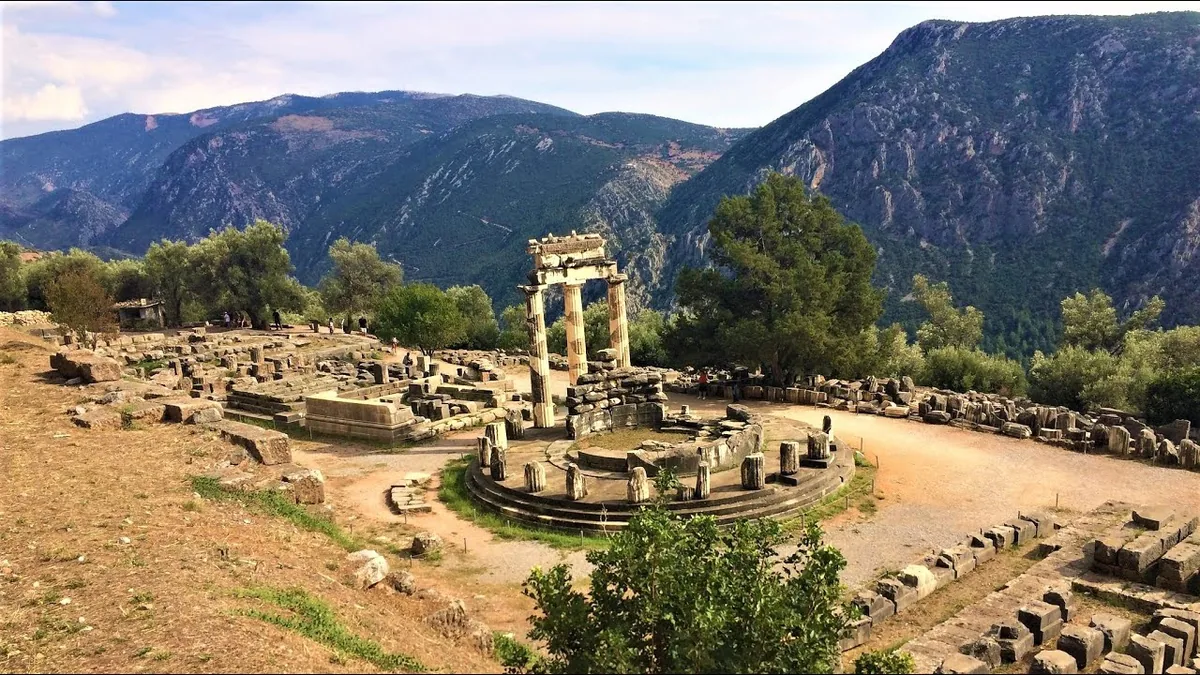
“Queen Amalia had soil carted in by the load and 15,000 plant species imported to build a garden on bare Attic rock in the 1840s, the trees she established are now the only significant canopy shade available anywhere in central Athens.”
About National Garden
Amalia von Oldenburg began the garden's development in the 1840s on the grounds of the new royal palace, working with the German landscape architect Friedrich Schmidt to impose an English-style informal garden on terrain that offered almost nothing to work with: rocky soil, no existing shade, and a Mediterranean climate hostile to the temperate species that defined the garden aesthetic she wanted. The effort succeeded. A catalogue from 1856 recorded 519 established species. The garden was opened to the public in 1923 following the abolition of the monarchy; the palace behind it became the current Parliament building. The Roman mosaic fragments encountered during construction and subsequent modifications were kept in situ rather than relocated, an unusual decision that makes the garden a layered space, the first-century BCE city accessible beneath the nineteenth-century paths.
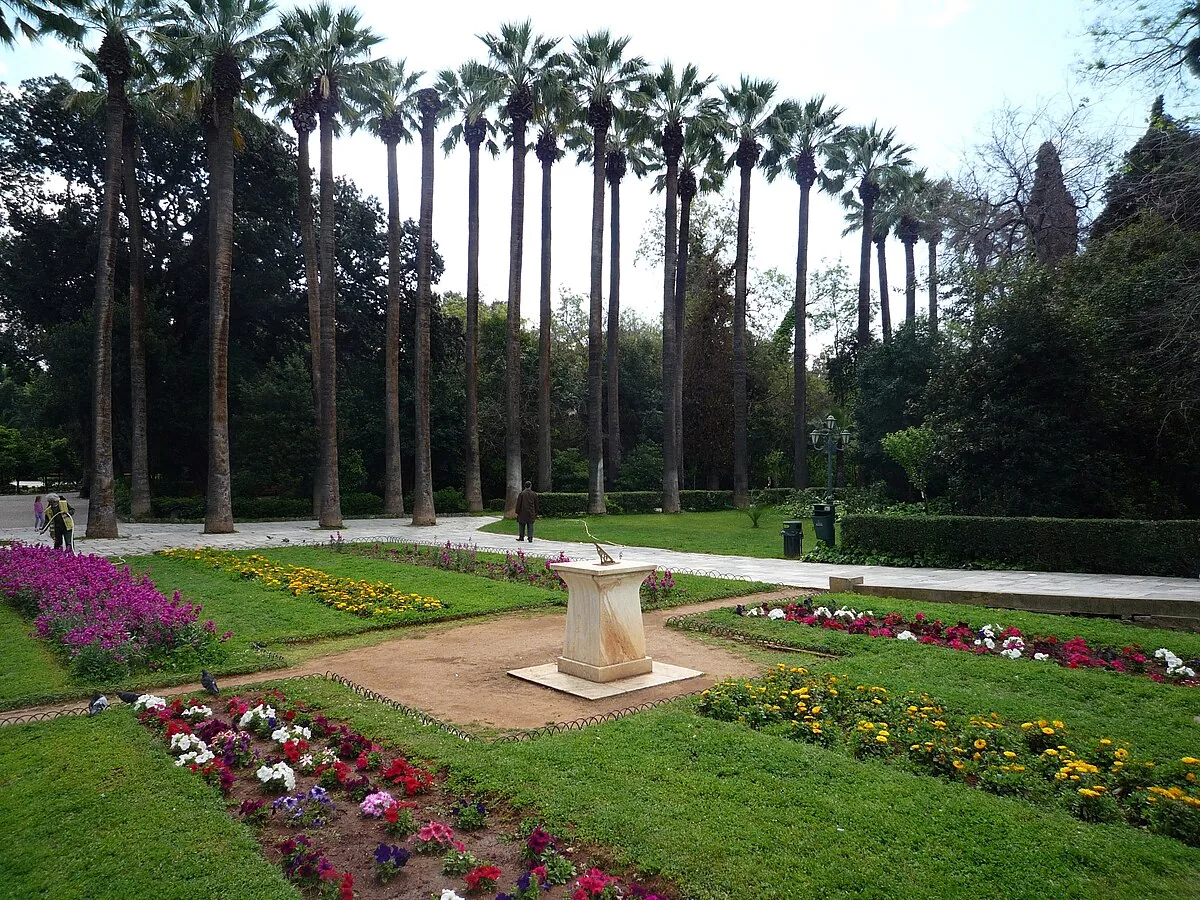
Commissioned by Queen Amalia
The National Garden in Athens exists because Queen Amalia had 15,000 plant species imported in the 1840s to landscape a garden on rocky Attic terrain that had no topsoil. Soil was brought in by the cartload; the species came from across the Mediterranean and the tropics; the labour required to establish what is now a 15.5-hectare mature urban garden was extraordinary by any standard. The garden sits directly behind the Hellenic Parliament on the east side of Syntagma Square, open to the public since 1923 when the monarchy was abolished. The mature tree canopy established over 180 years provides the only significant shade in central Athens.
The National Garden in Athens exists because Queen Amalia had 15,000 plant species imported in the 1840s to landscape a garden on rocky Attic terrain that had no topsoil.
Background
Amalia von Oldenburg arrived in Greece in 1836 as the eighteen-year-old Queen consort of Otto, the Bavarian-born first king of modern Greece. Athens at that time was a town of roughly ten thousand people constructing itself into a capital on the ruins of the Ottoman city, with little existing public infrastructure. The royal garden was one of the first organised public amenities of the new state. A botanical catalogue from the 1850s recorded 519 plant species successfully established; the subsequent century and a half of less intensive management reduced the collection's diversity while the original trees grew to their current scale. Roman mosaic fragments, found during the garden's construction and during later modifications, are preserved in place at several points along the paths.
The garden functions primarily as a local park for the residents of central Athens. Office workers eat lunch on the benches; families use the playground; elderly residents take their morning walks along the shaded paths. The tourist population is thinner here than at the Acropolis or Syntagma Square. The Roman mosaics are in protective glass-covered enclosures at several path junctions, small fragments of the ancient city visible at eye level within the paths of a nineteenth-century garden. A small botanical museum, a café, and a turtle pond complete the facilities.
The garden is directly adjacent to Syntagma Square metro station (Lines 2 and 3). Multiple gates provide access from Syntagma, Vassilissis Amalias Avenue, and Irodou Attikou Street.
The garden is directly adjacent to Syntagma Square metro station (Lines 2 and 3).
The Experience
The garden's quality is the tree canopy. Athens in July is genuinely hot, and the streets outside the garden's walls offer almost no shade. Inside, the mature plane trees, cypresses, and subtropical species planted 180 years ago produce deep shade over the main paths, and the temperature drops measurably. Audibly, the also changes: the street noise from Syntagma fades, and the garden has the compressed quiet of a place that has been tended for a long time. The Roman mosaics in their glass-covered enclosures are easy to miss. Follow the main path east from the Syntagma entrance and look down at the path junctions, the protective cases are at ground level. The fragments are not museum-quality complete images, but the fact that they are in their original Roman position beneath a nineteenth-century garden in the centre of a twenty-first-century capital city is specific to this place.
Why It Matters
The National Garden is where Athenians go when they want shade, which is most of the year. Its primary significance is urban rather than historical, a nineteenth-century act of landscape creation that produced a functioning public space for a capital that needed one and has been using it ever since. The Roman mosaic fragments are a secondary layer, evidence of the ancient city that modern Athens was built over.
Why Visit
The garden is not a destination in the usual sense, it is a shortcut, a rest stop, and a piece of evidence about how cities work. The combination of mature shade, Roman mosaics in the paths, Parliament on one side, and the Zappeion on the other makes it one of the more layered public spaces in central Athens. Come for the shade, stay for the mosaics.
✦ Insider Tips
- 1
The Roman mosaic fragments are at ground level in glass-covered enclosures at several path junctions, they are not signed prominently and most visitors walk past them.
- 2
The Zappeion, the neoclassical exhibition hall at the garden's southern end, has a café with terrace seating that is significantly cheaper than the restaurants on Syntagma Square.
- 3
The garden's north gate on Irodou Attikou Street is quieter than the Syntagma Square entrance and deposits you near the Presidential Palace, whose evzone guard change is worth timing.
- 4
The small botanical museum near the central playground holds the original plant catalogues and historical material on the garden's creation, undervisited and genuinely interesting for anyone curious about the 1840s landscaping project.