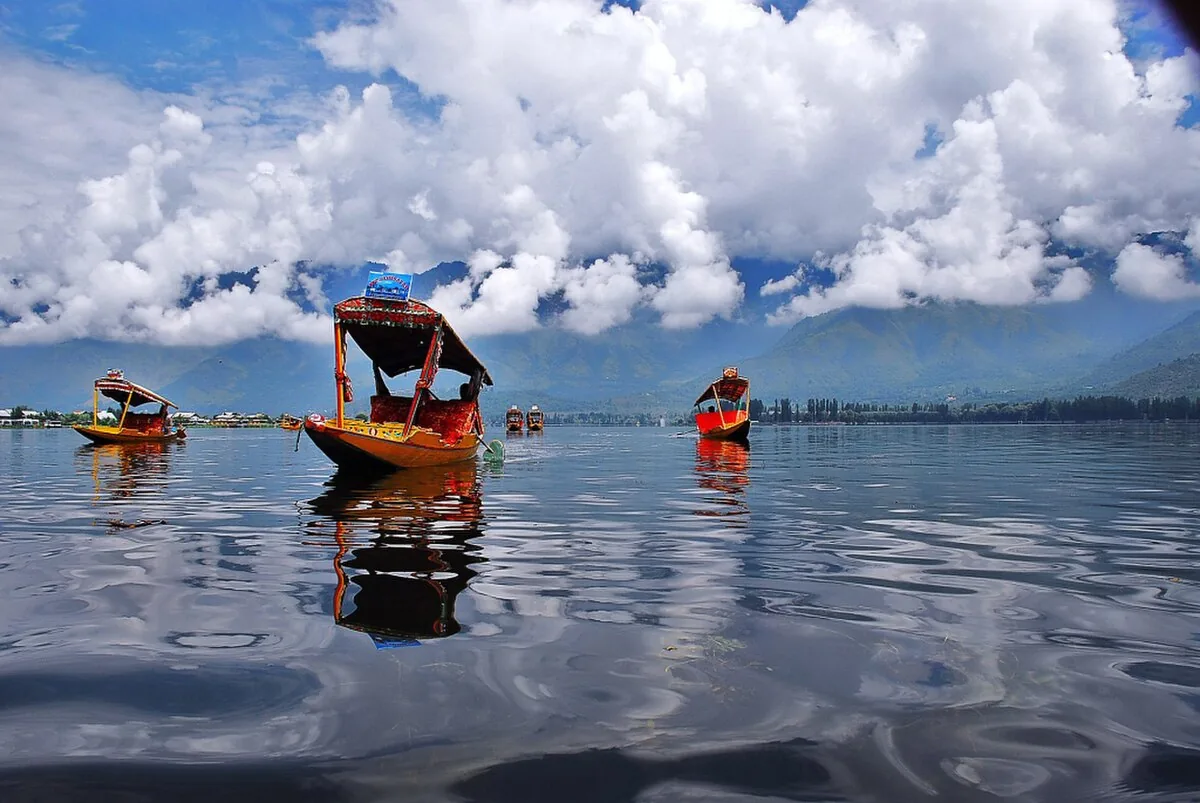
In this Himalayan liquid city, the houses are made of cedar, the gardens float on rafts of reeds, and the morning commute happens in a wooden gondola.
About Dal Lake
The lake is believed to be millions of years old, a remnant of a much larger body of water that once covered the entire Kashmir Valley. It was transformed into a site of high art and horticulture in the 17th century by Emperor Jahangir, who declared it a 'Paradise on Earth.' The houseboat culture peaked in the early 20th century, creating a unique hybrid of Kashmiri craftsmanship and European domesticity. Despite political turbulence in the region, the lake has remained the unwavering heart of the valley's tourism economy, surviving through a delicate balance of traditional farming and modern hospitality.
Dal Lake in short
Srinagar’s Dal Lake is less a body of water and more a liquid city, where the streets are carved from glass-flat surface and the houses are carved from cedar wood. Fringed by the snow-capped Zabarwan mountains, the lake is a sprawling ecosystem of houseboats, floating gardens, and aquatic bazaars. The surroundings here is sharp and carries the scent of woodsmoke, pine, and the damp, sweet aroma of lotus flowers. Moving through this world in a shikara, a brightly painted wooden gondola that glides almost silently through forests of reeds. The light in Kashmir has a silvery, translucent quality that turns the water into a mirror for the Mughal gardens and ancient shrines that line the shore.
The lake’s current identity was shaped
The lake’s current identity was shaped by the Mughal emperors, who saw Srinagar as their summer playground. They built elaborate terraced gardens like Shalimar Bagh and Nishat Bagh along the banks, viewing the water as a celestial reflection. During the British era, the local Maharaja forbade the English from owning land in the valley, leading to the creation of the iconic houseboats, vessels that bypassed the law by floating on the water. These 'floating palaces' became the height of colonial luxury, featuring intricate khatamband ceilings and Victorian furniture. Today, the lake remains the center of Kashmiri life, supporting a community of Hanji people who grow vegetables on floating islands made of reeds and silt, a tradition that predates the Mughal arrival.
Reclining on the velvet cushions of a shikara
Reclining on the velvet cushions of a shikara, The gentle vibration of the oar hitting the water. Immediately, the 'floating market' at dawn, where farmers in traditional pherans haggle over mounds of saffron-colored tomatoes and green chillies from their boats. In your ears of the lake is a low, rhythmic splashing, punctuated by the calls of kingfishers and the distant prayer from the Hazratbal Shrine. You discover a cool dampness of the lake air on your face and smell the spicy aroma of kahwa, traditional saffron tea, being brewed on a nearby houseboat. The element that stays with you is the 'blue hour' after sunset, when the lights of the houseboats twinkle on the water like a fallen constellation.
Srinagar is the primary hub
Srinagar is the primary hub of Kashmir, connected by frequent flights from Delhi and a scenic, if long, road journey from Jammu. The lake is the center of the city, and the main Boulevard road is lined with numbered 'ghats' or piers. To reach a houseboat, you must take a shikara from one of these piers. Most people spend at least two nights on the water to fully absorb the rhythm of the lake. While the main body of the lake is busy with tourism, the backwaters and the smaller Nigeen Lake offer a more secluded experience where the water is clearer and the mountain views are even more dramatic.
The Experience
The morning at Dal Lake is a study in grey and gold as the sun breaks through the Himalayan mist. The opening note is the texture of the hand-carved cedar on the houseboats, looking like lace frozen in wood. The slow, meditative pace of life where there are no cars, only the soft wake of passing boats. The most surprising moment is discovering the 'floating shops' that sell everything from pashmina shawls to fresh flowers right to your houseboat window. It is a place where the boundary between land and water is permanently blurred, creating a sense of being suspended in a dream.
Why It Matters
Dal Lake is the cultural and ecological heart of Kashmir, representing a unique sustainable lifestyle where humans and water have coexisted for centuries. It is the primary site for the study of Mughal horticulture and a living archive of Kashmiri wood-carving traditions. Humanly, it serves as a symbol of the valley's legendary hospitality and its enduring beauty.
Why Visit
Visit Dal Lake for a type of silence you cannot find anywhere else in India. It is a slow-travel destination in the truest sense. While the rest of the world rushes, here you are forced to recline, drink tea, and watch the mountains change color in the reflection of the water. It is a masterclass in the art of doing nothing.
✦ Photo Gallery
Best Season
🌤 April to June is the peak season for flowers and pleasant weather; however, the autumn months of October and November offer the golden foliage of the Chinar trees.
Quick Facts
Best time to visit
April to June is the peak season for flowers and pleasant weather; however, the autumn months of October and November offer the golden foliage of the Chinar trees.
Getting there
In Srinagar, India; reach Srinagar first, then continue to the site.
Location
Srinagar, India
Type
attraction
Coordinates
34.1200°, 74.8700°
Insider Tips
- 1
Wake up at 4:30 AM to see the floating vegetable market; it is the most authentic slice of lake life and is over by 7:00 AM.
- 2
Stay on a houseboat in the Nigeen Lake area if you want a quieter, cleaner experience away from the main tourist traffic.
- 3
Try the local 'Wazwan' cuisine on one of the lakeside restaurants, but specifically ask for the 'Tabak Maaz' for a true Kashmiri experience.
- 4
Bring a warm pashmina or jacket even in summer, as the temperature drops significantly the moment the sun disappears behind the mountains.