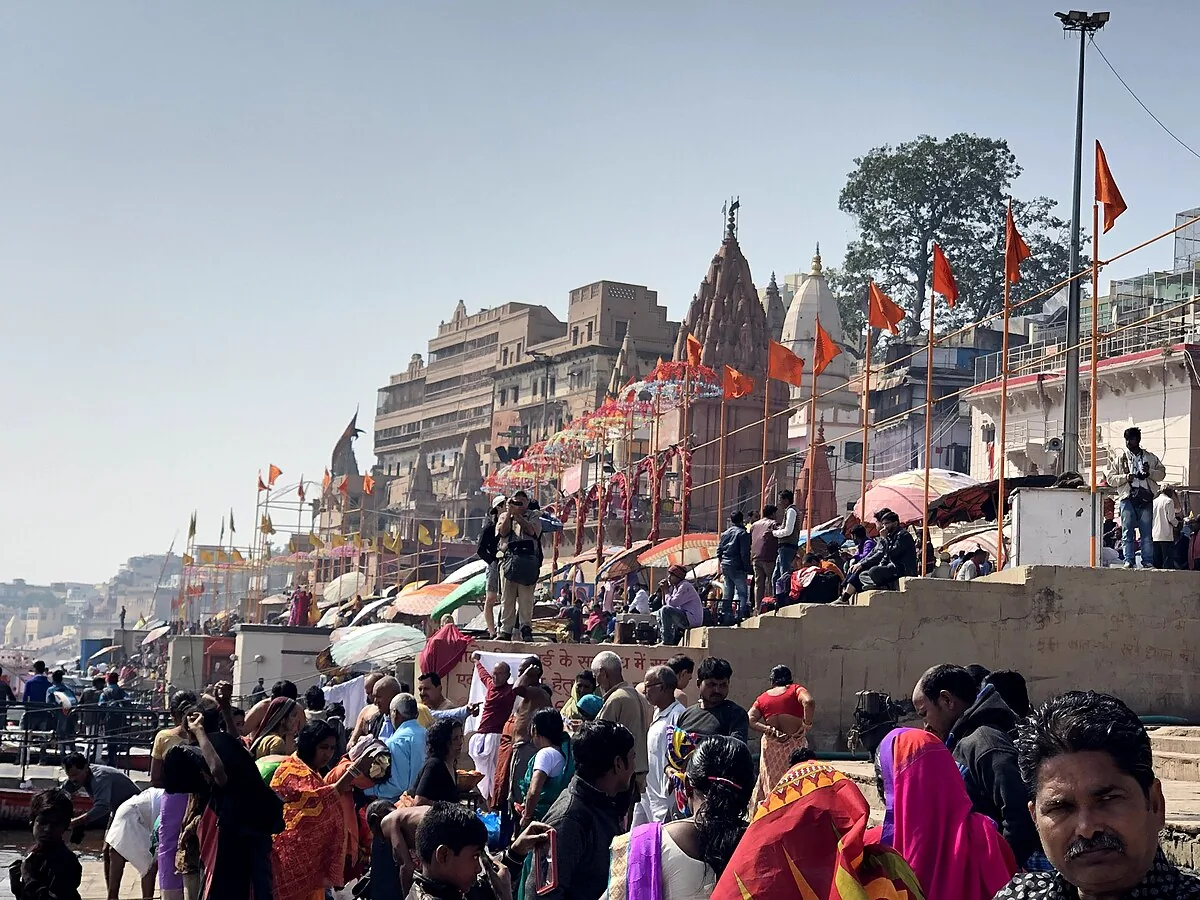
On these stone steps, a ritual of fire and chanting has been performed every single night for decades, regardless of monsoon floods or political upheaval.
About Dashashwamedh Ghat
Dashashwamedh’s origins are buried in the Puranas, but its physical structure was solidified during the Maratha revival of the 18th century. It was designed to handle the massive influx of pilgrims that had been coming to the city since the time of the Buddha. The ghat has remained a focal point for Hindu theology, hosting scholars and saints who have shaped the philosophical landscape of India. Despite the encroachment of modern tourism, the core of the ghat remains a site of rigorous Vedic tradition, where the priests are trained from a young age in the precise movements of the evening ritual.
What Dashashwamedh Ghat actually is
Varanasi lives on its stone steps, and Dashashwamedh is the main artery where the city’s spiritual and social blood flows. This is the oldest and most spectacular ghat on the Ganges, a chaotic theater of life, death, and laundry. The space smells of woodsmoke, marigolds, and incense, thick enough to taste. During the day, the stone steps are occupied by silk weavers, barbers, and saffron-clad sadhus. As the sun dips below the horizon, the atmosphere shifts into a high-octane ritual of fire and chanting. The river itself looks like a sheet of hammered silver, reflecting the neon lights of the ancient city behind it.
current architectural form, 1748
Legend dictates that Lord Brahma created this ghat to welcome Lord Shiva, sacrificing ten horses in a grand Vedic ritual, the name literally translates to the 'Ghat of Ten Sacrificed Horses.' Historically, the site reached its current architectural form in 1748 under the patronage of Peshwa Balaji Baji Rao. Since then, it has was the heartbeat of the holy city, surviving centuries of floods and the rise and fall of empires. It remains the primary access point for pilgrims who believe that a dip in these specific waters can wash away a lifetime of karma, making it one of the most energetically charged spots on the planet.
The evening Ganga Aarti is a sensory bombardment. Seven young priests stand on elevated wooden platforms, waving massive brass lamps that roar with flame while the air vibrates with the sound of bells and conch shells. The heat from the fires and the rhythmic chanting thrumming in your chest. What catches you is the thousands of small leaf-boats, called diyas, carrying flickering candles and rose petals out into the dark water. From a boat on the river, the sight of the illuminated ghat looks like a golden fortress. During the morning, the mood is different; the light is soft, and the sound of splashing water and murmuring prayers replaces the evening’s theatrical roar.
Reaching the ghat requires navigating
Reaching the ghat requires navigating the labyrinthine 'galis' or alleys of the old city, where motorcycles and sacred cows jostle for space. People typically arrive by auto-rickshaw at Godowlia Crossing, the nearest motorized point, before walking the final ten minutes through a bazaar selling everything from silk saris to brass deities. The walk is a gauntlet of sights and smells that is a necessary transition from the modern world into the ancient rhythm of the riverfront.
The Experience
The temple bells at Dashashwamedh is a relentless, joyful noise that drowns out the city’s traffic. The mass of the texture of the ancient, worn stone beneath you, smoothed by millions of bare feet over the centuries. First, the small details: a barber shaving a pilgrim's head, the bright orange of a sadhu’s robes against the grey stone, and the scent of wet mud as the river recedes after a rain. The most poignant moment is watching the silent drift of the diyas; hundreds of tiny sparks representing individual prayers floating into the vast, indifferent dark of the Ganges.
Why It Matters
Dashashwamedh is the spiritual epicenter of Varanasi, the oldest living city in the world. It serves as a bridge between the celestial and the terrestrial, representing the Hindu concept of 'tirtha' or a crossing place. Culturally, it is the primary stage for the Ganga Aarti, a ritual that has become an iconic symbol of Indian heritage.
Why Visit
This place pulls because this is the rawest, most unfiltered version of India. While the Taj Mahal is a monument to a person, Dashashwamedh is a monument to a civilization’s belief in the eternal. It is a place that challenges your senses and your sense of time, offering a perspective on life and death that you won't find anywhere else.
✦ Photo Gallery
Best Season
🌤 November to February offers the most pleasant temperatures for sitting on the steps, with the Dev Deepawali festival in November being the ultimate, if crowded, spectacle.
Quick Facts
Best time to visit
November to February offers the most pleasant temperatures for sitting on the steps, with the Dev Deepawali festival in November being the ultimate, if crowded, spectacle.
Getting there
In Varanasi, India; reach Varanasi first, then continue to the site.
Location
Varanasi, India
Type
attraction
Coordinates
25.3072°, 83.0103°
Insider Tips
- 1
Rent a boat at least thirty minutes before the Aarti begins to secure a spot directly in front of the priests' platforms.
- 2
Visit at 5:00 AM to witness the Subah-e-Banaras, a quieter morning ritual of classical music and yoga on the neighboring ghats.
- 3
Beware of 'guides' offering special access to the cremation ceremonies; these are public areas and you do not need to pay for entry.
- 4
Wear slip-on shoes, as you will be constantly stepping on and off boats or entering small shrines along the steps.
- 5
The best lassi in the city is found at Blue Lassi, a short walk through the alleys behind the ghat, served in traditional clay cups.