“While most of the world's great forts are museums, this golden sandcastle in the Thar Desert remains a living city where three thousand people still sleep within its medieval walls.”
About Jaisalmer Fort
Rawal Jaisal abandoned his previous fort at Lodhruva to build this stronghold on the more defensible Trikuta Hill. The fort’s history is a saga of 'Jauhar', the ritual mass suicide of women during sieges to avoid capture, most notably during the 13th-century attack by Alauddin Khilji. Despite the violence of its past, the fort became a center for Jain scholarship, housing thousands of rare palm-leaf manuscripts in its subterranean vaults. In the modern era, the fort faces a unique threat: water. The 20th-century introduction of piped water has caused the porous sandstone foundations to seep and crumble, leading to an ongoing international effort to save the 'Golden Fort' from its own residents.
Jaisalmer Fort rises from the Trikuta Hill like
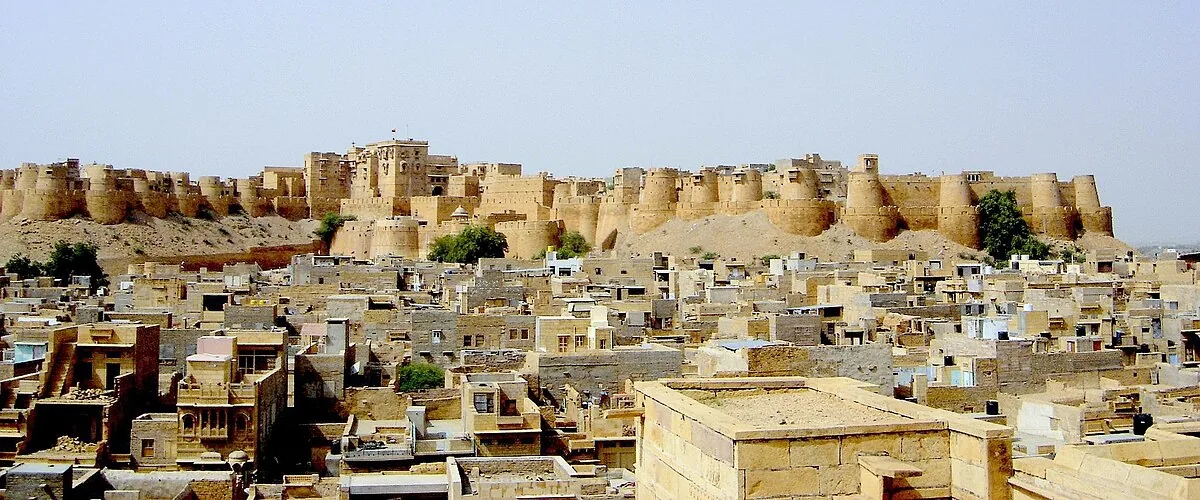
Jaisalmer Fort rises from the Trikuta Hill like a gargantuan sandcastle, its ninety-nine bastions blending seamlessly into the golden hues of the Thar Desert. Unlike every other fort in Rajasthan, this is a living city; three thousand people still reside within its honey-colored sandstone walls. The surroundings here is dry and hot, smelling of camel leather, turmeric, and ancient stone. The narrow, winding alleys are a labyrinth of carved balconies and hidden courtyards where the sun creates sharp, geometric shadows. It is a place of incredible density, where the sound of temple bells and the shouts of vendors echo through streets so narrow you can touch both sides with your outstretched arms.
Jaisalmer Fort rises from the Trikuta Hill like a gargantuan sandcastle, its ninety-nine bastions blending seamlessly into the golden hues of the Thar Desert.
Built in 1156 by the Rajput
Built in 1156 by the Rajput ruler Rawal Jaisal, the fort was a strategic sentinel on the lucrative trade routes connecting India to Central Asia and the Middle East. It was nearly impregnable, surviving multiple sieges by the Delhi Sultanate. The wealth generated by these caravans is visible in the ornate havelis (mansions) built by wealthy merchants inside the walls. These structures are masterpieces of stone-carving, featuring delicate jali screens that allowed women to watch the streets without being seen. Over the centuries, the fort became a self-sustaining ecosystem, with its own temples, markets, and palaces, thriving in one of the most inhospitable environments on earth until the rise of maritime trade led to the decline of the overland Silk Road.
Entering through the four massive gateways,
Entering through the four massive gateways, the transition from the modern town to a medieval world where the pace is dictated by the heat. The rough, sandy texture of the walls and notice how the color of the stone changes from a pale lemon in the morning to a deep, fiery gold at sunset. Inside the Jain Temples, the carvings are so intricate they look like they were made of lace rather than stone. The smell of woodsmoke as residents cook their midday meals and the sound of traditional Rajasthani folk music drifting from a rooftop cafe. The most striking experience is simply getting lost in the upper reaches of the fort, where the alleys open up to reveal views of the vast, shimmering desert stretching toward the Pakistani border.
Jaisalmer is the last outpost of the Indian
Jaisalmer is the last outpost of the Indian rail network, a twelve-hour journey from Jaipur or eighteen hours from Delhi on the 'Malani Express.' The drive through the desert is equally cinematic but demanding. Once you arrive at the station, the fort looms over the city like a permanent sun. To reach the interior, you must walk or take a small rickshaw, as the gates are too narrow for cars. The best way to understand the fort is to stay in one of the small guesthouses within the walls, allowing you to walk the ramparts at night when the stone is still warm and the desert stars are at their brightest.
' The drive through the desert is equally cinematic but demanding.
The Experience
Inside Jaisalmer Fort has a parched, electric quality. What you catch first is the vibrant splashes of color from the turbans and saris of the locals, a sharp contrast to the monochromatic gold of the stone. The heat radiating from the walls even after the sun has set, a slow release of the desert’s energy. Sitting on the ramparts at dusk, you watch the city below light up while the call to prayer from a distant mosque mixes with the tinkling of bells from the Jain temples. It is a moment of total immersion in a world that feels like it shouldn't exist in the 21st century.
Why It Matters
Jaisalmer Fort is a UNESCO World Heritage site and the only 'living fort' of its scale in the world. It represents a peak of Rajput military architecture and is shaped by the sophistication of medieval urban planning in desert conditions. Culturally, it is the custodian of centuries-old Jain and Hindu traditions that have remained unchanged by the passage of time.
Why Visit
Visit Jaisalmer to experience a time-warp. While the forts in Jodhpur or Jaipur are grander, they are empty stages. Jaisalmer is a living, breathing play. It is the only place where you can buy groceries, visit a barber, and have a coffee inside a 12th-century military machine. It is as close to a medieval dream as you can get.
✦ Insider Tips
- 1
Avoid taking long showers if you stay inside the fort; the drainage system is ancient and water seepage is the primary cause of the walls collapsing.
- 2
The 'Kothari’s Patwa-ki-Haveli' just outside the fort is the most impressive mansion in the city and should not be missed for its stone-work.
- 3
Buy a small piece of 'Habur stone' from a local shop; this fossil-rich rock is unique to the area and can turn milk into yogurt overnight.
- 4
Visit the Jain Temples before 12:00 PM, as they often close to tourists in the afternoon for private worship.