“Swallowed by the jungle for seven hundred years, these temples house stone-work so lifelike that it captures every human emotion from spiritual ecstasy to earthly desire.”
About Khajuraho Group of Monuments
The Chandela kings were great patrons of the arts, and their reign marked a golden age for Central India. The construction of the temples was an act of royal piety and a display of imperial wealth, with each temple typically dedicated to Shiva, Vishnu, or Jain Tirthankaras. The erotic art, which has caused so much modern debate, was likely a reflection of Tantric practices that viewed the union of male and female as a metaphor for the soul's union with the divine. After the decline of the Chandelas in the 13th century, the site was abandoned, and the thick forests of Bundelkhand kept the stone secrets safe until the 19th-century rediscovery by the British.
What this is
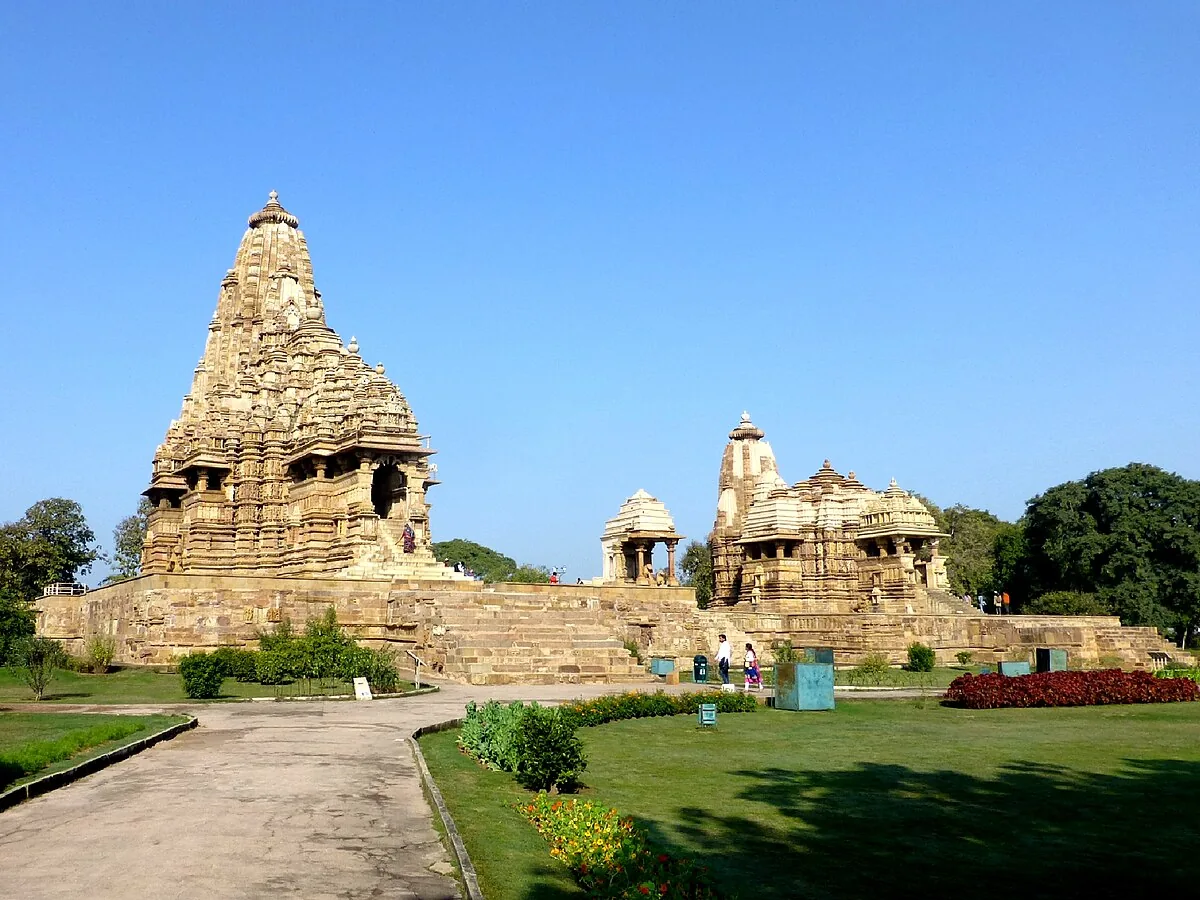
Khajuraho’s temples rise from the plains of Madhya Pradesh like petrified peaks of sandstone, their surfaces a dense, throbbing celebration of every aspect of human life. While famous for their erotic sculptures, these temples are actually a profound exploration of the four goals of Hindu life: dharma, artha, kama, and moksha. The surroundings here is dry and carries the scent of sun-baked earth and the faint fragrance of the surrounding teak forests. The honey-colored stone has a warm, tactile quality that catches the shifting light, turning a deep amber at sunset. The site is an island of sophisticated artistry in a rural landscape, where the sound of the wind through the stone spires is the only accompaniment to the visual feast of celestial nymphs and mythical beasts.
Khajuraho’s temples rise from the plains of Madhya Pradesh like petrified peaks of sandstone, their surfaces a dense, throbbing celebration of every aspect of human life.
Built between 950 and 1050 CE by the Chandela dynasty, these temples represent the pinnacle of North Indian temple architecture. The Chandelas claimed descent from the Moon God, and at the height of their power, they built eighty-five temples, of which only twenty-five survive today. Unlike many other temples that were destroyed during medieval invasions, Khajuraho’s remote location protected it; the temples were swallowed by the jungle and forgotten for centuries. They were rediscovered in 1838 by a British officer, Captain T.S. Burt, who was led to the site by local hunters. The complex is unique for the 'Nagara' style architecture, characterized by shikhara towers that mimic the peaks of the Himalayas, the abode of the gods.
Visiting Khajuraho Group of Monuments
Walking onto the manicured lawns of the Western Group, The vertical energy of the Kandariya Mahadeva temple, its spires looking like a mountain range in stone. The presence of the rough texture of the sandstone and notice the incredible anatomical detail of the sculptures, the muscle of a warrior, the curve of a dancer’s spine. Within, the space the small sanctums is cool and dark, smelling of ancient stone and faint incense. The complexity of the carvings; while the erotic panels are the most photographed, they account for only ten percent of the art, surrounded by scenes of music, war, and daily labor. Sound-wise is a quiet, reverent murmur, occasionally broken by the call of a peacock from the nearby woods. The light at dawn is the most dramatic, hitting the east-facing temples and making the sandstone look like it is glowing from within.
Khajuraho has its own airport and railway station, connected to Delhi, Varanasi, and Agra. The temples are divided into three groups: the Western, Eastern, and Southern. The Western Group is the most significant and requires a ticket, while the others are scattered among the local villages and are free to visit. Travelers usually stay in the small town of Khajuraho and use bicycles or rickshaws to move between the sites. Arriving at the Western Group at 6:00 AM allows you to see the sculptures in the best light before the midday heat and the tour buses arrive. The nightly sound and light show provides a helpful, if theatrical, overview of the Chandela history for those new to the site.
Khajuraho has its own airport and railway station, connected to Delhi, Varanasi, and Agra.
The Experience
Around Khajuraho has a stillness that encourages long periods of looking. What grabs you is the tiny details that most skip: the expression of a woman applying kohl to her eyes, or the intricate harness on a stone elephant. The immense weight of the shikhara towers above you, a physical presence of the divine mountain. The most profound moment is standing at the base of the Lakshmana temple at sunset, watching the shadows deepen in the carvings until the figures seem to move in the flickering orange light. It is a place that celebrates the body and the spirit with equal intensity, making you feel the wholeness of the human experience.
Why It Matters
Khajuraho is a UNESCO World Heritage site and the most important example of the Nagara architectural style in India. It is a unique record of a society that integrated the sensual and the spiritual without conflict. Culturally, it is a product of to the sophistication of medieval Indian art, where stone was treated with the delicacy of wood or clay.
Why Visit
Visit Khajuraho to see the most expressive sculpture on the planet. While other temples are about grand scale, Khajuraho is about the intimacy of the detail. It is a place that challenges your perceptions and offers a vision of a past that was remarkably open, vibrant, and artistically fearless.
✦ Insider Tips
- 1
Hire a government-approved guide for at least the Western Group; the symbolism of the carvings is nearly impossible to understand on your own.
- 2
Rent a bicycle to visit the Eastern and Southern groups; it is the best way to see the rural landscape and the smaller, quieter temples.
- 3
Visit the Jain temples in the Eastern Group for a quieter, more meditative experience compared to the busier Western Group.
- 4
The light and sound show is better in the evening when the air is cooler; bring insect repellent if you are visiting during the shoulder months.