“A city of 11,000 people was buried mid-sentence by a volcano, and when we dug it up 1,700 years later, the bread was still in the oven.”
About Archaeological Park of Pompeii
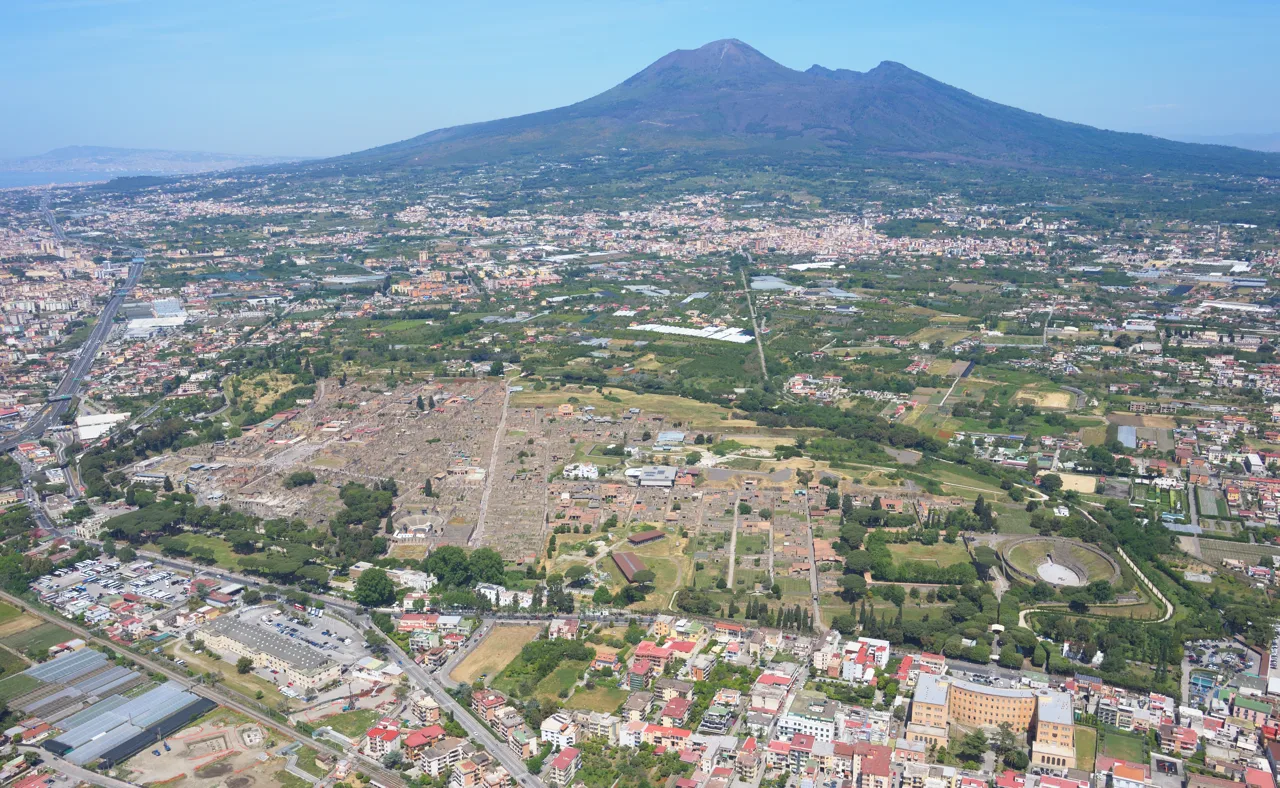
Pompeii was a thriving Roman commercial and residential city until August 24, 79 AD, when Mount Vesuvius erupted and buried it under volcanic material. The site was rediscovered in the 16th century and systematic excavation began in 1748. Ongoing work continues to uncover new sections, including the recent discovery of a thermopolium with intact food remains.
What Archaeological Park of Pompeii is
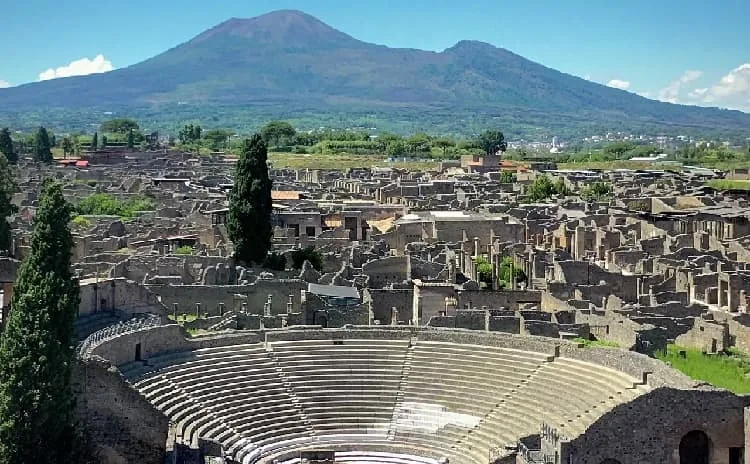
Pompeii is a Roman city barely changed since by the eruption of Mount Vesuvius on August 24, 79 AD. Located near Naples in southern Italy, the site preserves streets, houses, public buildings and the plaster casts of people who died in the eruption, offering a window into daily Roman life that no other archaeological site can match.
Pompeii is a Roman city barely changed since by the eruption of Mount Vesuvius on August 24, 79 AD.
The Day the Clocks Stopped
When Vesuvius erupted, Pompeii was a prosperous city of roughly 11,000 people. The pyroclastic surge buried it under metres of volcanic ash and pumice, killing those who had not fled and preserving the city in extraordinary detail. Excavation began in the 18th century and continues today, with about two-thirds of the city now uncovered. You can walk the basalt-paved streets and see the deep ruts worn by cart wheels, enter houses with intact frescoes on the walls, visit a bakery with the millstones still in place and a thermopolium (fast-food counter) with painted menus. The Forum, the Amphitheatre and the public baths reveal civic life. The most affecting objects are the plaster casts of the dead, made by pouring plaster into the voids left in the ash by decomposed bodies, capturing people in their final moments with their postures and expressions intact.
The Experience
You enter through one of the ancient gates and immediately you are walking a Roman street, complete with raised sidewalks, stepping stones for crossing and ruts from two thousand years of cart traffic. The houses range from modest to palatial, many with frescoes still showing vivid colour. The Forum is open to the sky with Vesuvius looming directly behind it. The plaster casts are displayed in several locations and are difficult to look at and impossible to look away from.
Why It Matters
Pompeii is the most complete and most visited Roman archaeological site in the world. It provides an without equal record of daily Roman life, from the layout of houses to the food people ate on the day the city was destroyed.
Pompeii is the most complete and most visited Roman archaeological site in the world.
Why Visit
The most complete Roman city ever excavated, preserved by a volcanic eruption in 79 AD with streets, frescoes, and the plaster casts of its final residents.
✦ Insider Tips
- 1
Wear sun protection and sturdy shoes; the site is vast and exposed.
- 2
The House of the Vettii and the Villa of the Mysteries are highlights.
- 3
Vesuvius looms behind the Forum, which is worth a photograph and a pause.