Roman engineers once flooded this massive stone bowl to float full-sized warships for the entertainment of a bloodthirsty crowd, long before it became the world's most famous ruin.
About Colosseum
Financed by the spoils of the Siege of Jerusalem, the construction transformed a landscape of private royal excess into a public utility for the Roman masses. The Flavian dynasty used the building to solidify their legitimacy through 'bread and circuses,' providing a distraction from the political instability of the era. Over centuries, earthquakes and lightning strikes battered the upper levels, but the most significant damage was human-led. During the Renaissance, the Colosseum was essentially a free hardware store, providing the high-quality travertine used to build the palaces of the Roman elite.
What The Colosseum actually is
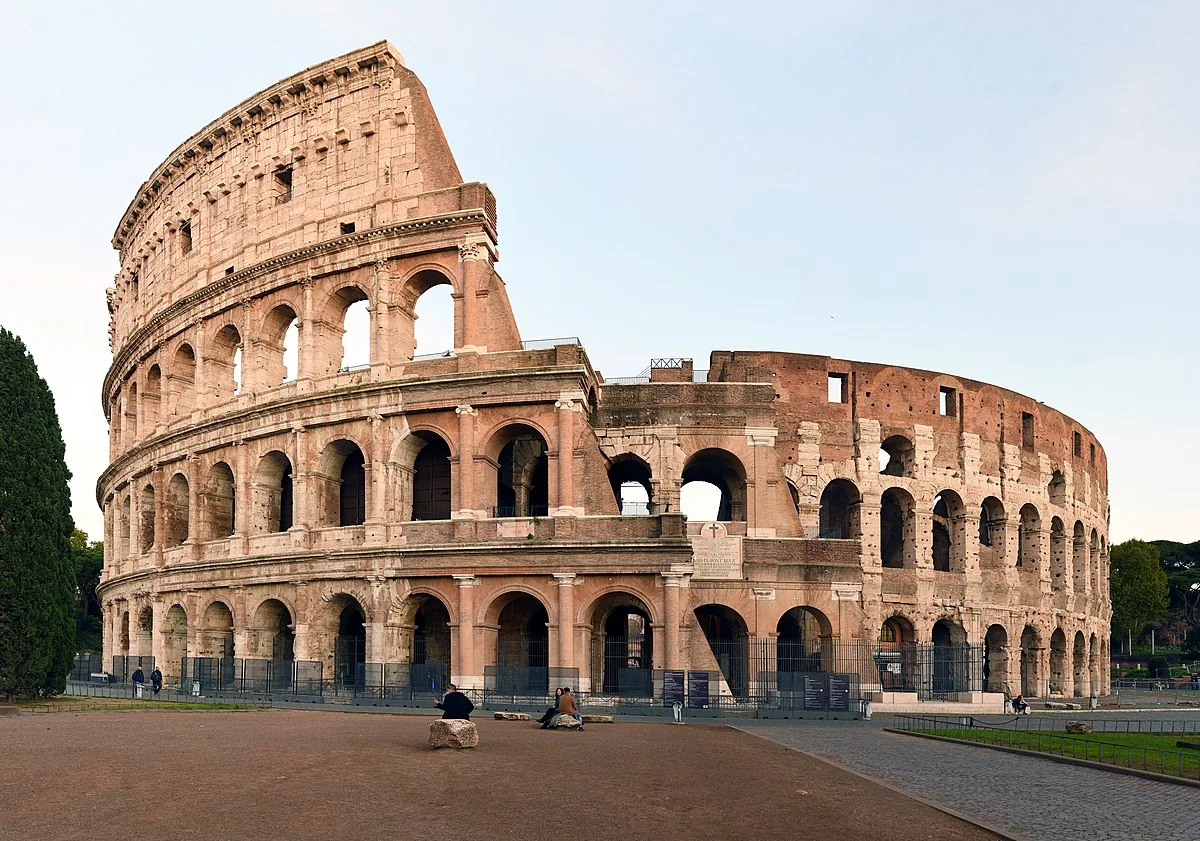
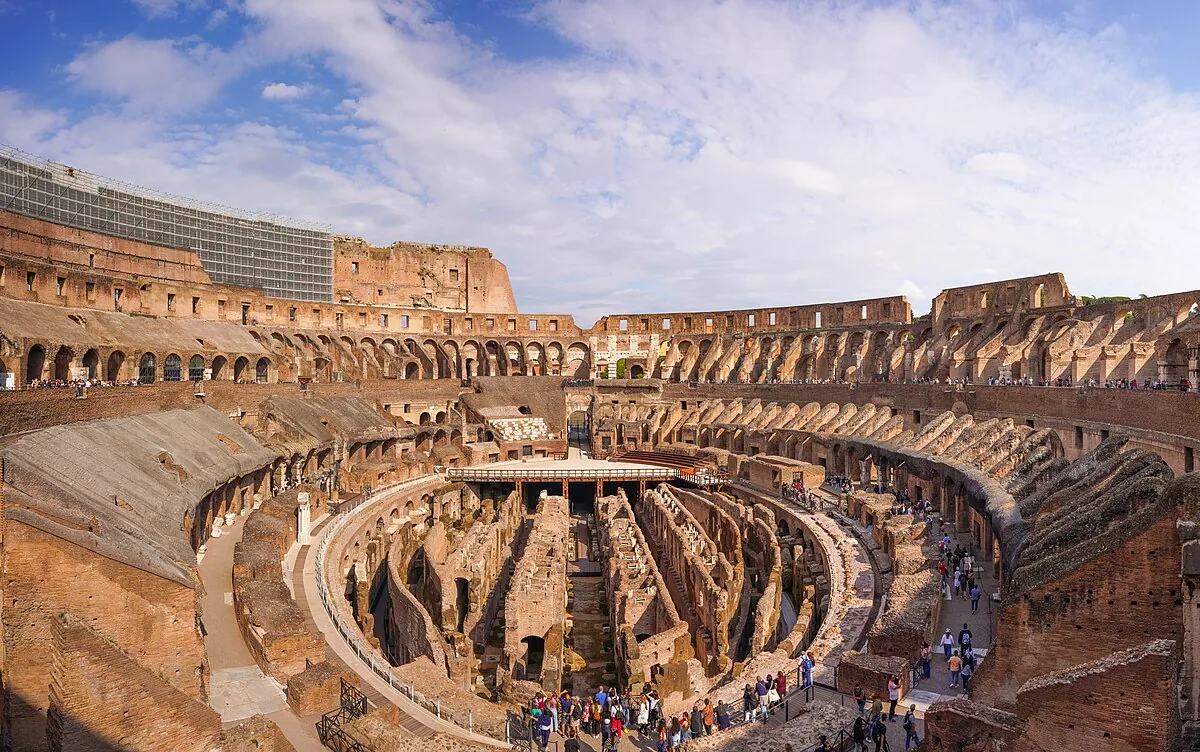
Giant travertine blocks stack toward the Roman sky, forming a skeleton of an empire that refused to be forgotten. The Flavian Amphitheatre, better known as the Colosseum, anchors the city of Rome not just geographically but emotionally. Walking toward its honey-colored arches, The dry dust of antiquity and a trace of stone that has baked under the Mediterranean sun for two millennia. The sheer scale of the elliptical structure remains a physical weight. A grit of the ancient path underfoot, realizing that eighty thousand voices once shook the very foundations you stand upon. Even in its ruined state, the structure dominates the modern traffic circling it, a silent witness to the shift from pagan spectacle to Christian monument.
“Giant travertine blocks stack toward the Roman sky, forming a skeleton of an empire that refused to be forgotten.”
Colosseum, Italy
Commissioned by Emperor Vespasian
Emperor Vespasian began this ambitious project in 72 AD on the site of Nero's private lake, a political gesture meant to return the land to the people of Rome. His son Titus completed the work in 80 AD, inaugurating the arena with a hundred days of games that cost the lives of nine thousand animals. The sheer engineering required to flood the arena for naval battles or to operate the trapdoors of the hypogeum was revolutionary. After the fall of the empire, the building was a quarry, a fortress, and even a Christian shrine. Much of the missing marble facade ended up in the construction of St. Peter's Basilica, leaving the rugged, skeletal core we see today.
Standing on the second tier
Standing on the second tier at dusk, the cooling evening breeze pull through the limestone arches. The way the light catches the pitted surfaces of the stone, revealing the holes where iron clamps were ripped out by medieval scavengers. The sound of the city fades into a low hum, replaced by the internal echo of what this space once contained. Below, into the hypogeum, seeing the labyrinthine ruins of the animal pens and elevator shafts, a dark underworld beneath the bright floor. The most evocative moment usually happens when you look through an upper arch and see the Arch of Constantine framed perfectly, bridging the gap between the stadium and the triumphal way.
Access is straightforward via the Colosseo
Access is straightforward via the Colosseo metro station on Linea B, which deposits you directly across from the North entrance. Arriving on foot from the Roman Forum offers a more narrative approach to the site. Security lines are a constant reality, so early morning entry is the only way to beat the heavy midday heat of the Roman summer. The interior is best navigated with a pre-booked slot for the arena floor to avoid the dense clusters of tour groups on the standard walkways.
“Access is straightforward via the Colosseo metro station on Linea B, which deposits you directly across from the North entrance.”
The Experience
Within, the amphitheater feels strangely still compared to the chaos of the Via dei Fori Imperiali outside. A magnitude of the shadows cast by the high walls as the sun moves across the sky. First, the small weeds and wildflowers growing in the cracks of the stone, a soft green contrast to the harsh, grey history of the arena. The majority focus on the center, but if you look at the remaining original seating, you can still find faint carvings that marked the spots for specific social classes.
Why It Matters
The Colosseum stands as the ultimate architectural icon of the Roman Empire's power and its eventual decay. It represents a peak in ancient engineering and crowd management that informed every modern stadium built since. Beyond the architecture, it acts as a somber memorial to the human and animal lives sacrificed for imperial entertainment.
Why Visit
Visit to feel the scale of an empire that thought it would last forever. Inside the center of the arena floor, you realize that history isn't just a series of dates, but a physical presence that can still dwarf our modern world. It is the only place where the brutal and the beautiful are so inextricably linked.
Insider Tips
- 1
Book the 'Underground' tour weeks in advance to see the hypogeum, as it is the only part of the site that feels eerie and untouched.
- 2
Use the entrance at the Palatine Hill first to skip the longest ticket lines at the main Colosseum gate.
- 3
Bring a reusable water bottle to fill at the ancient fountains (nasoni) located around the exterior of the monument.
- 4
View the monument from the 'Parco del Colle Oppio' across the street at night for the best uncrowded photography angle.
- 5
Carry a small physical map of the original layout, as the modern ruins are confusing to decipher without a visual reference of the missing seating.