While the rest of Europe was sliding into the dark ages, 6th-century craftsmen in Ravenna were using gold and glass to build a headquarters for the afterlife.
About Basilica di San Vitale
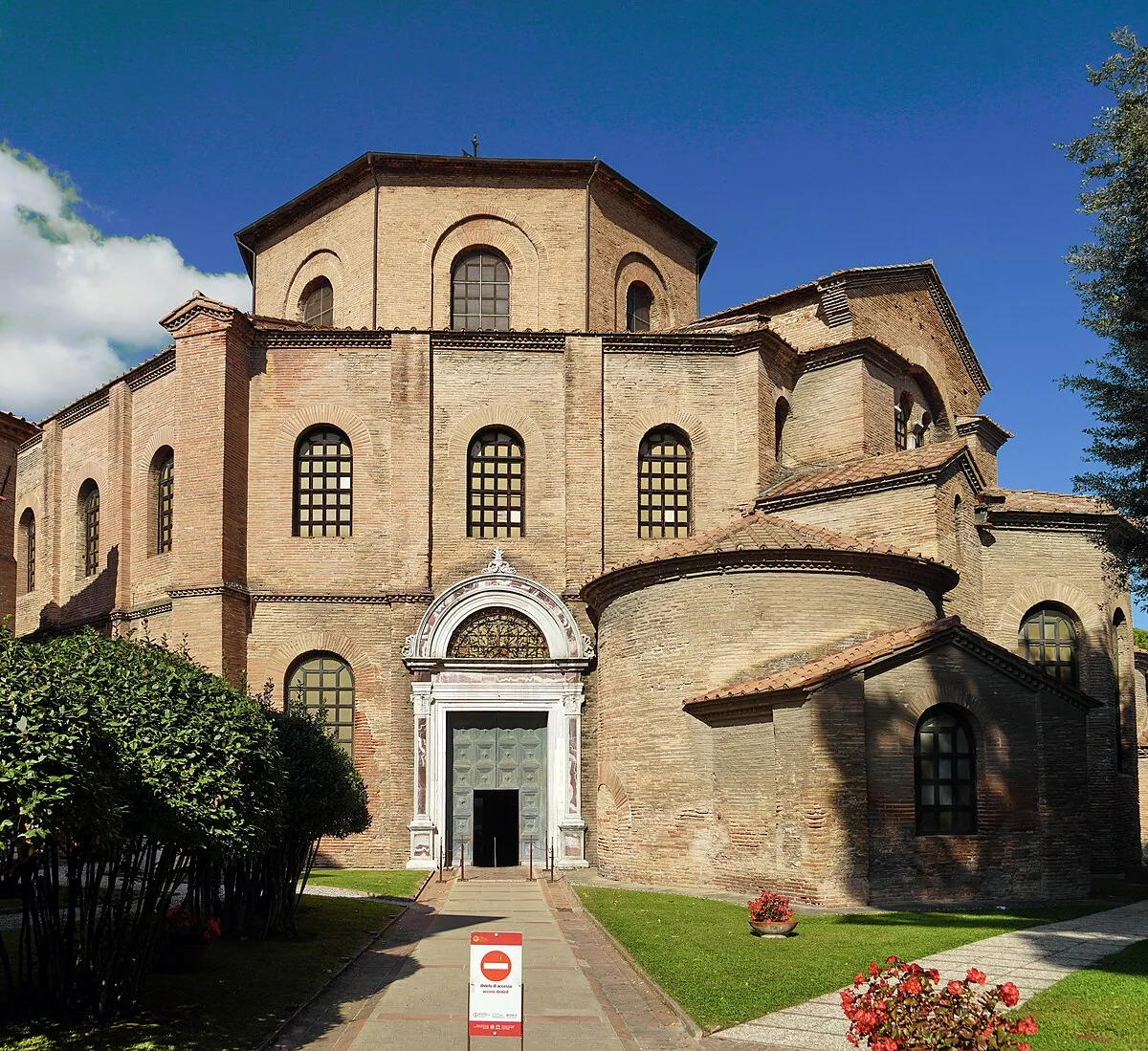
The basilica represents the peak of Byzantine architecture in Italy, departing from the traditional rectangular basilica plan in favor of a complex, centrally-planned octagon. Its design likely influenced the construction of Charlemagne's Palatine Chapel in Aachen centuries later. The mosaics survived the fall of the Exarchate, the Middle Ages, and even the heavy bombardments of World War II, which destroyed much of the surrounding city. Today, it remains a UNESCO World Heritage site, protected by sophisticated climate controls to ensure that the salt from the nearby Adriatic Sea doesn't corrode the delicate plaster holding the mosaics in place.
What Basilica di San Vitale in Italy is
Deep green and glittering gold dominate the interior of this octagonal brick fortress in Ravenna, a city that once stood as the western hinge of the Byzantine Empire. The Basilica of San Vitale is an architectural puzzle, where the plain, unassuming exterior gives no hint of the psychedelic explosion of mosaics waiting inside. The interior is cool and smells of damp stone and the faint, sweet trace of centuries of candle smoke. The walk across a labyrinthine floor of marble and tile. Notice how the light from the high windows makes the glass tesserae on the walls appear to vibrate. It is a space where the imperial majesty of Constantinople was exported to Italy, creating a permanent vision of a celestial court that has not faded since the 6th century.
Ecclesius began construction, 526
Bishop Ecclesius began construction in 526 while Ravenna was still under the rule of the Ostrogoths, but it was the banker Julianus Argentarius who provided the staggering sum of 26,000 gold pieces to complete it. The church was consecrated in 547 by Archbishop Maximian after the Byzantine General Belisarius recaptured the city for Emperor Justinian. This history is frozen in the two most famous mosaic panels in the world, which face each other across the apse. On one side, Justinian carries a gold paten, and on the other, Empress Theodora, adorned in heavy jewels and a purple robe, holds a chalice. These portraits were political propaganda, asserting the presence of the distant rulers in a newly conquered land they would never actually visit.
Stepping into the central nave,
Stepping into the central nave, The vertical lift of the dome supported by eight massive pillars. First, the way the light catches the gold leaf sandwiched between glass layers, creating a glow that seems to come from within the walls rather than from the sun. The sound is a soft, reverent hush that makes every footstep on the marble floor echo like a heartbeat. The texture of the intricately carved capitals, where birds and vines are rendered in white marble with lace-like precision. The most moving moment occurs standing directly under the image of Christ Enthroned; the vibrant blue of the celestial globe beneath his feet is a color so deep it feels like it might swallow the room. Most visitors stay for hours, waiting for the sun to shift and illuminate different sections of the Biblical scenes.
Ravenna is easily reached
Ravenna is easily reached by train from Bologna or Ferrara, and the basilica is a ten-minute walk from the station through the quiet, pedestrianized city center. Tickets are usually sold as a combined pass that includes the nearby Mausoleum of Galla Placidia and the Neonian Baptistery. The church is still a consecrated space, so respectful dress is required. Arriving in the late afternoon often provides the best light, as the setting sun hits the apse mosaics directly through the western windows, turning the entire sanctuary into a shimmering sea of gold and emerald.
The Experience
The atmosphere inside San Vitale is heavy with the weight of empire and the stillness of the divine. First, the tiny, individual tiles that make up Theodora's pearls, realizing each one was placed by hand fourteen hundred years ago. A cool, solid presence of the columns brought from across the Mediterranean to support this massive brick shell. The sound of a distant choir practicing can occasionally be heard, the voices rising into the dome and blending with the visual complexity. What sticks with you is the realization that the figures in the mosaics are looking directly at you with an intensity that bridges the gap between the ancient world and the present day.
Why It Matters
San Vitale is the most important monument of Byzantine art in Western Europe. It preserves the only surviving contemporary portraits of the most powerful couple in the late Roman world. Historically, it marks the brief moment when Italy was reunited with the East, and culturally, it remains the ultimate example of how light and color can be used to create a sacred environment.
Why Visit
This one matters because you cannot understand the power of gold until you see it used here. In San Vitale, color is not a decoration; it is an atmosphere. You come here to see the faces of people who died fifteen hundred years ago rendered with such clarity that they feel like they could step off the wall and speak.
✦ Photo Gallery
Best Season
🌤 Spring and early Autumn offer the best natural light and avoid the humid heat that can sometimes make the brick interiors feel heavy.
Quick Facts
Best time to visit
Spring and early Autumn offer the best natural light and avoid the humid heat that can sometimes make the brick interiors feel heavy.
Getting there
In Ravenna, Italy; reach Ravenna first, then continue to the site.
Location
Ravenna, Italy
Type
attraction
Coordinates
44.4206°, 12.1964°
Insider Tips
- 1
Bring a small pair of binoculars; the mosaics on the upper reaches of the choir are filled with tiny details that are invisible to the naked eye.
- 2
The combined ticket is valid for seven days, so don't feel the need to rush through all five UNESCO sites in a single afternoon.
- 3
Look for the 'Labyrinth' on the floor of the presbytery; following its path was a medieval form of mini-pilgrimage and penance.
- 4
Visit the Mausoleum of Galla Placidia next door immediately after San Vitale to compare the different styles of 5th and 6th-century mosaics.
- 5
Try the local 'piadina' flatbread at one of the kiosks near the basilica; it is the definitive street food of the Romagna region.