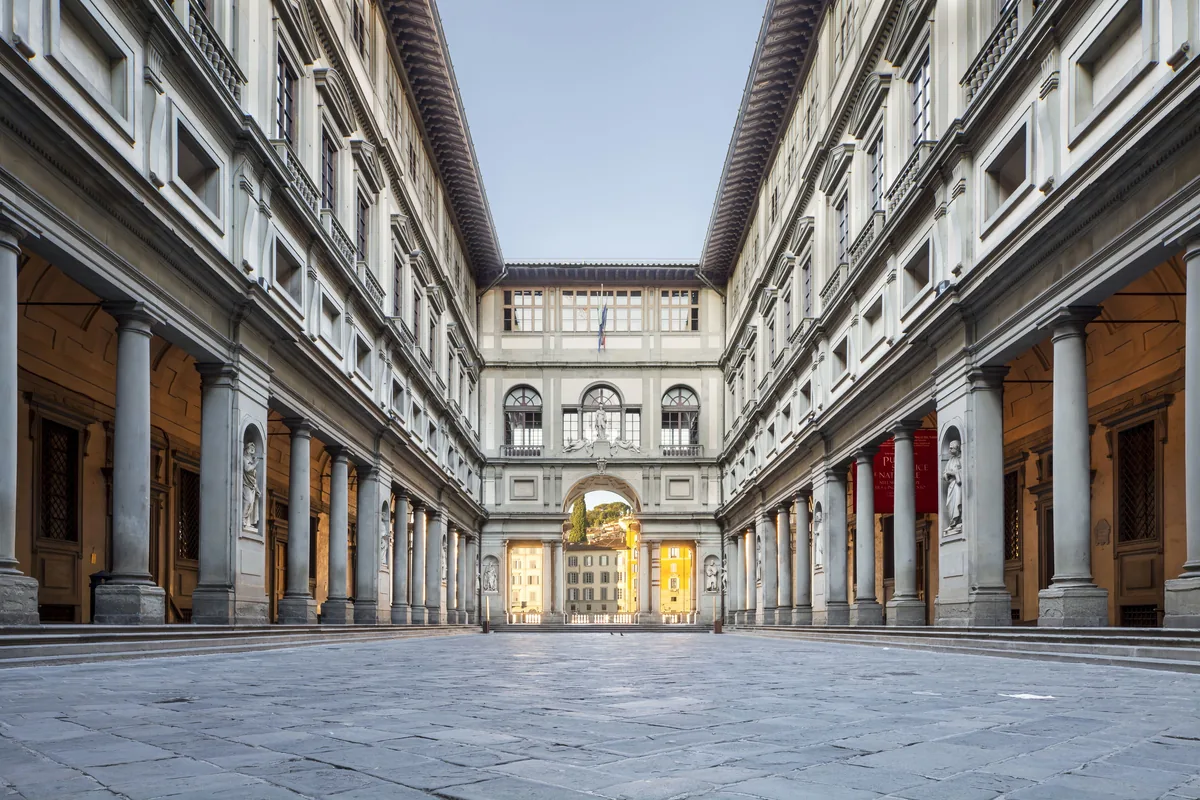
Inside this church, the letters on the wall are taller than a human being, and the dome is vast enough to hold a skyscraper, yet it feels as intimate as a whisper.
About St. Peter's Basilica
The site has been a place of pilgrimage since the 1st century, long before the grand marble facade existed. The original 'Old St. Peter's' was a crumbling barn-like structure that survived for over a millennium before the Renaissance Popes decided to replace it with something that reflected Rome's renewed glory. During the 16th century, the project became a revolving door for the era's greatest minds, each leaving a distinct mark. Bernini’s later addition of the Baldacchino used bronze stripped from the Pantheon, a controversial move that linked the new Christian capital with the pagan glory of the past.
What St. Peter's Basilica actually is
Massive gilded letters circle the base of a dome so high it seems to contain its own weather system. St. Peter's Basilica is the epicenter of the Catholic world, a building of such immense proportions that it recalibrates your sense of space. Within, the space is cool and smells of beeswax, marble dust, and the faint, sweet trace of incense. The walk across a sea of polished polychrome marble, noticing that the letters in the frieze are actually six feet tall, though they look small from the floor. The light is filtered through high windows, creating dramatic shafts of gold that illuminate the bronze canopy of the Baldacchino. It is a monument to the intersection of faith, art, and the sheer political will of the papacy.
“Massive gilded letters circle the base of a dome so high it seems to contain its own weather system.”
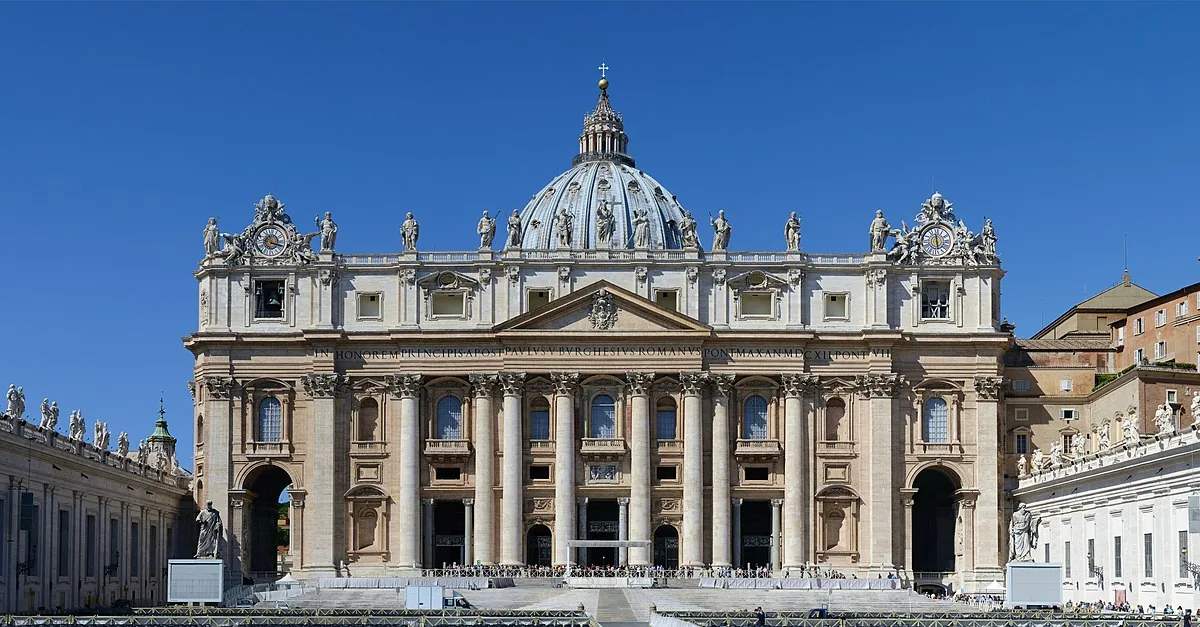
St. Peter's Basilica, Italy
current basilica began, 1506
Construction of the current basilica began in 1506 on the site of a 4th-century church built by Emperor Constantine. It took 120 years and the genius of Bramante, Michelangelo, and Bernini to complete. The building marks the purported burial site of St. Peter, the first Pope, whose tomb lies directly beneath the main altar. Michelangelo was seventy-one when he took over as lead architect, designing the massive dome that would become the blueprint for capitals and cathedrals worldwide. The funding of this project through the sale of indulgences famously triggered the Protestant Reformation, making the basilica a catalyst for one of the greatest shifts in European history.
Approaching through Bernini’s curving colonnade in St.
Approaching through Bernini’s curving colonnade in St. Peter’s Square, The architectural embrace of the 'arms of the church.' The immediate hush crossing the threshold into the nave, where the scale makes the crowds of thousands seem like tiny dots. The cold, smooth surface of Michelangelo’s 'Pietà' behind its protective glass, a moment of intimate sorrow in a room of grand triumphs. Audible here of a choir practicing in a side chapel can travel hundreds of feet through the perfect acoustics. The most exhilarating moment is the climb to the top of the dome; after squeezing through narrow, slanting staircases, you emerge to a panoramic view of Rome that stretches to the Alban Hills.
Location and access
The basilica is located in Vatican City, easily reached via the Ottaviano metro station. Entry is free, but the security line in the piazza can take several hours, especially on Wednesday mornings when the Pope holds his general audience. Dress codes are strictly enforced, no bare shoulders or knees, and guards will turn away anyone not compliant. For those wishing to see the excavations of the ancient necropolis (the Scavi) below the church, tickets must be requested months in advance through the Ufficio Scavi. Arriving at 7:00 AM when the doors first open is the only way to experience the space without the overwhelming press of modern tourism.
“The basilica is located in Vatican City, easily reached via the Ottaviano metro station.”
The Experience
The light inside St. Peter’s has a thick, golden quality that seems to slow time down. The worn foot of the bronze statue of St. Peter, polished smooth by the touch of millions of pilgrims over the centuries. Part of the immense volume of the air around you, a physical pressure that makes you feel both insignificant and elevated. Standing beneath the dome, you notice the blue and gold mosaics that look like paintings from below but are actually massive stone compositions. It is a place that successfully uses scale to provoke a sense of the divine.
Why It Matters
St. Peter’s is the supreme achievement of the High Renaissance and Baroque periods and the largest church in the world by internal volume. It is a museum of the highest order, housing works by Michelangelo, Bernini, and Canova. Culturally, it remains the spiritual home for over a billion people and the most recognized symbol of the papacy.
Why Visit
The point is that your brain cannot process the scale of this place through photos alone. You need to stand next to one of the giant cherubs, which turn out to be larger than you are, to understand the audacity of the men who built it. It is the ultimate a product of what human beings can achieve when they are motivated by a mix of deep faith and monumental ego.
Insider Tips
- 1
The line for the dome climb is separate from the main entry; do this first to avoid the worst of the midday heat on the roof.
- 2
Look for the red porphyry disc near the entrance, which marks the spot where Charlemagne was crowned Holy Roman Emperor in 800 AD.
- 3
Visit the Treasury Museum (Tesoro) to see the ancient papal tiaras and the stunning 'Crux Vaticana' from the 6th century.
- 4
If the main security line is too long, consider visiting the Vatican Museums first and using the 'secret' door from the Sistine Chapel, though this is officially for guided groups only.
- 5
Attend the 5:00 PM Vespers on a weekday to hear the acoustics of the basilica used for their original musical purpose.