The architect of this glass-and-iron 'drawing room' fell to his death from the roof just twenty-four hours before the grand opening he had spent twelve years preparing for.
About Galleria Vittorio Emanuele II
The gallery was a bold statement of the Belle Époque, reflecting a time when European cities were being transformed by the industrial revolution. Its iron-and-glass structure was one of the largest of its kind in the world, paving the way for the modern shopping mall. However, unlike a mall, the Galleria was designed with the aesthetic standards of a palace, featuring allegorical mosaics representing Europe, America, Africa, and Asia. It has seen the rise and fall of fascism, the birth of the Italian fashion industry, and remains the primary stage for Milanese public life, from political protests to Christmas tree lighting ceremonies.
The short version
Massive glass vaults soar above a floor of intricate mosaic, creating a space like a cathedral built for the worship of commerce and style. The Galleria Vittorio Emanuele II is Milan’s drawing room, a grand four-story passage that connects the Piazza del Duomo to the Teatro alla Scala. The room here smells of expensive leather, roasted espresso, and the faint, metallic scent of rain on iron. The walk through a cross-shaped arcade where the walls are decorated with stucco caryatids and the shopfronts are framed in dark, polished wood. The sound is a polished cacophony of clicking heels on marble and the low, elegant murmur of the Milanese elite taking their afternoon aperitivo.
“Massive glass vaults soar above a floor of intricate mosaic, creating a space like a cathedral built for the worship of commerce and style.”
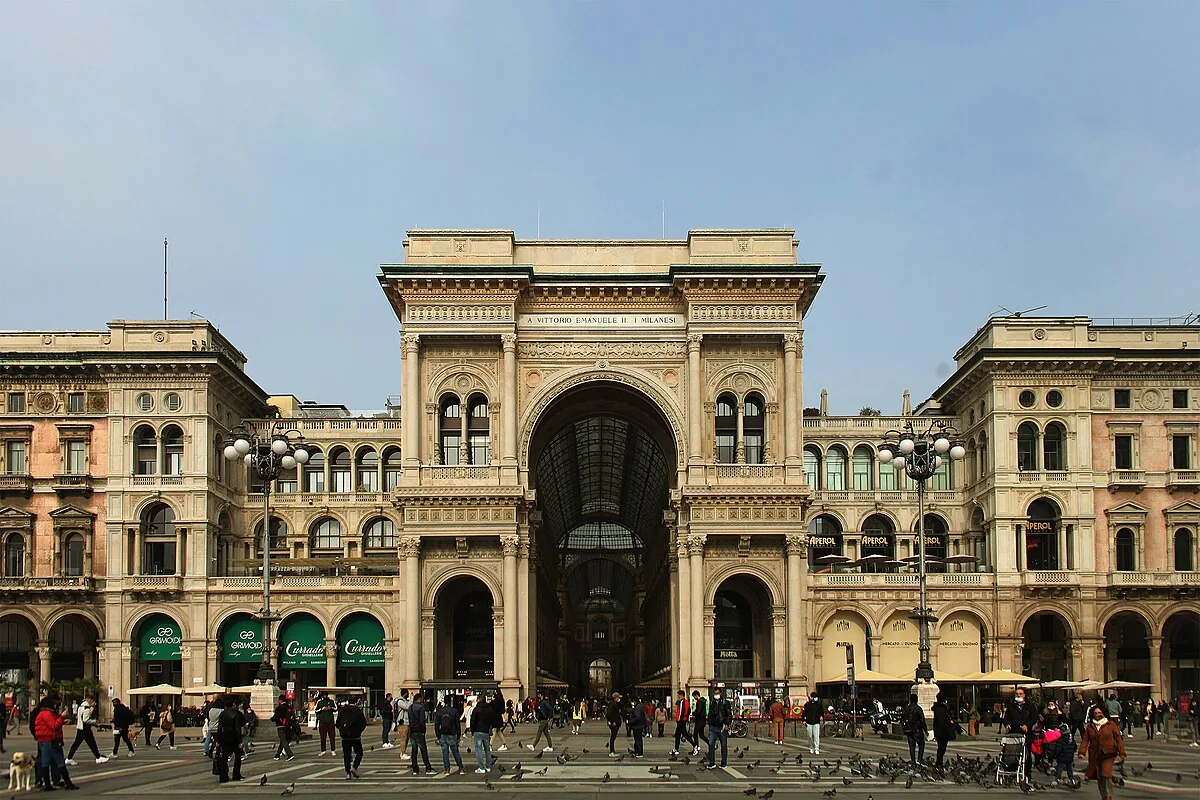
Galleria Vittorio Emanuele II, Italy
design the gallery, 1861
Architect Giuseppe Mengoni won a competition to design the gallery in 1861, just as Italy was becoming a unified nation. The project was meant to symbolize the modernization and power of the new Italian state, named after its first king. Construction began in 1865 and was a feat of 19th-century engineering, utilizing vast amounts of iron and glass that were cutting-edge materials at the time. Tragic irony struck the project when Mengoni fell to his death from the top of the scaffolding just one day before the gallery was inaugurated in 1877. Despite this grim beginning, the gallery immediately became the social heart of Milan, surviving the Allied bombings of 1943 to remain the city’s most prestigious address.
The gallery is the literal center of Milan
The gallery is the literal center of Milan, situated between the Duomo and the Scala. The Duomo metro station is the primary access point for Lines 1 and 3. Entry is free and open twenty-four hours a day, making it a favorite shortcut for locals late at night when the shops are closed and the architecture feels even more imposing. To experience the gallery like a true Milanese, arrive around 11:00 AM for a coffee at Camparino in Galleria, one of the historic bars where the ritual of the aperitivo was born. For a different perspective, you can book a ticket for the 'Highline Galleria' to walk along the external rooftops and look down into the glass vaults.
Visiting Galleria Vittorio Emanuele II
Standing in the central 'Ottagono' beneath the 150-foot glass dome, The immense verticality of the space. The mosaics on the floor depicting the coats of arms of the four capitals of Italy: Rome, Florence, Turin, and Milan. The sound of the city outside is replaced by a dignified, echoing acoustics that makes even a casual conversation sound important. A smooth, worn surface of the marble under your shoes and notice the precise detail in the mosaic of the bull, where a tradition of spinning on one’s heel for good luck has worn a deep hole into the stone. The light shifts constantly throughout the day, as clouds move across the glass ceiling, casting long, geometric shadows across the luxury displays of Prada and Louis Vuitton.
The Experience
Inside the Galleria feels refined and surprisingly still, despite the thousands of people passing through. First, the smell of panettone from the historic Marchesi pastry shop and the way the glass ceiling turns a deep, moody blue at twilight. You get a weight of the city's history in the dark wood and brass of the storefronts, which are legally required to have gold lettering on a black background to maintain visual harmony. The most elegant moment is finding a seat at a café table in the evening, watching the light from the interior lamps reflect off the polished marble floor. It is a place that insists you stand a little taller and walk a little slower.
Why It Matters
Galleria Vittorio Emanuele II is one of the oldest and most beautiful enclosed shopping malls in the world and a masterpiece of 19th-century architecture. It represents the birth of the Italian nation and Milan’s role as its commercial and fashion capital. Historically, it is the link between the religious power of the Duomo and the cultural power of the Scala opera house.
Why Visit
The thing is that this is the only place in the world where a shopping trip feels like a religious experience. The architecture is so grand that the luxury goods on display become secondary to the glass dome above them. You come here to participate in a 150-year-old tradition of 'fare la passeggiata', the art of seeing and being seen in the centre of the world's most stylish city.
Insider Tips
- 1
Spin three times on your right heel on the testicles of the bull mosaic in the center for good luck; it's the only time you'll see a crowd gathered around a hole in the floor.
- 2
Go to the rooftop walk (Highline Galleria) at sunset for a view of the Duomo spires that feels close enough to touch.
- 3
The coffee is cheaper if you stand at the bar at Camparino rather than taking a table in the center of the gallery.
- 4
Look up at the lunettes above the shops to see the mosaics representing the four continents; they are often overlooked by shoppers.
- 5
Visit after midnight; the gallery stays open and the lack of crowds allows the monumental scale of the ironwork to truly shine.