Deep in the Sardinian interior, there is a limestone canyon so narrow and vertical that locals believe the stars can be seen from its floor even at high noon.
About Gola di Gorropu
Geologically, the Supramonte is a massive karst plateau, and Gorropu is its most dramatic expression. The canyon floor was once a secret path used by bandits and rebels who hid from the central authorities in the inaccessible caves that pockmark the walls. It wasn't until the 1980s that the gorge became a destination for hikers and climbers, put on the map by the opening of world-class multi-pitch climbing routes. Despite its popularity, the gorge remains a fragile ecosystem, home to the 'Gorgonia', a rare aquatic plant, and the Sardinian brook salamander, both of which rely on the pristine, oxygen-rich water of the river pools.
Gola di Gorropu in Italy
Giant white boulders of limestone choke a narrow canyon floor where walls rise vertically for fifteen hundred feet, blocking out the sun and creating a microclimate of eerie, crystalline silence. The Gola di Gorropu is the deepest gorge in Europe, a geological wound in the Supramonte mountains of eastern Sardinia. Here, The air is noticeably colder than the surrounding scrubland, smelling of damp rock, oleander, and the fresh, cold water of the Flumineddu river. You scramble over stones that have been polished smooth by millennia of winter floods, feeling the scale of the earth’s power in every step. It is a place of primitive beauty, where the sky is reduced to a thin blue ribbon and the only residents are golden eagles and rare Mediterranean trout.
“Giant white boulders of limestone choke a narrow canyon floor where walls rise vertically for fifteen hundred feet, blocking out the sun and creating a microclimate of eerie, crystalline silence.”
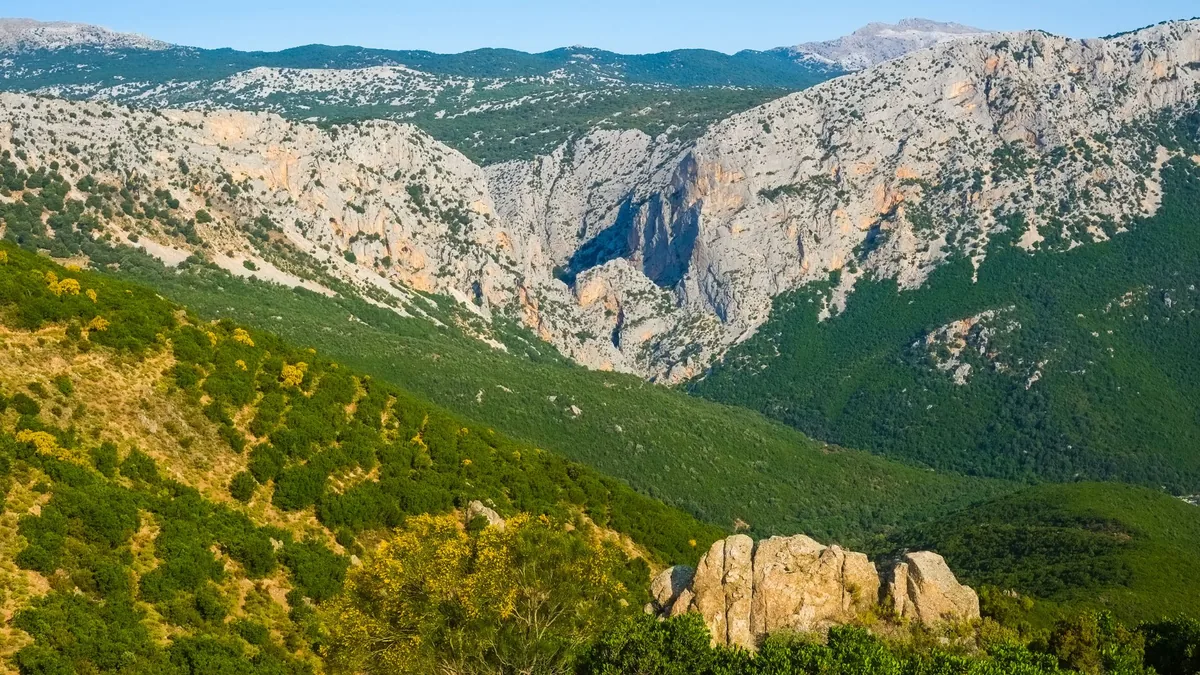
Gola di Gorropu, Italy
The gorge was carved over millions of years
The gorge was carved over millions of years by the Flumineddu river, which still flows through the canyon during the wet winter months. Local Sardinian legends are thick with tales of the 'Sa Gultia', a giant bird that supposedly lives in the highest crevices, and stories of people who lose their souls if they enter the gorge after dark. For the shepherds of the Barbagia region, Gorropu was a place of strategic refuge and a natural barrier that protected their traditional way of life from outsiders for centuries. The area remains one of the wildest and least inhabited parts of Italy, a limestone fortress that has resisted the modernization seen on the Sardinian coasts.
Starting the descent from the Passo Silana, you
Starting the descent from the Passo Silana, the immediate strain on your legs as the trail drops steeply through forests of ancient holm oak. Immediately, the way the light disappears entering the mouth of the canyon, replaced by a soft, reflected glow from the white limestone walls. The audio element is defined by the echo of dripping water and the occasional sharp crack of a stone shifting underfoot. The grit of the river sand in your shoes and notice the massive trunks of trees that have been swept into the gorge by past floods, now looking like bleached bones. The most intense moment occurs at the 'Hotel Supramonte' section, where the walls are so close together and so high that There is a primal sense of claustrophobia and awe.
Location and access
The gorge is located in the province of Nuoro, accessible via a long, winding road to the Passo Silana on the SS125 highway. There are two main ways to visit: a strenuous five-hour round-trip hike from the pass, or a flatter but longer walk from the Sa Barva bridge near Dorgali. For those who want to experience the gorge without the exhausting hike back up, local companies offer a jeep shuttle service from the canyon floor back to the main road. The gorge itself is divided into color-coded zones; the green and yellow zones are accessible to most hikers, but the red zone requires technical climbing gear and a professional guide. Arriving in the early morning is essential, as the shadows in the canyon deepen significantly by mid-afternoon.
“The gorge is located in the province of Nuoro, accessible via a long, winding road to the Passo Silana on the SS125 highway.”
The Experience
Inside Gorropu has a heavy, mineral quality that feels like it belongs to another era. First, the way the sound of your own voice changes as the walls tighten around you, becoming flatter and more immediate. A physical effort of navigating the boulders, which requires a kind of slow-motion dance over the white stone. The hum of the wind whistling through the high cracks sounds like a distant choir. What sticks with you is dipping your hands into a 'tinazzo', a natural rock pool, and feeling the bone-chilling temperature of the water that has never seen the sun. It is a place that demands respect and a quiet footfall.
Why It Matters
Gola di Gorropu is one of the most spectacular natural landmarks in the Mediterranean and a key site for the study of karst geology. It represents the wild, unyielding heart of Sardinia and preserves a prehistoric landscape that has vanished from most of Europe. Culturally, it is a site of deep mythic resonance for the people of the Barbagia, symbolizing the island's isolation and strength.
Why Visit
Visit Gorropu because it is the antithesis of the Sardinian beach holiday. It is a place of raw stone and vertical drama that will challenge your body and reset your sense of scale. You come here to find a type of silence that is increasingly rare in Italy, and to stand at the bottom of a fifteen-hundred-foot wall of white rock that makes everything else feel insignificant.
Insider Tips
- 1
Wear hiking boots with excellent grip; the 'white' boulders are beautifully smooth but can be treacherously slippery even when dry.
- 2
Bring twice the amount of water you think you need if you are hiking back up to Passo Silana; the ascent is brutal in the afternoon sun.
- 3
Look for the 'Sardinian Trout' in the deeper pools; they are a unique, protected species that only survives in this specific environment.
- 4
The entry fee at the mouth of the canyon is small and goes toward the maintenance of the trails and the preservation of the gorge.
- 5
Pay for the jeep shuttle back up if you are not an experienced hiker; it saves you three hours of steep climbing and offers a fun, bumpy ride through the scrubland.