“A cardinal who lost the papal election built 500 fountains in his garden instead, and they all run on gravity alone with no pumps.”
About Villa d'Este
Cardinal Ippolito II d'Este began the villa and gardens in 1560 after failing to be elected pope. The architect Pirro Ligorio engineered the gravity-fed water system from the Aniene River. The Organ Fountain was completed around 1611. The gardens influenced Baroque garden design across Europe, including Versailles. Villa d'Este became a UNESCO World Heritage Site in 2001.
What Villa d'Este actually is
Villa d'Este is a 16th-century villa in Tivoli, about 30 kilometres east of Rome, famous for its gardens of terraced fountains. The property was built for Cardinal Ippolito II d'Este and contains roughly 500 fountains fed entirely by gravity from the Aniene River, making it one of the most ambitious hydraulic engineering projects of the Renaissance.
Villa d'Este is a 16th-century villa in Tivoli, about 30 kilometres east of Rome, famous for its gardens of terraced fountains.
500 Fountains Powered by Gravity
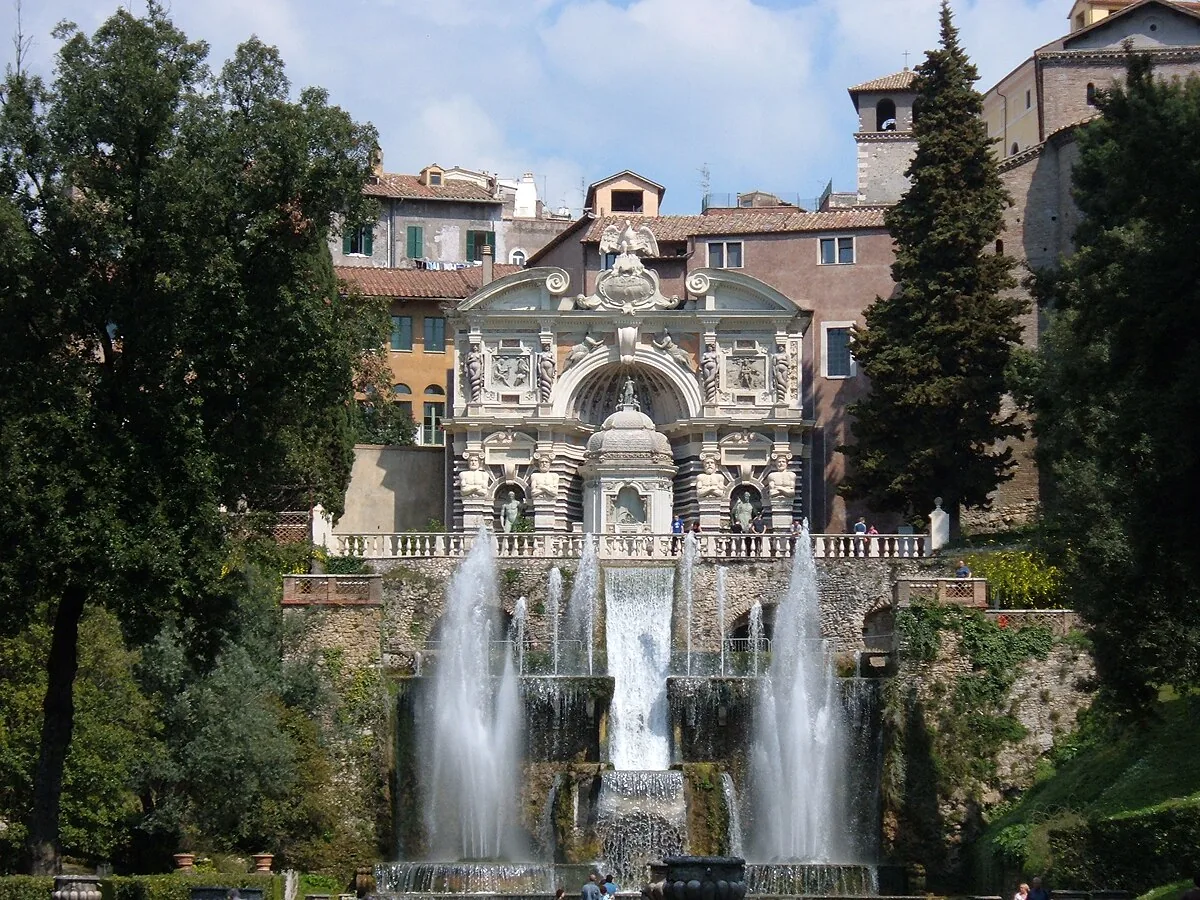
Cardinal Ippolito d'Este, disappointed at missing the papacy, channelled his ambitions into building the most spectacular garden in Italy. He hired the architect Pirro Ligorio, and between 1560 and 1572 they transformed a steep Tivoli hillside into a series of terraces connected by staircases, grottos and fountains. The water system is entirely gravity-fed: an aqueduct diverts the Aniene River into a network of channels and pipes that power every fountain without a single pump. The most famous is the Organ Fountain, which uses water pressure to push air through organ pipes and actually plays music. The Pathway of the Hundred Fountains runs the length of one terrace with a continuous line of spouts, mossy stone channels and carved reliefs. The gardens influenced fountain design across Europe and directly inspired the gardens at Versailles.
The Experience
You descend through the terraces and the sound of water builds with each level. The Organ Fountain produces actual musical notes from water-driven air. The Hundred Fountains pathway is a long, moss-covered corridor of continuous flowing water. At the bottom, the Neptune Fountain crashes into a broad pool. The gardens are lush with centuries-old cypresses and plane trees, and the combination of engineered water and grown-over stone gives the place a quality that sits between architecture and wilderness.
Why It Matters
Villa d'Este is one of the most important Renaissance gardens in the world and a landmark in the history of hydraulic engineering. Its gravity-fed fountain system was a breakthrough that influenced European garden design for centuries.
Villa d'Este is one of the most important Renaissance gardens in the world and a landmark in the history of hydraulic engineering.
Why Visit
500 gravity-powered Renaissance fountains cascading down a Tivoli hillside, including one that plays music, in a garden that inspired Versailles.
✦ Insider Tips
- 1
Walk the Hundred Fountains pathway slowly; the moss and water details reward patience.
- 2
Combine with nearby Hadrian's Villa for a full day in Tivoli.
- 3
Take the train from Rome Tiburtina; Tivoli is about 45 minutes.