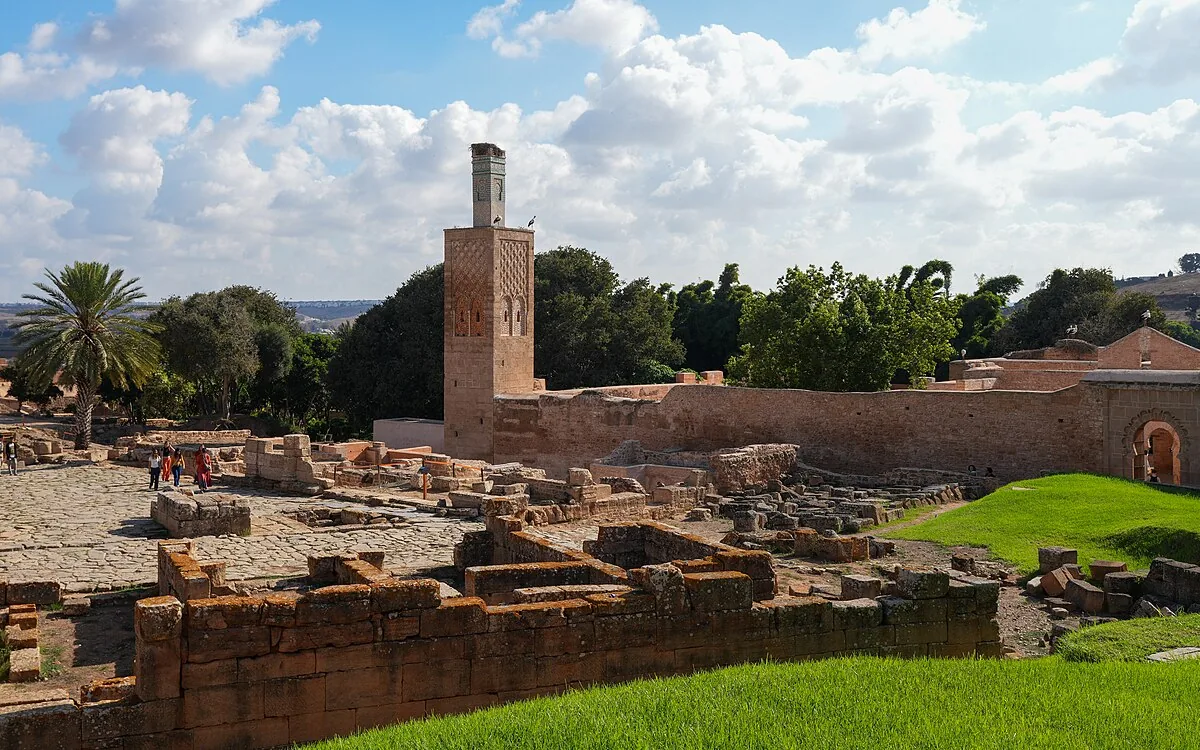
“The loudest residents of this ancient Roman capital and royal Islamic tomb are the hundreds of storks who have built a clattering city of nests on top of the ruins.”
About Chellah
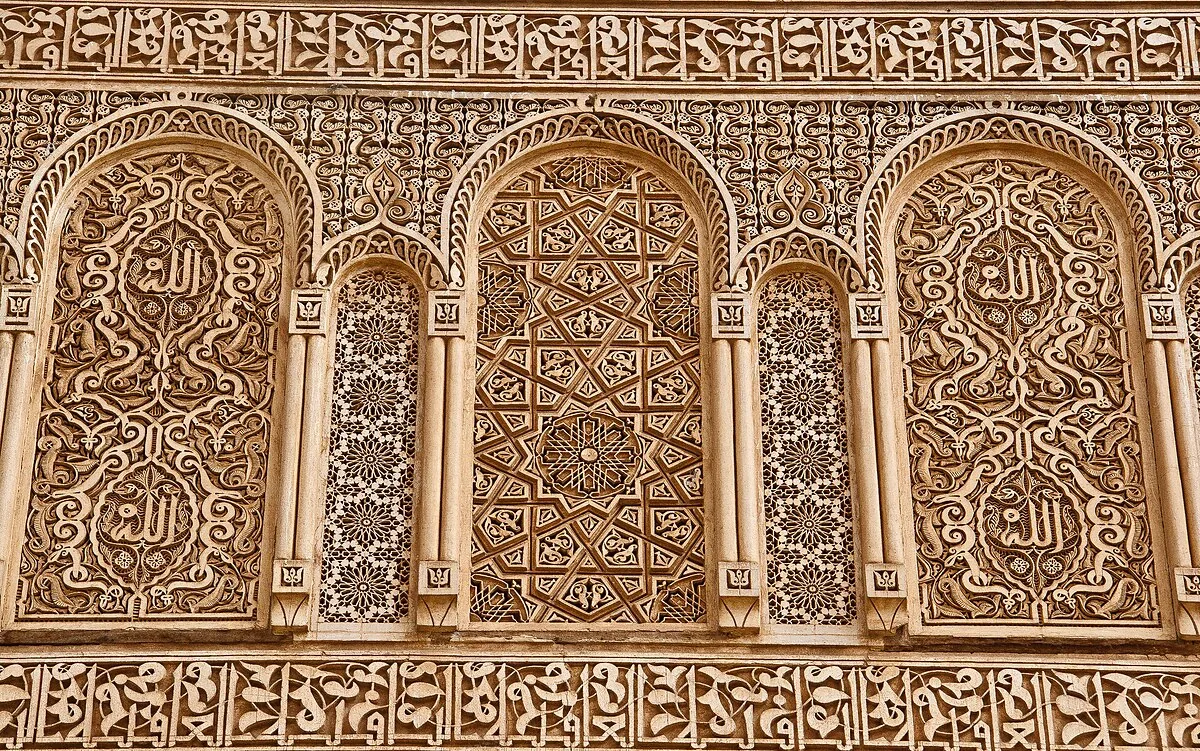
Sala Colonia was once the heart of Roman trade in the region, shipping grain and salt back to Europe. The Merenid conversion of the site into a 'khalwa' (spiritual retreat) and necropolis in 1339 transformed it into a sacred space that was largely off-limits to commoners. Sultan Abu al-Hasan’s tomb is a masterpiece of decorative stone carving, even in its ruined state. The site remained a focal point of Moroccan spirituality until the 18th century. In the early 20th century, French archaeologists began the delicate task of separating the Roman and Islamic layers, choosing to leave much of the vegetation intact to preserve the site's unique atmospheric charm. It now hosts the annual Chellah Jazz Festival, blending ancient acoustics with modern music.
Chellah
On the outskirts of Rabat, behind a set of imposing Merenid gates, lies Chellah, a place where the ruins of a Roman city and an Islamic necropolis have merged into a wild, overgrown garden. This is perhaps the most romantic site in Morocco, where nature has reclaimed the triumphs of men. Ancient Roman forums and bathhouses are now carpeted in wildflowers, while the minaret of a 14th-century mosque is a high-altitude perch for dozens of storks. Around you it smells of damp earth and blooming orange trees, and the sound of the city outside feels miles away. It is a dual-layered history lesson where you can stand on a Roman Decumanus while looking at a Sufi saint’s tomb, all while the Atlantic breeze rustles through overgrown palms and tangled vines.
On the outskirts of Rabat, behind a set of imposing Merenid gates, lies Chellah, a place where the ruins of a Roman city and an Islamic necropolis have merged into a wild, overgrown garden.
Origins
The site began as the Phoenician and later Roman port of Sala Colonia, serving as a vital naval outpost on the Bou Regreg river. By the 11th century, the Romans were long gone, and the site fell into ruin until the Merenid sultan Abu al-Hasan built a royal necropolis here in the 1300s. He surrounded the ancient Roman town with the massive, honey-colored limestone walls and defensive towers that still stand today. The necropolis became the final resting place for the sultan himself and his wife, Shams ad-Duha, a European convert to Islam. For centuries, the site was a place of pilgrimage for those seeking the blessings of the local saints buried within the sanctuary. Like Volubilis, it was severely damaged by the 1755 Lisbon earthquake, after which it was left to the storks and the creeping greenery that now defines its character.
Walking down the paved path into the valley
Walking down the paved path into the valley, The temperature drop as the dense vegetation of the necropolis takes over. Audible: Chellah is unmistakable: the constant, clattering 'clack-clack-clack' of storks nesting on every available ruin and minaret. The texture of the crumbled Roman walls, which are pitted and weathered, providing homes for small lizards and succulents. Something like a sense of melancholy in the Merenid ruins, where the roofless mosque allows the sky to become the ceiling. People tend to miss the sacred eel pond, where local women still come to feed hard-boiled eggs to eels believed to possess the power to grant fertility. What registers is the contrast between the rigid, geometric Roman foundations and the fluid, organic decay of the medieval Islamic structures.
Chellah is located just a few
Chellah is located just a few kilometers from the center of Rabat and is easily accessible by a short 'petit taxi' ride from the Medina or the train station. The site is open daily, but visiting in the late afternoon provides the best photographic light as the sun hits the orange-tinted limestone. There is a small entrance fee, and while the paths are generally well-maintained, some of the Roman sections involve uneven ground and overgrown grass. It is a popular spot for local families on weekends, so a weekday morning visit offers the most solitude.
Chellah is located just a few kilometers from the center of Rabat and is easily accessible by a short 'petit taxi' ride from the Medina or the train station.
The Experience
What draws you in is the way the ivy has strangled the Roman columns, creating a strange, living architecture. Audible: the wind through the tall grasses adds a ghostly layer to the quiet of the tombs. The moisture of the river valley, which makes the greenery unusually lush for Morocco. Most visitors miss the small Roman forum located at the bottom of the slope, often distracted by the more visible minaret. What stays with you is watching a stork glide silently from the top of the mosque to the river, a bridge between the ruined past and the living present.
Why It Matters
Chellah is a unique archaeological hybrid that proves the layered nature of Moroccan history. It is one of the few places in the world where Roman and Islamic ruins coexist so intimately and beautifully. Culturally, it remains a site of folk-religious practice, centered around the eel pond, showing how ancient myths survive long after the empires that nurtured them have fallen.
Why Visit
Visit Chellah to see the most beautiful version of a ruin. While Volubilis is grand and Rabat's medina is busy, Chellah is a secret garden that feels discovered rather than displayed. It is the best place in the capital to escape the noise and see the wild, poetic side of Morocco's history.
✦ Insider Tips
- 1
Bring a few dirhams to tip the 'eel guardian' if you want to see the sacred eels emerge from the dark crevices of the pond.
- 2
Walk to the very back of the site to find the Roman bathhouse; it's often much quieter than the necropolis area.
- 3
Check the schedule for the Jazz au Chellah festival if you are visiting in September; seeing a concert among the illuminated ruins is memorable.
- 4
Don't wear your best shoes, as the lower paths near the river can be muddy even in the dry season.
- 5
Look for the tomb of the 'Black Sultan' Abu al-Hasan; the stone carvings there are some of the most intricate in the country.