“Saved from demolition by a legendary fashion designer, this garden was built around a shade of blue so intense it was officially trademarked by its creator.”
About Jardin Majorelle
Jacques Majorelle originally arrived in Morocco to recover from heart disease, but he stayed for the light. His garden became his life's work, a botanical collection that nearly bankrupt him due to its maintenance costs. After Saint Laurent and Bergé took over, they not only saved the flora but also turned the space into a memorial for their own love of Morocco. Upon his death in 2008, Saint Laurent’s ashes were scattered in the rose garden, and a Roman pillar was erected as a quiet monument to his influence. The garden remains one of the most visited sites in the country, managed by a foundation that ensures the blue remains vivid and the cacti stay tall.
What Jardin Majorelle actually is
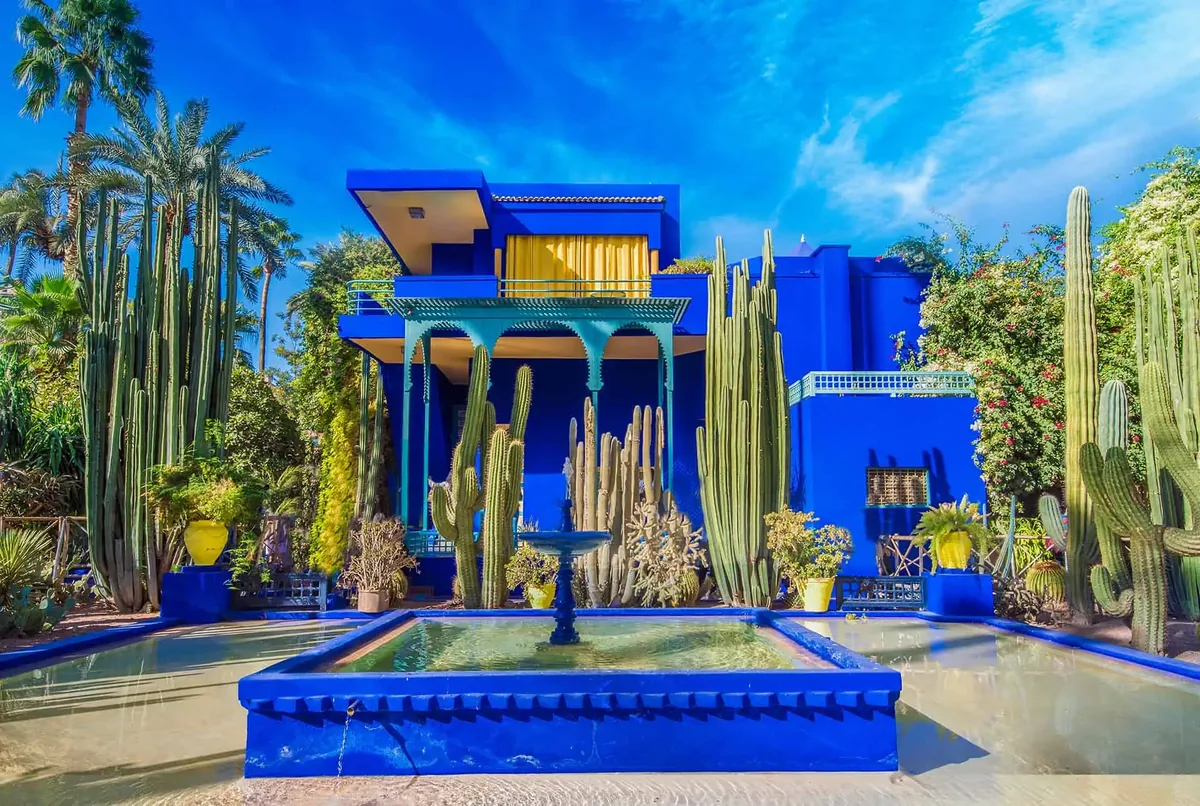
Deep in the dusty, terracotta-hued suburbs of Marrakech, Jardin Majorelle emerges like a cool, electric-blue mirage. This two-and-a-half-acre botanical garden is an architectural poem composed of exotic plants, still water, and a specific shade of cobalt that now bears the creator's name. Giant cacti rise like sculptures against the primary yellow of the flower pots, while the sound of the city's frantic traffic is replaced by the soft splash of fountains and the rustle of bamboo. The garden is a study in controlled contrast, where the wild silhouettes of desert flora are contained within a rigid, Cubist landscape. It is an aesthetic sanctuary, a place where the overwhelming sensory load of the nearby Medina is neutralized by the deliberate calm of a master painter’s vision.
Deep in the dusty, terracotta-hued suburbs of Marrakech, Jardin Majorelle emerges like a cool, electric-blue mirage.
forty years, beginning, 1923
French painter Jacques Majorelle spent forty years, beginning in 1923, meticulously crafting this private Eden. He filled it with rare botanical specimens from five continents, creating a living work of art centered around his Art Deco studio. The iconic 'Majorelle Blue' that defines the garden was inspired by the intense colors of Berber clothing and the tiles he saw throughout Morocco. After Majorelle’s death in 1962, the garden fell into a state of decay and was slated for demolition to make way for a hotel complex. In 1980, fashion designer Yves Saint Laurent and his partner Pierre Bergé purchased the property to save it from the wrecking ball. They restored the gardens to their former glory and transformed the studio into a museum dedicated to Berber culture, cementing the site’s status as a crossroads of French fashion and Moroccan heritage.
Walking along the shaded paths,
Walking along the shaded paths, The way the intense Moroccan sun is filtered through layers of palms and giant succulents, casting long, geometric shadows. The sound of the garden is surprisingly avian; dozens of bird species have made this their permanent home, their songs echoing off the blue plaster walls. The texture of the lily ponds, where the water is so still it acts as a perfect mirror for the Art Deco architecture. There is a distinct drop in temperature moving deeper into the bamboo grove, a welcome relief from the dry heat of Marrakech. People often miss the subtle sound of the wind rattling through the desert grasses, a soft percussion that underscores the visual vibrancy. What draws the eye is the scent of water on hot stone and the faint, sweet trail of night-blooming jasmine that lingers in the corners of the courtyard.
Located in the Guéliz district, the garden
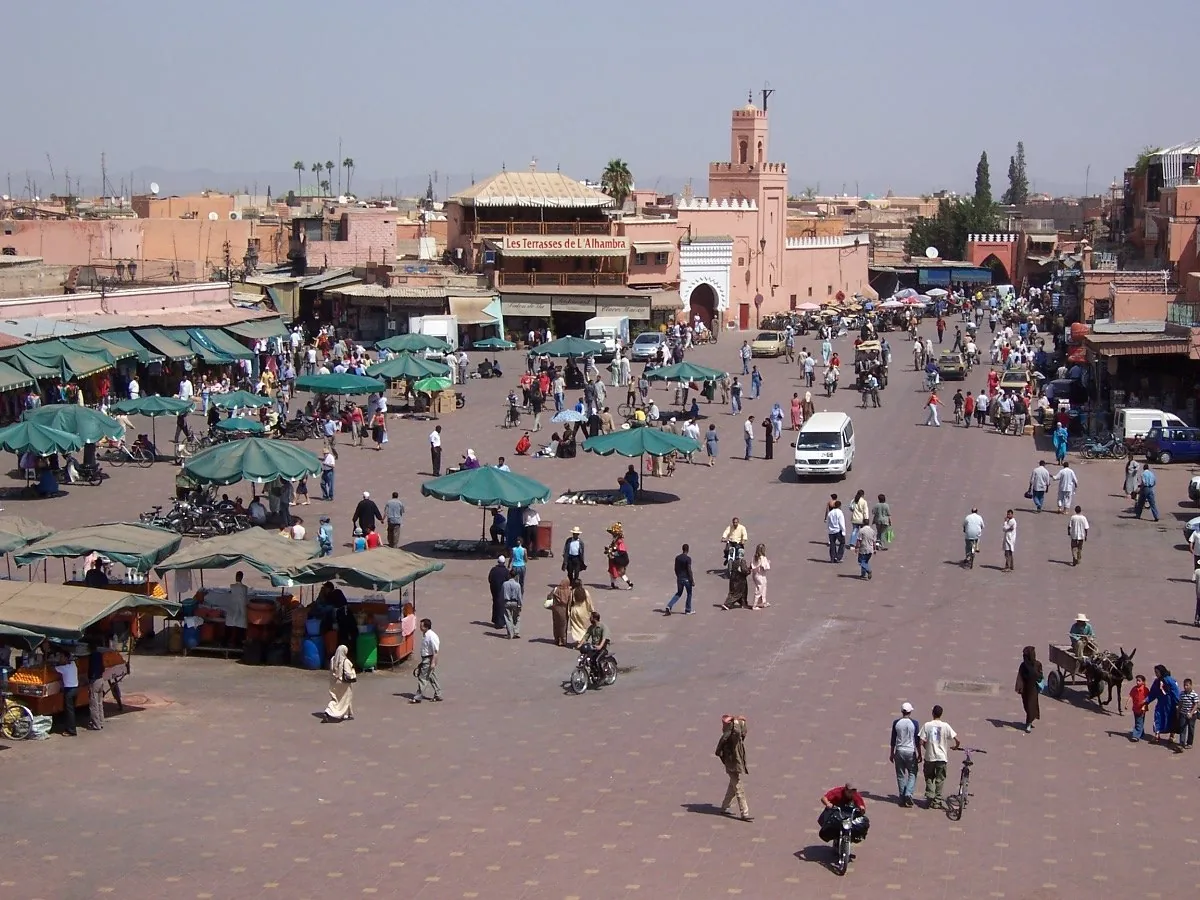
Located in the Guéliz district, the garden is a short 'petit taxi' ride from the Jemaa el-Fnaa or a twenty-minute walk from the city walls. Because of its immense popularity, the site now operates on a strict online-only booking system, and entry is timed to prevent overcrowding. Arriving via a horse-drawn carriage (calèche) adds a layer of old-world charm to the journey, though the walk through the New Town offers a glimpse into the more modern, sophisticated side of Marrakech life away from the souks.
Located in the Guéliz district, the garden is a short 'petit taxi' ride from the Jemaa el-Fnaa or a twenty-minute walk from the city walls.
The Experience
What grabs you is the way the yellow and orange accents of the buildings pop against the deep blue, creating a visual vibration that feels almost digital. Audible: the bulbuls in the trees is a constant, cheery presence that makes the garden feel alive rather than just curated. Something of smooth, cool surface of the ceramic pots as you navigate the narrow paths. Most visitors miss the small, inscribed plaques that identify the rare desert plants collected during Majorelle’s travels. The moment that stays with you is standing by the long reflecting pool at the garden's center, where the sky and the architecture merge into a single, seamless blue dream.
Why It Matters
Jardin Majorelle is a landmark of 20th-century landscape design and a vital preservation of the Berber aesthetic seen through a Western lens. It represents the deep cultural link between the French artistic community and the landscape of North Africa. Beyond its beauty, it houses the Pierre Bergé Museum of Berber Arts, which contains one of the most important collections of indigenous jewelry and textiles in the world.
Why Visit
Visit Jardin Majorelle to understand how a single color can define a place. It is the best example of 'quiet' Marrakech, offering a visual and mental palate cleanser that is essential for any traveler navigating the chaos of the city. It’s where fashion, botany, and history meet in a perfectly composed frame.
✦ Insider Tips
- 1
Book your tickets online at least three days in advance, as they often sell out and no tickets are sold at the gate.
- 2
Arrive at the very first time slot of the morning to experience the garden's silence before the mid-morning rush of influencers and tour groups.
- 3
Spend extra time in the Berber Museum inside the old studio; the collection of tribal jewelry is arguably more impressive than the garden itself.
- 4
Wear neutral colors if you plan on taking photos; anything too bright will clash violently with the garden's primary color palette.
- 5
The on-site cafe is expensive but offers one of the most peaceful spots in Marrakech for a traditional mint tea.