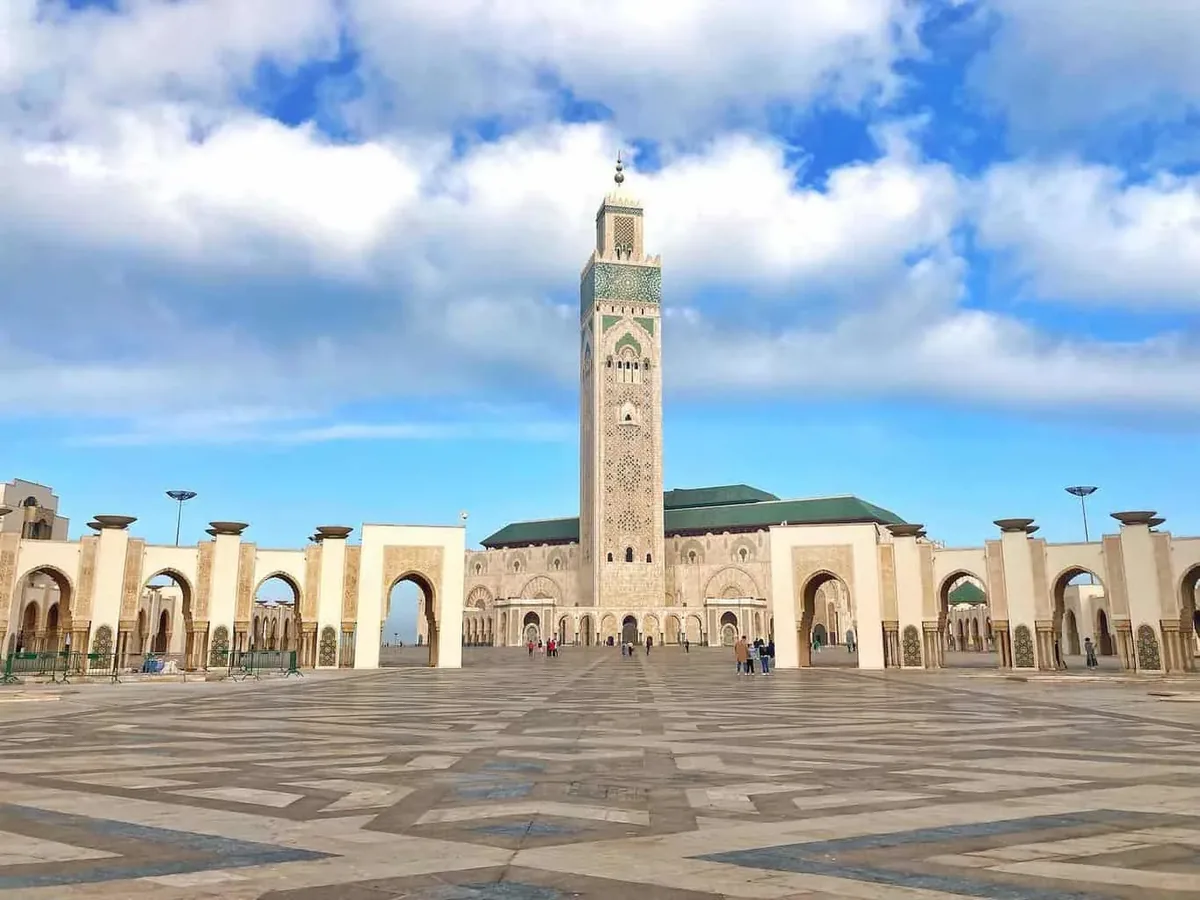
A laser beam fires from the top of the world's tallest minaret, cutting through the Atlantic mist to point the way across thousands of miles of desert toward Mecca.
About Hassan II Mosque
Construction of the Hassan II Mosque was an unprecedented feat of engineering, requiring a massive platform to be reclaimed from the ocean to fulfill the King's vision. Michel Pinseau, the French architect, blended traditional Moorish aesthetics with modern materials like titanium and reinforced concrete to ensure the building could survive the corrosive salt air. The mosque's location was chosen specifically to revitalize the northern tip of Casablanca, a city that had long been seen as purely industrial compared to the imperial beauty of Fes or Marrakech. Since its opening, it has functioned not just as a house of worship but as a cultural center, housing a library, a museum of Moroccan history, and a traditional madrasa. It is a defiant statement of Morocco's ability to innovate while remaining deeply rooted in the artistic traditions of the Maghreb.
About Hassan II Mosque
A colossal monument of cream-colored marble and turquoise tilework sits anchored to the Atlantic coastline, its minaret piercing the fog of Casablanca like a spiritual lighthouse. Hassan II Mosque is one of the few active religious sites in Morocco open to non-Muslims, offering a rare glimpse into the scale of modern Islamic craftsmanship. The environment around the plaza is perpetually cooled by the ocean, smelling of salt and damp stone. The walk across a vast esplanade that can hold eighty thousand worshippers. Notice how the 210-meter minaret, the tallest of its kind, dominates the horizon. You catch is a imposing duality: the crashing of heavy Atlantic swells against the mosque's foundation and the melodic, echoing call to prayer that radiates across the city’s industrial rooftops.
Background
King Hassan II commissioned this project in 1980 with the specific intent of creating a landmark that would reflect the verse from the Quran stating that 'the throne of God was built upon water.' Over ten thousand master artisans and craftsmen from across the kingdom spent seven years carving cedar wood from the Middle Atlas, hand-placing millions of zellij tiles, and polishing marble from the quarries of Agadir. Completed in 1993, the mosque is a marvel of late 20th-century technology, featuring a retractable roof that can open the prayer hall to the sky in minutes and a laser beam atop the minaret that points toward Mecca. It was funded almost entirely through public subscription, with nearly every Moroccan citizen contributing to the construction as a matter of national pride.
Stepping into the prayer hall,
Stepping into the prayer hall, the sudden, cavernous hush of a room designed to hold twenty-five thousand people. What registers is the way the light filters through the enormous Murano glass chandeliers, reflecting off the heated granite floors. Overhead, the space is a soft, airy reverb where even a footstep feels amplified against the intricate stucco walls. There is a transition from the sun-drenched exterior to the cool, dim majesty of the interior, where the smell of beeswax and incense lingers in the rafters. The opening note is the glass floor section in the basement, which allows you to look directly down at the churning ocean beneath the structure. The most striking moment is standing in the ablution room, where dozens of marble fountains shaped like lotus flowers sit under a forest of vaulted arches, creating a subterranean world of geometric perfection. The mosque is situated at the western end of Casablanca’s Corniche, easily accessible by a short taxi ride from the Casa Port train station. Visitors must join a guided tour to enter the interior, with departures scheduled several times a day outside of prayer hours. Tickets are sold at a dedicated museum and box office located at the edge of the complex. Arriving for the first morning tour often provides the clearest light for photography, as the coastal mist usually burns off by 10:00 AM. After the tour, a walk along the sea wall offers the best perspective of the building's daring position, where it appears to be floating on the waves during high tide.
The Experience
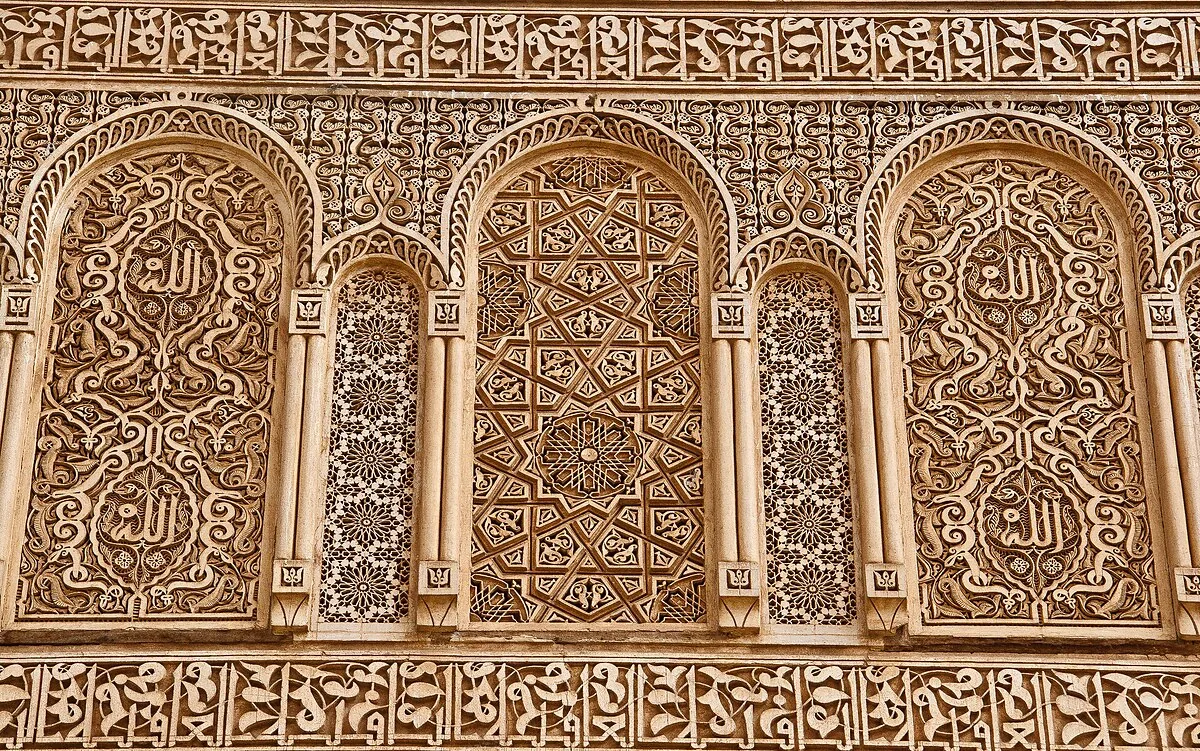
The feel is one of overwhelming, vertical grandeur. The first thing you register is the intricate patterns of the 'zellij' mosaics, where every tiny piece of hand-cut tile contributes to a sprawling, mathematical garden of color. Part of the scale of the cedar-wood doors, so massive they require electric motors to swing open for the King. The sound of the ocean is a constant, rhythmic pulse that you can feel through the floor, grounding the ethereal architecture in the raw power of nature. From the start, the contrast between the polished, modern surfaces and the ancient techniques of hand-carved plasterwork that cover every inch of the upper walls. The most striking detail is the sheer volume of space above your head, a hollow monument that makes even the largest crowds feel small and hushed. It is a place where engineering meets the divine.
Why It Matters
Hassan II Mosque is the largest mosque in Africa and a global masterpiece of contemporary Islamic architecture. It represents the pinnacle of Moroccan craftsmanship and the country's religious identity in the modern era. Historically, it is the most significant architectural project undertaken in Morocco since the medieval period, serving as a symbol of the nation's 20th-century revival.
Why Visit
Go because you need to see what ten thousand artists can achieve when given a decade and a blank canvas of marble. While older mosques offer history, Hassan II offers a sense of living, breathing ambition. You come here to stand on a glass floor over the Atlantic and to see the most complex geometry on earth executed on a scale that defies the imagination. It is the only building in Casablanca that makes the city's chaos disappear.
✦ Photo Gallery
Best Season
🌤 September and October provide the most consistent blue skies, avoiding the heavy Atlantic fogs of winter and the humid heat of mid-summer.
Quick Facts
Best time to visit
September and October provide the most consistent blue skies, avoiding the heavy Atlantic fogs of winter and the humid heat of mid-summer.
Getting there
In Casablanca, Morocco; reach Casablanca first, then continue to the site.
What's nearby
Chellah is also close by.
Location
Casablanca, Morocco
Type
attraction
Coordinates
33.6085°, -7.6327°
Insider Tips
- 1
Check the prayer schedule online before visiting; the mosque is strictly closed to tourists during the five daily prayer times and on Fridays.
- 2
Bring a pair of socks; you will be required to remove your shoes and carry them in a provided bag, and the marble floors can be quite cold.
- 3
The basement ablution area is just as beautiful as the main hall; don't rush through it or you will miss the incredible lotus fountains.
- 4
Take a taxi back to the city center; the walk through the surrounding neighborhood is long and lacks shade, especially in the afternoon.