“Nine thousand alleys weave a web so dense that even the most advanced satellite maps struggle to track a pedestrian moving through this car-free medieval giant.”
About Fes el-Bali
The city’s survival is largely due to the rigid guild system that has dictated the quality of local leather, silk, and ceramics for over a millennium. When Sultan Moulay Idriss II made it his capital in 808, he established a sanctuary where Islamic scholarship and commerce could coexist. The 14th century marked the city's golden age under the Marinids, who constructed the monumental gates and public fountains that still function as the medina's social anchors. Despite the French Protectorate attempting to build a 'Ville Nouvelle' outside the walls in the 1900s, the old city remained the center of resistance and cultural pride. Today, UNESCO oversight helps preserve the structural integrity of the high-walled houses that lean against one another for support.
What Fes el-Bali actually is
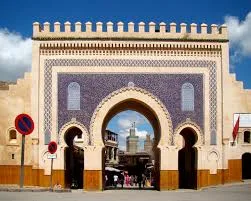
Navigation ceases to be a mathematical exercise and becomes an act of faith the moment you step through Bab Boujloud into the medieval heart of Fes. This sprawling labyrinth of over nine thousand alleys remains the world’s largest car-free urban area, a place where the primary mode of heavy transport is still the braying donkey. The air within these high, sun-blocked walls is a dense mix of cedar smoke, drying leather, and the sharp sweetness of orange blossom. Unlike the manicured souks of other cities, Fes el-Bali feels raw and functional, a living relic of the 9th century that refuses to modernize for the sake of comfort. You end up moving through a vertical world where every doorway leads to a hidden courtyard or a theological college tiled in intricate mosaics. The city pulses with a rhythmic, clanging energy as metalworkers beat copper into shape just feet away from scholars discussing ancient texts.
Navigation ceases to be a mathematical exercise and becomes an act of faith the moment you step through Bab Boujloud into the medieval heart of Fes.
the Jawhar River, 789
Idris I founded this settlement on the banks of the Jawhar River in 789, but it was the arrival of eight thousand families from Andalusia and two thousand from Tunisia that ignited its cultural explosion. These refugees brought with them the sophisticated architectural and artisanal skills that turned Fes into the intellectual capital of the Maghreb. By the 12th century, under the Almoravids, the city had become a center for philosophy and science, anchored by the University of al-Qarawiyyin, the oldest continuously operating educational institution on the planet. The Merenid dynasty later added the grand madrasas that define the city's skyline today. While Marrakech was the kingdom's military outpost, Fes remained its spiritual and scholarly conscience. Even when the capital moved to Rabat in 1912, the city maintained its status as the guardian of Moroccan tradition and the heart of the nation’s craft guilds.
Descending into the Chouara Tannery,
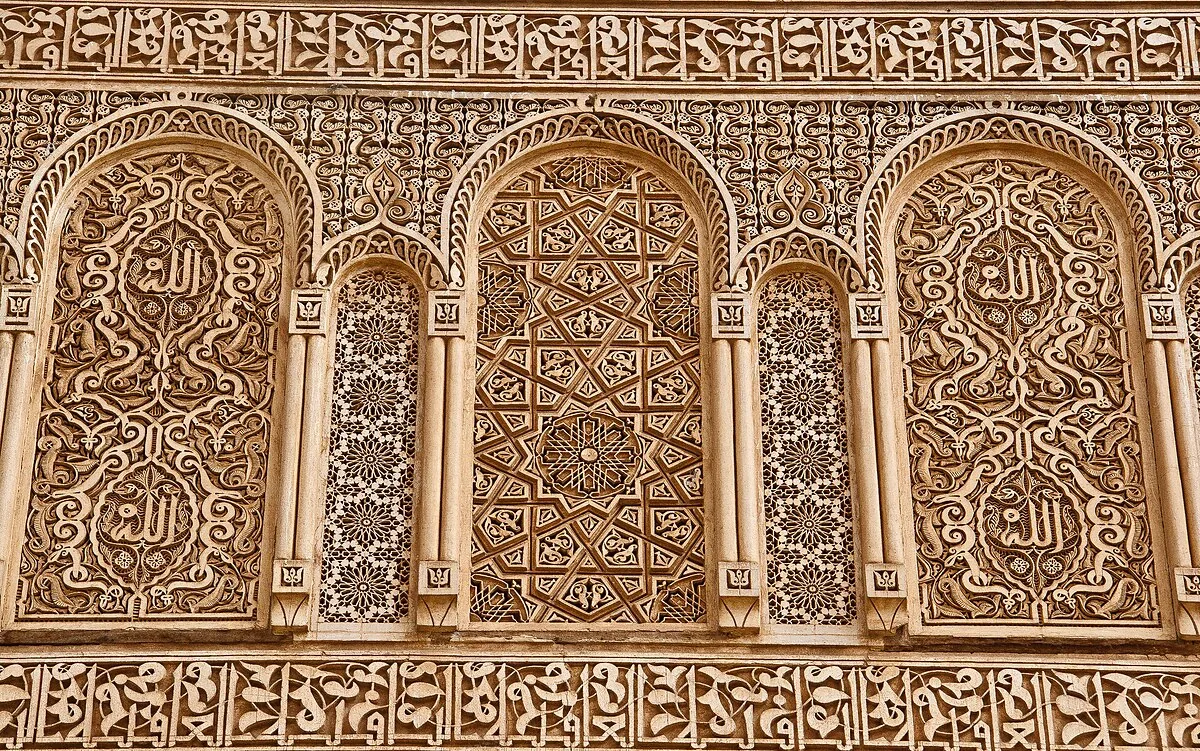
Descending into the Chouara Tannery, The pungent, acidic scent of pigeon droppings and ammonia rising from the honeycomb of stone vats. The light hits the pools of indigo, saffron, and poppy-red dye with a cinematic intensity as men waist-deep in liquid pull out sodden hides. The contrast between this visceral, ancient labor and the silence of the nearby Al-Attarine Madrasa, where the intricate 'zellij' tilework creates a dizzying field of geometric perfection. The clatter of the medina is a chaotic blend of 'balak!' shouts from donkey drivers and the rhythmic tapping of woodworkers carving fragrant cedar. The temperature drop by several degrees moving from the open-air spice markets into the narrow, shaded residential quarters. Often missed is the tiny communal bakeries where local families still bring their dough to be fired in ovens fueled by wood shavings from the carpenter’s district. First, the worn copper knockers on heavy oak doors, each one a signal of the privacy and family life thriving behind the windowless walls.
Fes-Saïss Airport receives frequent flights from Europe
Fes-Saïss Airport receives frequent flights from Europe and major Moroccan cities, and the medina is a twenty-minute taxi ride away. Arriving by train at the Fes station is equally convenient, as the rail network connects the city to Tangier, Casablanca, and Marrakech. Most travelers enter the old city through Bab Boujloud, the famous 'Blue Gate,' which transitions into green on the interior side. Once inside, your only option is walking, so hiring a licensed guide for your first afternoon is less about history and more about surviving the geographical complexity of the streets.
Fes-Saïss Airport receives frequent flights from Europe and major Moroccan cities, and the medina is a twenty-minute taxi ride away.
The Experience
What registers is the way the light filters through the bamboo-slat roofs of the souks, creating a strobe-like effect as you walk. Audible: the call to prayer begins as a single distant voice and swells into a haunting, multi-layered chorus that echoes off the limestone walls. The grit of the spice market on your skin and the sudden, cool spray of a communal fountain. Most visitors miss the small, carved wooden doors that lead to the 'foundouks,' ancient inns for traveling merchants that now house artisan workshops. What remains with you is standing on a rooftop at sunset, watching the storks nest on the crumbling Merenid tombs as the green tiles of the Qarawiyyin Mosque begin to glow.
Why It Matters
Fes el-Bali is the heartbeat of Moroccan identity, a place where the medieval world hasn't just survived but has remained vital. It is a outstanding repository of Islamic architecture and traditional craftsmanship. The city is a product of to urban planning that prioritizes human interaction and trade over the convenience of modern machinery.
Why Visit
Visit Fes if you want to experience a city that doesn't care if you're there. While other destinations have been sanitized for tourism, Fes remains stubbornly authentic, loud, and demanding. It is the only place on earth where you can truly lose your sense of time and direction in a world that operates exactly as it did in the year 1200.
✦ Insider Tips
- 1
Carry a sprig of mint when visiting the tanneries to mask the overwhelming smell of the curing vats.
- 2
Listen for the word 'Balak!', it means 'watch out' and usually precedes a very large donkey carrying several hundred pounds of luggage.
- 3
Download a reliable offline map app like Maps.me, but accept that you will still get lost and that is part of the experience.
- 4
Seek out the Nejjarine Museum for its beautifully restored woodwork and one of the best rooftop views in the city center.
- 5
Don't be afraid to enter the communal bread ovens; most bakers will happily show you their work for a few dirhams.