A sultan once ordered the destruction of his own masterpiece because the walls missed the direction of Mecca by just a few degrees.
About Koutoubia Minaret
Completed during the zenith of the Almohad Empire, the Koutoubia was intended to manifest the power and religious purity of the dynasty. Yaqub al-Mansur, the 'Victorious,' oversaw the final touches, ensuring the minaret reached a height that would dominate the horizon for miles. The structure was engineered with a ramp rather than stairs, allowing the muezzin to ride a horse to the top to deliver the call to prayer. Through the centuries, the mosque’s gardens have shifted from being a dense urban center for manuscript traders to a public park. The 1990s saw a massive restoration that cleaned centuries of grime from the sandstone, revealing the subtle pinks and ochres that define its personality today.
What Koutoubia Minaret actually is
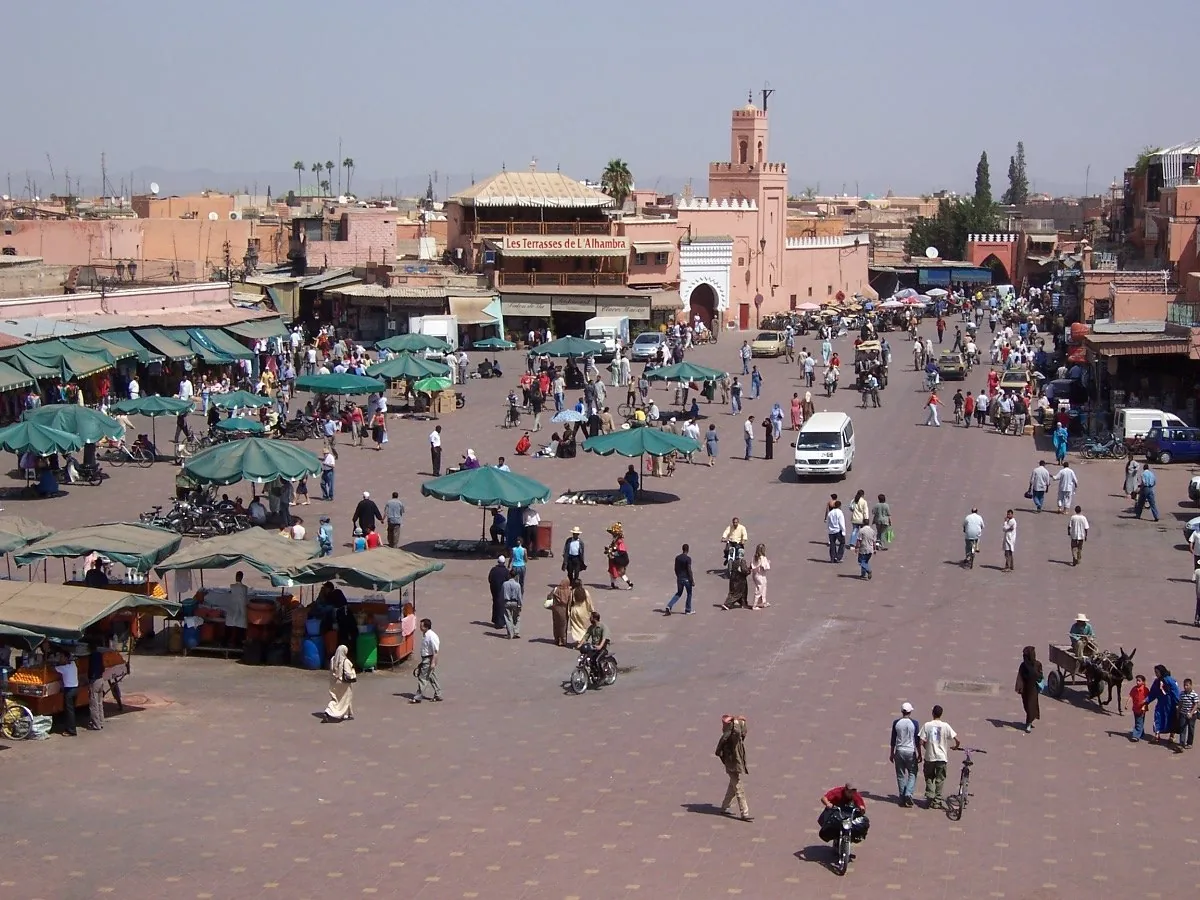
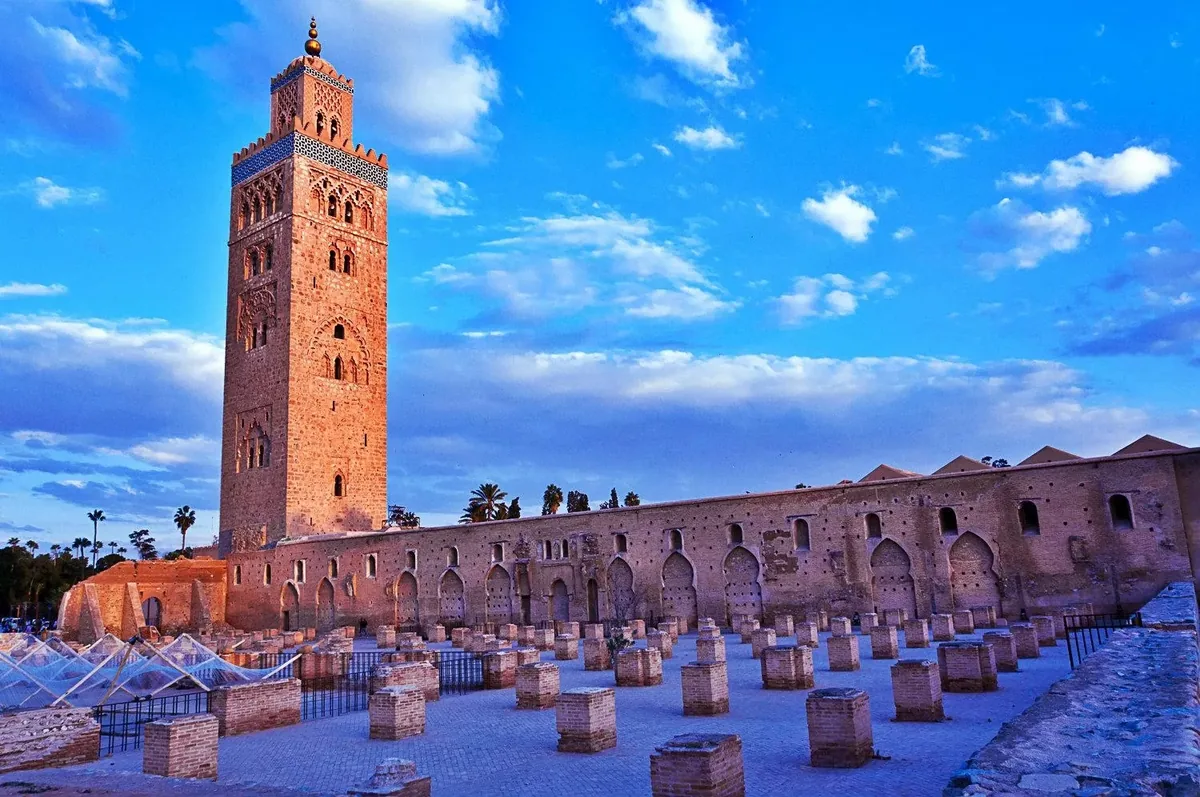
Marrakech revolves around a single axis of rose-colored sandstone. Every street in the medina eventually offers a glimpse of the Koutoubia Minaret, a structure so central to the city's identity that no other building is permitted to rise above its seventy-meter peak. The tower is a lighthouse of faith and geography, its silhouette cutting through the heat haze that often settles over the red city. Unlike the frantic commerce of the nearby Jemaa el-Fnaa, the gardens surrounding the minaret offer a pockets of deliberate quiet. Here, There is a heavy, floral weight of orange blossom and the dry scent of dust kicked up by passing horse carriages. The tower’s exterior is a masterclass in Almohad proportions, featuring four distinct faces with varying decorative motifs that shift in color as the sun moves from the High Atlas toward the Atlantic. It is the ultimate compass for those lost in the labyrinth of the souks.
Commissioned by Sultan Abd
Sultan Abd al-Mu'min began the original project in 1147, but the first version faced an unusual fate: it had to be demolished because its qibla wall was not perfectly aligned with Mecca. The version you see today was completed under the reign of Yaqub al-Mansur around 1195, utilizing the same Almohad architectural language that would later define the Giralda in Seville and the Hassan Tower in Rabat. Legend tells that the three golden spheres atop the spire were originally fashioned from the melted jewelry of a sultan's wife who broke her fast during Ramadan. For centuries, the mosque sat at the center of the city’s book-selling district, giving the landmark its name, derived from the Arabic word for 'booksellers.' It survived dynasties and earthquakes, remaining the spiritual anchor of Marrakech even as the world around its base modernized and expanded.
Standing at the base of the tower
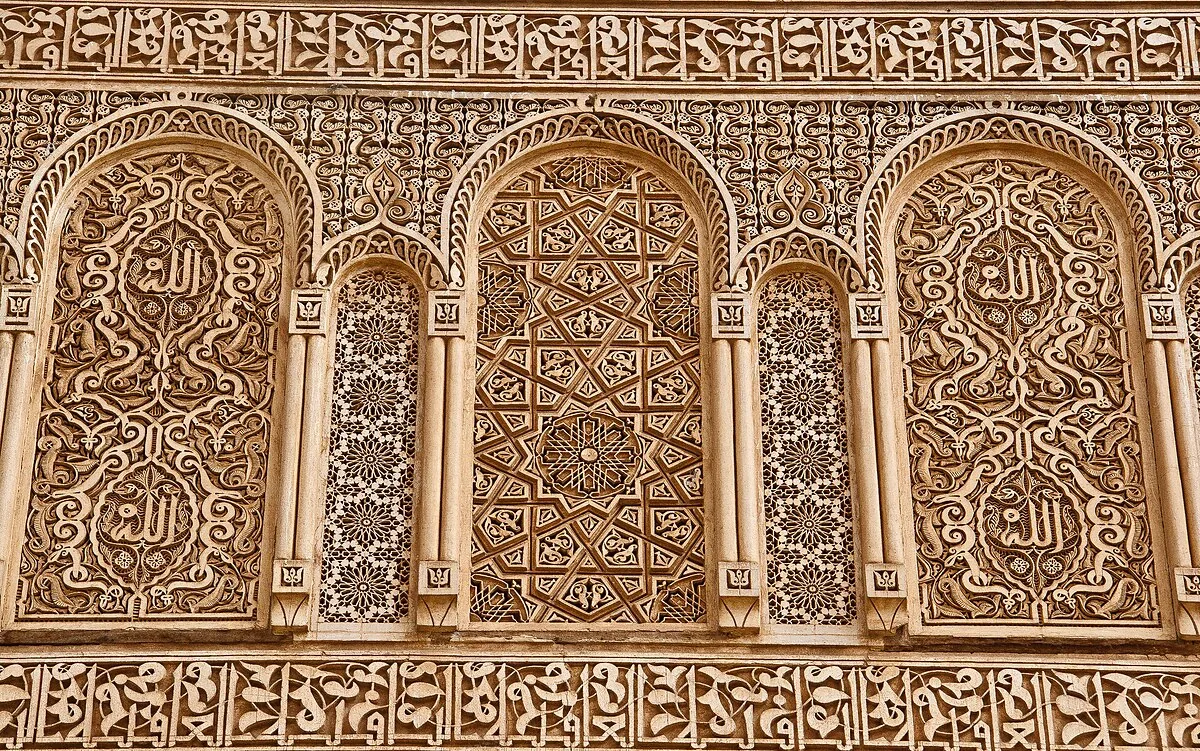
Standing at the base of the tower as the Maghrib prayer begins, The vibration of the adhan deep in your chest, a sound that temporarily silences the roar of motorbikes. The evening light turns the sandstone into a glowing ember, emphasizing the intricate turquoise tilework and the rhythmic curves of the scalloped arches. What stands out is the way the light catches the copper orbs at the very top, making them appear like three miniature suns. The gardens offer a sensory refuge where the sound of trickling water from the marble fountains competes with the chatter of birds nesting in the palms. The locals resting on the low stone walls, people-watching with a practiced, patient grace. People often miss the ruins of the original mosque’s prayer hall nearby, where dozens of stumped columns reveal the massive scale of the first, misaligned sanctuary. First, the scent of night-blooming jasmine beginning to compete with the smoky aroma of grilled meats wafting from the square.
Accessing the site is simple, as it sits
Accessing the site is simple, as it sits at the intersection of the old medina and the more modern Hivernage and Guéliz districts. Most travelers simply walk from their riads toward the center of the city, using the tower as a visual guide. While the interior of the mosque remains closed to non-Muslims, the surrounding gardens and the ruins of the first mosque are open to everyone. Arriving at sunset provides the most dramatic visual experience, but an early morning visit allows for a more solitary appreciation of the tower's architectural details before the crowds from the square spill over.
The Experience
The temperature drop by several degrees as you move into the shadow of the great tower. Nearby, the square is a distant, oceanic hum, occasionally pierced by a flute or a shout, making the silence of the minaret feel even more intentional. The grit of the red earth beneath your feet and the smooth, cool surface of the marble benches. Most visitors miss the small, carved details on the horseshoe arches that change slightly on each side of the tower. The piece that stays with you is the transition from the golden hour to dusk, when the floodlights kick on and the minaret seems to detach from the dark sky, floating like a lantern over the city.
Why It Matters
The Koutoubia is the definitive example of Moroccan-Andalusian architecture and the blueprint for religious towers across the Islamic West. It represents the architectural ambition of the 12th century and remains the tallest structure in Marrakech. Its survival and continued use make it a living link between medieval Morocco and the modern city.
Why Visit
Visit the Koutoubia to calibrate your senses. It provides the essential context for the rest of Marrakech; once you understand its scale and its quiet power, the chaos of the souks becomes more manageable. It is the only place in the city where you can truly appreciate the Almohad mastery of geometry and light without a single admission fee.
✦ Photo Gallery
Best Season
🌤 Late autumn (Oct-Nov) offers a clarity of air that makes the High Atlas mountains visible behind the tower, creating a spectacular contrast between the red stone and white peaks.
Quick Facts
Best time to visit
Late autumn (Oct-Nov) offers a clarity of air that makes the High Atlas mountains visible behind the tower, creating a spectacular contrast between the red stone and white peaks.
Getting there
In Marrakech, Morocco; reach Marrakech first, then continue to the site.
Location
Marrakech, Morocco
Type
attraction
Insider Tips
- 1
Stand by the ruins of the first mosque's pillars at sunset to photograph the minaret through the 'archways' of history.
- 2
Walk through the gardens toward the Lalla Hasna park for the best-scented rose bushes and a quieter view of the spire.
- 3
The call to prayer here is the most resonant in the city; try to be present for the sunset adhan at least once.
- 4
If you want the iconic shot of the tower reflecting in water, look for the small rectangular fountain near the main entrance gates.
- 5
Dress respectfully when walking near the entrance doors, even if you aren't entering, out of courtesy for the worshippers.