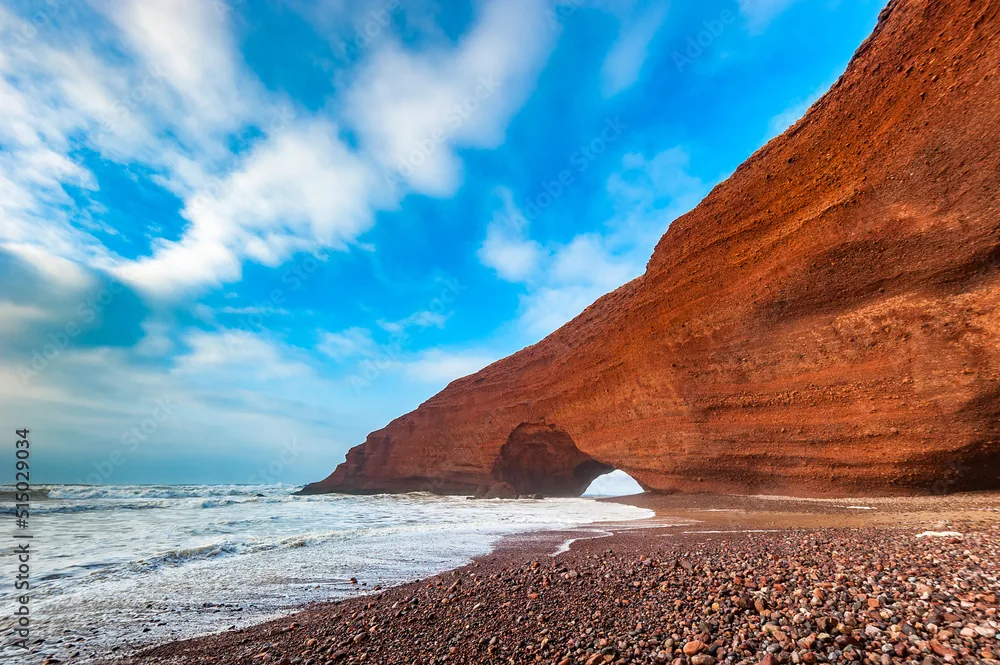
A thousand tons of red sandstone collapsed into the sea in a single afternoon, leaving a lone, defiant arch to guard this rugged stretch of the Atlantic.
About Legzira Beach
The geology here is a extension of the Anti-Atlas range, where layers of sediment were pushed up and then worn down over millions of years. Historically, this coast was a Spanish protectorate until 1969, which explains the distinct architectural flair of the nearby towns and the lingering presence of the Spanish language among the older generation. The beach remained a secret known only to the most intrepid surfers and hikers until the 2000s, when images of the 'Red Arches' went viral. Since the collapse of the northern arch, the region has seen a shift toward more conscious, sustainable tourism, with locals working to preserve the integrity of the cliffside paths and prevent further erosion from foot traffic.
What Legzira Beach actually is
South of Agadir, the Atlantic Ocean has spent eons sculpting the coastline into something primitive and formidable. Legzira Beach is famous for its massive natural arches of red sandstone that stride from the cliffs into the surf like petrified giants. The sand here is a deep, wet ochre, often littered with fragments of iridescent shells and smooth Atlantic stones. The landscape feels vastly different from the manicured resorts of the north; it is a place of high winds, crashing swells, and a salt mist that hangs heavy in the air. The geology is the star of the show, where the iron-rich cliffs glow with an almost supernatural intensity during the golden hour. It is a lonely, expansive stretch of shore that rewards those who prefer the raw power of the ocean over a sun-lounger and a cocktail.
The arches of Legzira were formed
The arches of Legzira were formed by the relentless action of the tides and the wind against the soft sedimentary rock of the Anti-Atlas mountains. For centuries, this area was known only to the local Berber fishermen who utilized the caves as shelter and the rich waters for their catch. The world only took notice relatively recently as travelers seeking more rugged scenery began to venture south of the Souss-Massa region. The beach suffered a heartbreaking loss in 2016 when one of its two primary arches collapsed after a winter of heavy storms, leaving a massive pile of red rubble where a gateway once stood. This event was a stark reminder of the transitory nature of even the grandest natural landmarks, making the remaining arch an even more precious sight for those visiting today.
Walking toward the remaining arch at low tide
Walking toward the remaining arch at low tide, The roar of the Atlantic is so loud it makes conversation a secondary concern. The air tastes sharply of salt and iodine, a brisk mountain-meets-sea quality that clears the lungs instantly. The texture of the arch itself, layers of compressed sand and stone that feel surprisingly rough and cold when you place a hand against them. There is a feeling of pull of the retreating tide around your ankles, dragging sand back into the deep. Simple to walk past is the tiny rock pools that form at the base of the cliffs, where miniature ecosystems of anemones and crabs hide from the pounding surf. The paragliders that often launch from the clifftops, their colorful canopies drifting like petals against the red stone. The piece that stays with you is standing directly beneath the surviving arch, realizing that the weight of the stone above you is held by nothing but the grace of gravity and time.
Reaching Legzira requires a drive
Reaching Legzira requires a drive of about two and a half hours from Agadir, usually via the town of Tiznit. The road winds through arid landscapes dotted with argan trees before dropping down toward the sea. Most travelers base themselves in the nearby town of Sidi Ifni, a faded Art Deco gem of a coastal village just ten kilometers to the south. Access to the beach involves descending a steep set of stairs from the parking area above, where a few small guesthouses and restaurants provide basic amenities and the day's fresh catch. Checking the tide tables is essential, as the arches are only safely accessible on foot when the water has retreated.
The Experience
What registers is the way the light reflects off the wet sand, creating a second, shimmering arch beneath your feet. The sound of the wind whipping through the rock openings creates a low, moaning whistle that sounds like a living thing. There is a feeling of spray of the ocean on your face, a fine, cool mist that sticks to your skin. Most visitors miss the ancient fishing huts carved directly into the rock face higher up the cliffs. What sticks with you is watching the sunset from a distance, as the remaining arch turns a deep, bruised purple against the orange horizon.
Why It Matters
Legzira is a result of the geological volatility of the Moroccan coast and a primary destination for earth-science enthusiasts. It serves as a symbol of the raw, unpolished beauty of the south, far removed from the imperial cities. It is a site that reminds us of the fragility of the natural world and the immense power of the sea.
Why Visit
Visit Legzira for the perspective that only a truly wild landscape can give you. It is the best place in Morocco to witness the intersection of the desert and the deep blue ocean. If you want to see a world in constant, violent motion, where the very earth you stand on is being reclaimed by the waves, this is your destination.
✦ Photo Gallery
Best Season
🌤 The Sept-Oct window offers the warmest water for wading and the clearest skies for sunset photography, without the intense summer heat of the interior.
Quick Facts
Best time to visit
The Sept-Oct window offers the warmest water for wading and the clearest skies for sunset photography, without the intense summer heat of the interior.
Getting there
In Legzira, Morocco; reach Legzira first, then continue to the site.
Location
Legzira, Morocco
Type
attraction
Insider Tips
- 1
Check the tide charts before you arrive; if the tide is high, you won't be able to walk under the arch.
- 2
Eat at one of the small shacks on the beach; the grilled sardines are usually caught just hours before they hit the plate.
- 3
Bring a sturdy windbreaker, as the Atlantic breeze is unrelenting even on the sunniest days.
- 4
Wear shoes with good grip for the descent; the stairs can be slippery with sea spray and sand.
- 5
Look for the paragliding school on the cliffs if you want a bird's-eye view of the remaining arch.