Hidden in the Rif Mountains, this city was closed to the world for four hundred years, preserving a secret world painted in every imaginable shade of blue.
About Medina of Chefchaouen
The town's name comes from the Berber word for 'horns,' referring to the shape of the mountains that loom over it. Its early history was defined by its role as a 'morabito,' or holy city, founded by Moulay Ali Ben Moussa Ben Rached El Alami. The architecture is a direct descendant of the lost world of Al-Andalus, with tiled roofs and interior courtyards that are rare in other parts of Morocco. The blue-wash tradition became the town's global calling card in the late 20th century, as residents realized the aesthetic appeal drew travelers from across the world. Today, the local government mandates the use of blue paint to maintain the historic character and visual unity that makes the town famous.
Medina of Chefchaouen
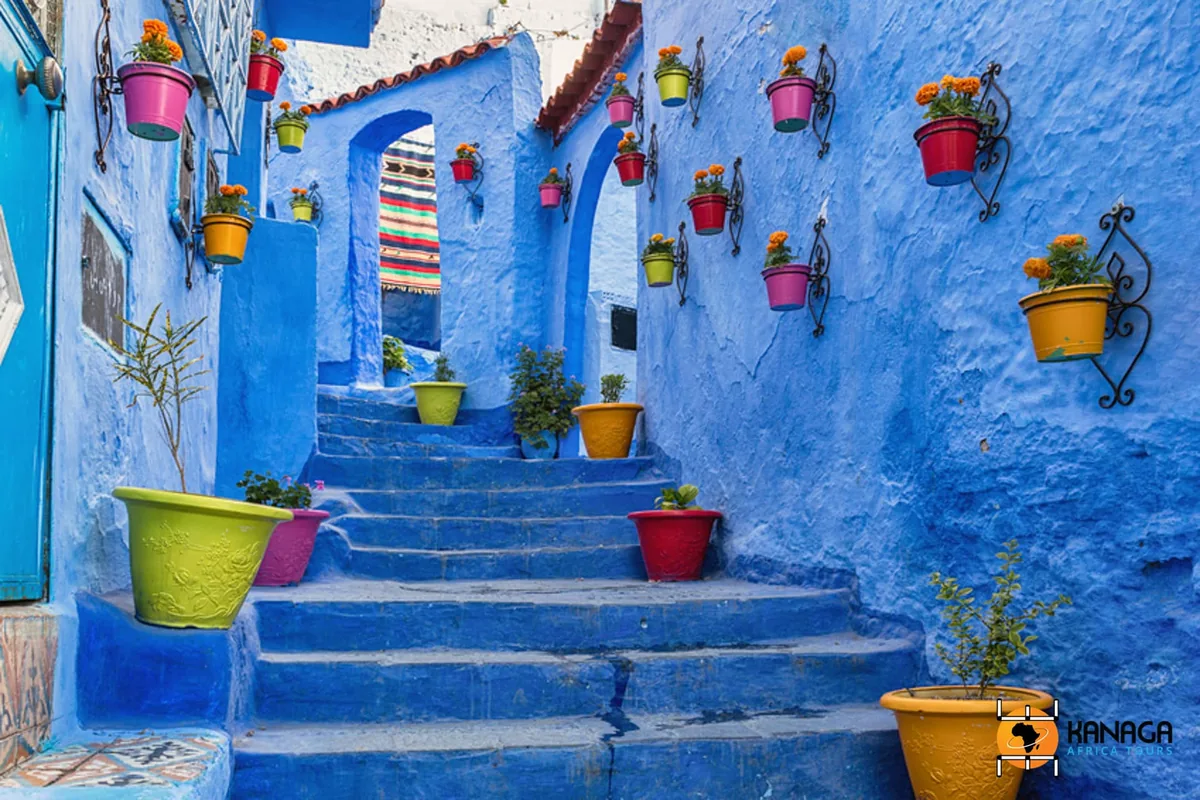
Tucked away in the folds of the Rif Mountains, the Medina of Chefchaouen is a surreal, sapphire-hued sanctuary that defies the typical earthy palette of Morocco. Every wall, doorway, and staircase in the old city is washed in varying shades of blue, from pale sky to deep, saturated indigo. This tradition, while visually stunning, creates a calming, ethereal atmosphere that feels disconnected from the frantic energy of the coastal cities. The area is crisp and mountain-fresh, scented with woodsmoke and the mountain herbs that are sold in bundles on every corner. The town is built into a steep slope, meaning that every walk involves navigating narrow, winding stairs that reveal sudden glimpses of the twin peaks of the Rif above. It is a place designed for wandering, where the lack of a grand monument is compensated for by the collective beauty of the neighborhood itself.
Its importance
Founded in 1471 as a small fortress to fight the Portuguese invasions, Chefchaouen grew significantly with the arrival of Sephardic Jews and Muslims fleeing the Spanish Reconquista. These refugees brought with them the whitewashed Andalusian architecture that still defines the town’s structure. The tradition of painting the town blue is often attributed to the Jewish community who arrived in the 1930s, who used the color to represent the sky and heaven, reminding them of God’s presence. Others suggest it was a practical measure to keep mosquitoes away or to keep houses cool in the summer. For centuries, the city was considered sacred and was closed to foreigners on pain of death, with the first Europeans only entering in disguise in the late 19th century. This long isolation preserved its unique dialect and traditions, making it a cultural island in the northern mountains.
Walking through the residential alleys,
Walking through the residential alleys, The way the blue paint reflects the light, making even the deepest shadows feel bright and airy. Nearby, the medina is characterized by the constant, musical trickle of water from the Ras el-Maa spring, which feeds the town’s fountains and communal laundry areas. The scent of goat cheese and freshly baked 'khobz' bread wafting from the small hole-in-the-wall shops. The calf-burning incline of the streets, but every few steps offer a stone bench or a shaded nook to rest. People often miss the small, hand-woven wool blankets and 'djellabas' that are unique to this region, far coarser and warmer than those found in the south. The cats of Chefchaouen, who seem to match the town's mellow pace, lounging on blue doorsteps with an air of quiet ownership. At sunset, the blue walls turn a haunting violet, creating a moment of stillness before the evening calls to prayer begin.
Chefchaouen is best reached by bus or private
Chefchaouen is best reached by bus or private car from Tangier or Fes, with the journey taking between three and four hours through the winding mountain roads of the Rif. There is no train station or airport in the town, which helps maintain its slightly remote atmosphere. The bus station is located in the new part of town, requiring a steep uphill walk or a quick 'petit taxi' ride to reach the gates of the medina. Once inside, the town is entirely pedestrian, and the best way to see it is simply to start at the main square, Outa el-Hammam, and head upward.
The Experience
Observe the way the light seems to glow from the pavement itself, a blue radiance that makes you feel like you are walking through water. The clatter of the mountain wind is a soft whistle through the narrow gaps in the houses, carrying the scent of wild mint and cedar. There is a feeling of texture of the rough, lime-washed walls, which are repainted by hand several times a year. Most visitors miss the Spanish Mosque, a lone building on a hill opposite the town that offers the best view of the blue city as it catches the evening sun. The piece that stays with you is sitting in a quiet alleyway and realizing that the silence here is different, not the silence of a desert, but the peaceful quiet of a mountain village at rest.
Why It Matters
Chefchaouen is a living monument to the multicultural history of Morocco, particularly the legacy of the Andalusian refugees. It is a center for traditional weaving and leatherwork that is distinct from the styles of the imperial cities. Culturally, it represents the resilience of the Rif region and the enduring power of a community to define its own identity through color and tradition.
Why Visit
Visit Chefchaouen for the atmosphere rather than the sights. It is the best place in Morocco to slow down and allow the geography of the mountains to dictate your pace. It offers a visual serenity that is unique in the world, making it a dream for photographers and anyone looking to escape the intensity of the southern plains.
✦ Photo Gallery
Best Season
🌤 Spring (April to June) is the most beautiful time, as the mountain wildflowers are in bloom and the weather is perfect for hiking the surrounding trails.
Quick Facts
Best time to visit
Spring (April to June) is the most beautiful time, as the mountain wildflowers are in bloom and the weather is perfect for hiking the surrounding trails.
Getting there
In Chefchaouen, Morocco; reach Chefchaouen first, then continue to the site.
Location
Chefchaouen, Morocco
Type
attraction
Insider Tips
- 1
Hike up to the Spanish Mosque at sunset for a panoramic view of the blue city as the lights begin to twinkle.
- 2
Try the local goat cheese (jben); it is a specialty of the Rif and is often sold fresh in the morning markets.
- 3
Be respectful when taking photos of residents; the local culture is more conservative than in Marrakech, and many people prefer not to be photographed.
- 4
Bring a light jacket even in summer; the mountain air cools down significantly the moment the sun drops behind the peaks.
- 5
The most 'Instagrammed' streets are near the top of the town, but the quietest and most authentic blue corners are found in the lower residential quarters.