“Inside a 1934 mansion that feels like a slice of the French Riviera, Morocco is quietly staging a revolution of modern art and contemporary thought.”
About Villa des Arts
Casablanca’s architectural identity was forged in the early 20th century under the guidance of urban planner Henri Prost, who saw the city as a canvas for the latest European styles. Villa des Arts was part of this 'New Town' expansion, representing the peak of the bourgeois Art Deco lifestyle. Following Morocco’s independence in 1956, many of these grand homes fell into disrepair or were subdivided into offices. The intervention of the ONA Foundation (now Al Mada) in the 1990s saved this particular villa from a similar fate, transforming it into the first private museum of its kind in the country. It has since become the headquarters for the city's intellectual elite, hosting not just exhibitions but also poetry readings, concerts, and workshops for local youth.
What Villa des Arts actually is
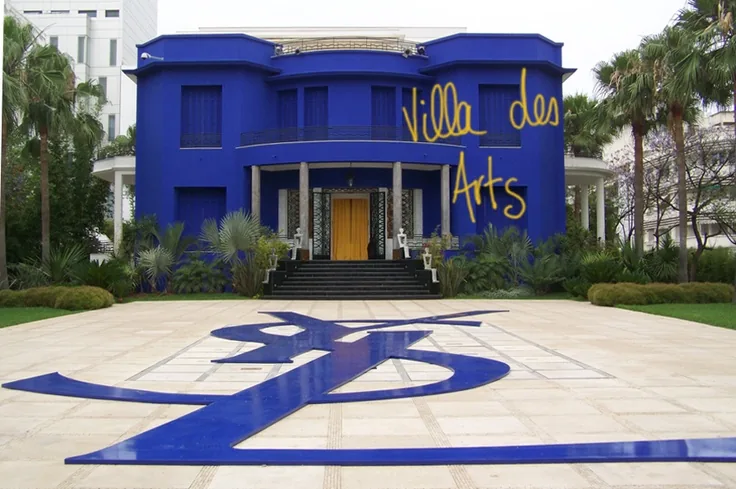
In the sophisticated heart of Casablanca’s Art Deco district, Villa des Arts provides a cool, white sanctuary for the city’s contemporary creative spirit. This 1930s mansion is a stunning example of colonial-era architecture, where the clean lines of European modernism meet the subtle decorative flourishes of North Africa. The villa is surrounded by a manicured garden that acts as a buffer against the city’s relentless white noise and traffic. Inside, the high-ceilinged galleries host a rotating schedule of some of the most provocative and exciting art in the Maghreb. The air inside is still and carries the faint, sterile scent of fresh paint and floor wax, a stark contrast to the humid salt air of the nearby Atlantic. It is a place that proves Morocco is not just a land of ancient ruins and medieval souks, but a thriving center for modern thought and visual experimentation.
In the sophisticated heart of Casablanca’s Art Deco district, Villa des Arts provides a cool, white sanctuary for the city’s contemporary creative spirit.
Built in 1934 during the height
Built in 1934 during the height of the French Protectorate, the villa originally was a private residence for a wealthy family before being acquired by the ONA Foundation. The foundation sought to create a space that would bridge the gap between traditional Moroccan heritage and the emerging global art scene. Casablanca itself was a laboratory for 20th-century urban planning and architecture, and this villa remains one of the finest surviving examples of that experimental era. After a careful restoration that preserved its original marble floors and sweeping staircases, it opened its doors to the public as a cultural center. Since then, it has played a pivotal role in launching the careers of many Moroccan artists who are now recognized on the international stage.
Visiting Villa des Arts
Stepping through the gate, The immediate softening of the city's roar, replaced by the crunch of gravel and the occasional call of a bird in the palms. The interior light is soft and diffused, carefully managed to protect the delicate paintings and sculptures on display. What draws the eye is the texture of the original Art Deco ironwork on the staircase, which feels cold and solid under your palm. An impression of sense of space that is so rare in the dense urban fabric of Casablanca. What most skip is the subtle geometric patterns in the terrace tiles, which were designed to echo the traditional zellij of the medina in a modern, monochromatic palette. The thing that registers is the way the visitors move through the galleries in a hushed, contemplative manner, a different kind of devotion than what you see at the city’s mosques. The bit that stays with you is looking out from a second-story window at the white skyline of Casablanca, realizing the villa is a piece of art that you can actually inhabit.
Location and access
The villa is located in the Parc de la Ligue Arabe neighborhood, a pleasant area for walking that is filled with other architectural gems from the early 20th century. It is easily reached by the city’s tramway system or a quick petit taxi ride from the Hassan II Mosque. Unlike many of the city’s tourist attractions, Villa des Arts is free to enter, reflecting its mission to make culture accessible to all. It is best visited in the mid-afternoon, followed by a walk through the nearby park or a coffee at one of the stylish cafes that line the surrounding boulevards.
The villa is located in the Parc de la Ligue Arabe neighborhood, a pleasant area for walking that is filled with other architectural gems from the early 20th century.
The Experience
The way the white walls of the villa seem to absorb the heat, keeping the galleries surprisingly cool even in August. The sound of your own footsteps on the polished stone floors becomes a rhythmic part of the exhibit. The transition from the crowded, commercial energy of the street to the refined, intellectual atmosphere of the gallery. Most visitors miss the small library in the back, which contains rare catalogs of North African art history. The moment that stays with you is the contrast between a piece of hyper-modern digital art and the 90-year-old architectural frame in which it sits, a perfect metaphor for Casablanca itself.
Why It Matters
Villa des Arts is the premier venue for contemporary Moroccan art and a vital architectural landmark. It preserves the city’s 'Moresque' heritage, a blend of Art Deco and Moorish design, while providing a platform for the voices that are shaping the country's future. It is a cultural beacon that connects Casablanca to the global dialogue of modern art.
Why Visit
Visit Villa des Arts to see the Morocco that most tourists miss. It is the best place to understand the sophisticated, urban heartbeat of Casablanca. If you want to see how a tradition-steeped country translates its identity into the 21st century, the answers are hanging on these white walls.
✦ Insider Tips
- 1
The museum is free, but check their website for event schedules; you might stumble upon a free jazz concert or a film screening.
- 2
Take your time to walk around the exterior of the building first to appreciate the Art Deco symmetry before going inside.
- 3
Combine your visit with a walk through the Parc de la Ligue Arabe, which has recently been renovated to its former glory.
- 4
Ask the staff for a brochure of the current exhibit; they are often available in French and English and are beautifully designed.
- 5
The neighborhood is great for 'arch-walking'; look up at the balconies of the surrounding buildings for some of the world's best Art Deco details.