A rediscovered body and a 14th-century miracle turned this hidden corner of the Fes medina into a sacred 'city within a city' where the law once had no power.
About Zaouia of Moulay Idriss II
The discovery of the saint's body in the 15th century was a pivotal moment for the Merenid dynasty, who used the event to bolster their religious legitimacy. Throughout the centuries, the zaouia was lavishly gifted by various Moroccan rulers, leading to the collection of magnificent clocks and silken hangings that decorate the interior. The shrine became the focal point of the Fes aristocracy, and the surrounding neighborhood, known as the Moulay Idriss quarter, became the most prestigious address in the city. In the early 1900s, the shrine played a role in national politics as a gathering place for scholars and leaders discussing resistance to colonial influence. It remains the most important pilgrimage site in the city, especially for women seeking blessings for fertility or healthy children.
Deep within the labyrinth of Fes el-Bali
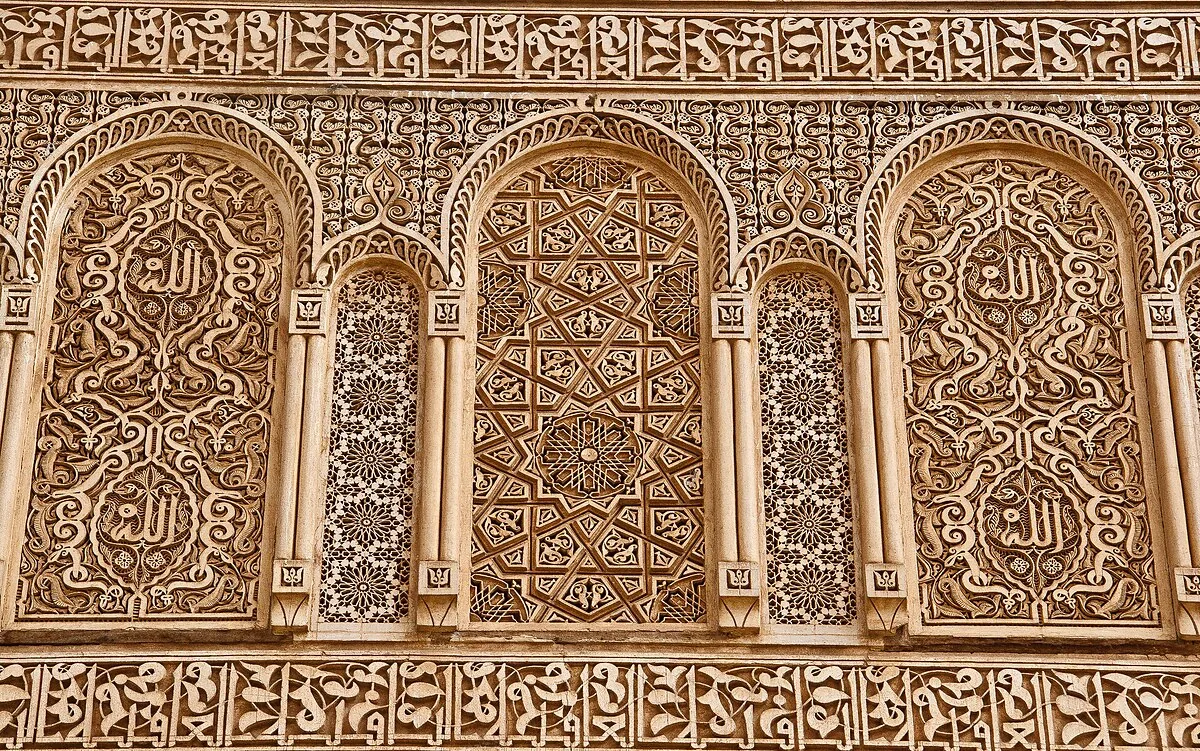
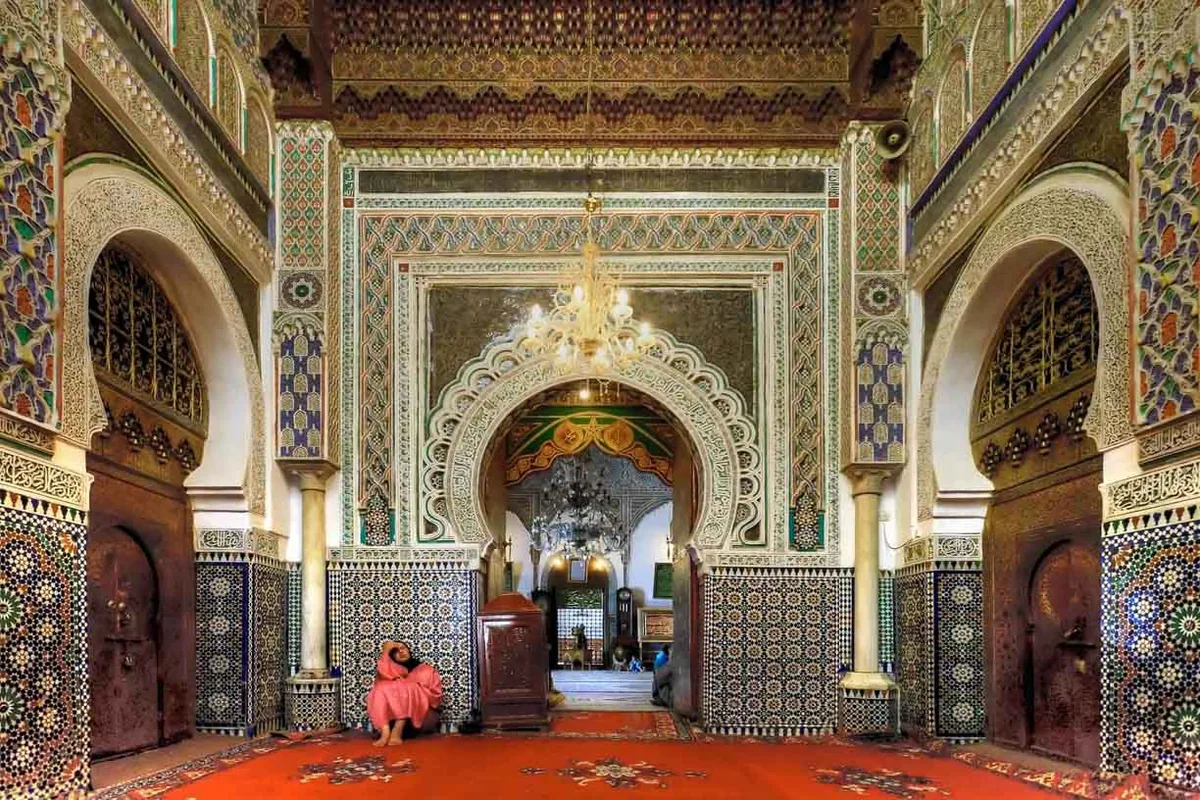
Deep within the labyrinth of Fes el-Bali, the air suddenly thickens with the scent of burning beeswax and rosewater approaching the Zaouia of Moulay Idriss II. This is the spiritual heart of the city, a sacred shrine and funerary complex dedicated to the man considered the secondary founder of Fes. While non-Muslims are strictly prohibited from entering the inner sanctum, the thresholds of the zaouia offer a powerful experience. You can stand at the heavy wooden beams that mark the limits of the 'horm', the sacred sanctuary, and peer into a spread of flickering brass chandeliers and walls dripping with intricate plasterwork. It is a place of profound local devotion, where the desperate and the grateful come to seek the 'baraka,' or divine blessing, associated with the saint’s tomb.
“Deep within the labyrinth of Fes el-Bali, the air suddenly thickens with the scent of burning beeswax and rosewater approaching the Zaouia of Moulay Idriss II.”
Zaouia of Moulay Idriss II, Morocco
Moulay Idriss II took over
Moulay Idriss II took over the throne at the age of twelve after the death of his father, the first Idrisid sultan. In 808, he moved the capital from Volubilis to the banks of the Fes River, effectively laying the foundation for the city we see today. His body was reportedly rediscovered on this site in 1437, over six centuries after his death, which sparked a massive revival of his cult. The current building was largely reconstructed in the 18th century by Sultan Moulay Ismail, who wanted to emphasize the divine right of the Alaouite dynasty by honoring their Idrisid predecessors. For centuries, the area around the shrine was a sanctuary where criminals could seek asylum and remain untouched by the law, provided they stayed within the sacred boundaries marked by the wooden beams in the streets.
Standing at the edge of the sanctuary, you
Standing at the edge of the sanctuary, The steady stream of pilgrims touching the brass mail-slot on the outer wall to leave offerings or seek blessings. The hum of the area is a low, constant murmur of prayers mingled with the distant clanging of the metalworkers' souk nearby. What registers is the texture of the walls, intense, multi-colored zellij tiles that climb toward ceilings of carved cedarwood. The heat of the hundreds of candles sold by vendors in the adjacent alleys, their smoke adding a hazy, mystical quality to the light. Often overlooked is the ancient clocks and the massive brass chandeliers that are visible through the open doors. The piece that registers is the way the local residents pause and touch their hearts as they pass the main entrance, a quiet gesture of respect that happens hundreds of times an hour.
Location and access
The zaouia is located in the Place de la Marche Verte area, near the famous Nejjarine Square. Finding it requires a bit of navigation through the dense core of the medina, but you can usually find your way by following the scent of incense and the concentration of candle shops. Since it is a functioning religious site and not a museum, there are no set visiting hours for the exterior views, though it is most active around the times of the five daily prayers. It is essential to dress conservatively when approaching the area, ensuring shoulders and knees are covered as a sign of respect to the worshipers.
“The zaouia is located in the Place de la Marche Verte area, near the famous Nejjarine Square.”
The Experience
You notice the vibrant colors of the 'kiswa,' the embroidered cloth that covers the saint’s tomb, visible from certain angles through the doorway. The hum of the water in the central courtyard fountain provides a cooling, rhythmic backdrop to the spiritual intensity of the space. The reverence of the crowd, a palpable energy that makes even the most casual observer speak in a whisper. Most visitors miss the small, historic sundial on the wall used to determine prayer times. What sticks with you is watching a mother press her child’s clothing against the sacred doorframe, a quiet act of faith that has been repeated for five hundred years.
Why It Matters
The Zaouia of Moulay Idriss II is the spiritual anchor of Fes and a primary example of Moroccan 'Maraboutism', the veneration of saints. It represents the historical continuity of the Moroccan state and its deep-seated Islamic traditions. For the people of Fes, it is not a monument but a living source of spiritual strength and communal identity.
Why Visit
Visit the perimeter of the Zaouia to witness the true, unpolished spiritual life of Fes away from the tourist-centric souks. It is the best place to see the high-water mark of Moroccan religious architecture and to feel the 'baraka' that locals believe protects the city. It offers a window into a side of Morocco that remains fiercely private and profoundly beautiful.
Insider Tips
- 1
Do not try to cross the wooden beams in the street if you are non-Muslim; these mark the 'horm' or sacred space where only the faithful may enter.
- 2
Buy a small bundle of handmade candles from the nearby vendors to support the local economy of the shrine.
- 3
Look for the brass 'slot' in the wall on the street side where you can drop a small donation for the upkeep of the poor who seek shelter there.
- 4
The best view of the interior (from the doorway) is usually around mid-morning when the sun hits the courtyard and reflects light into the prayer hall.
- 5
Keep your camera at chest level and be discreet; this is a place of deep prayer, and intrusive photography is highly disrespectful.