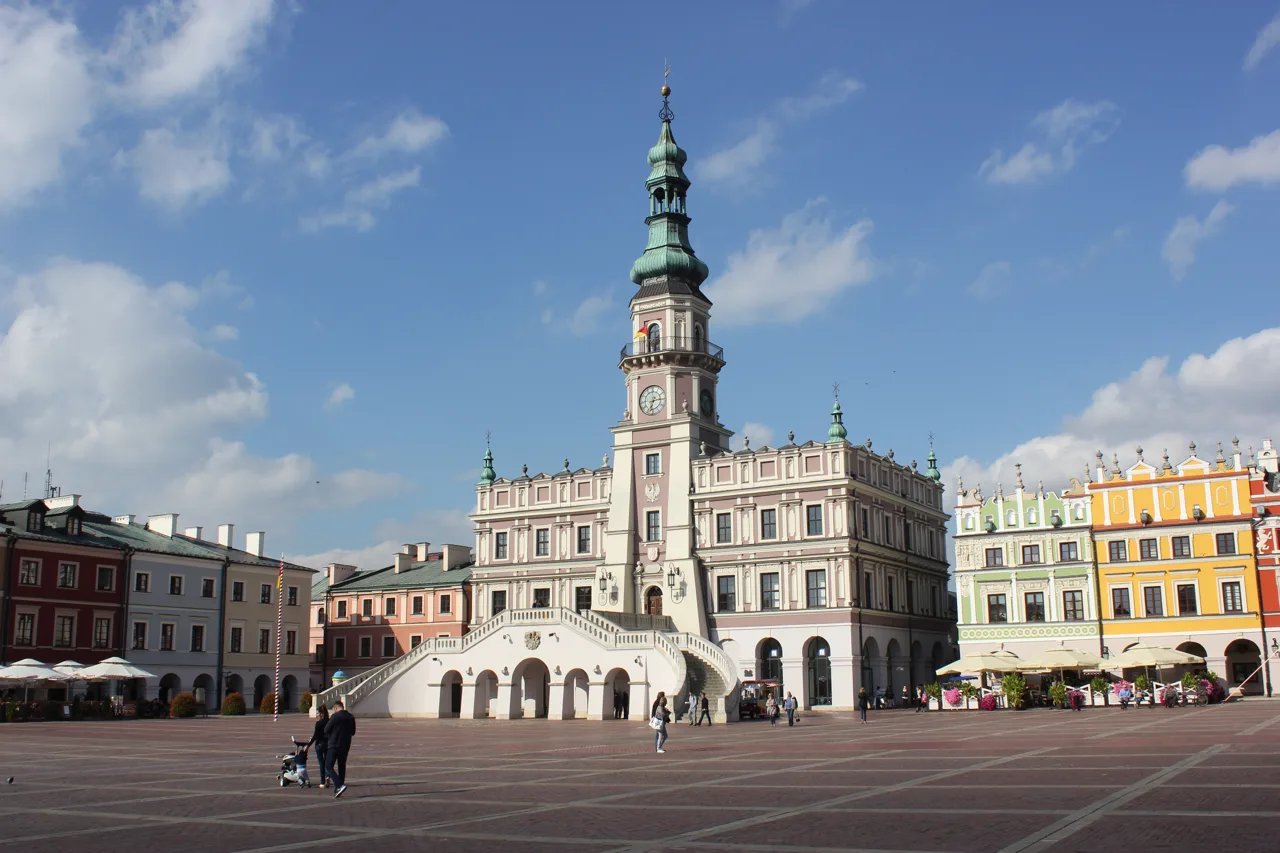
“Constructed from five million hand-molded bricks, this fortress is so large that it contains three separate castles within its walls, built to house an army of warrior-monks.”
About Malbork Castle
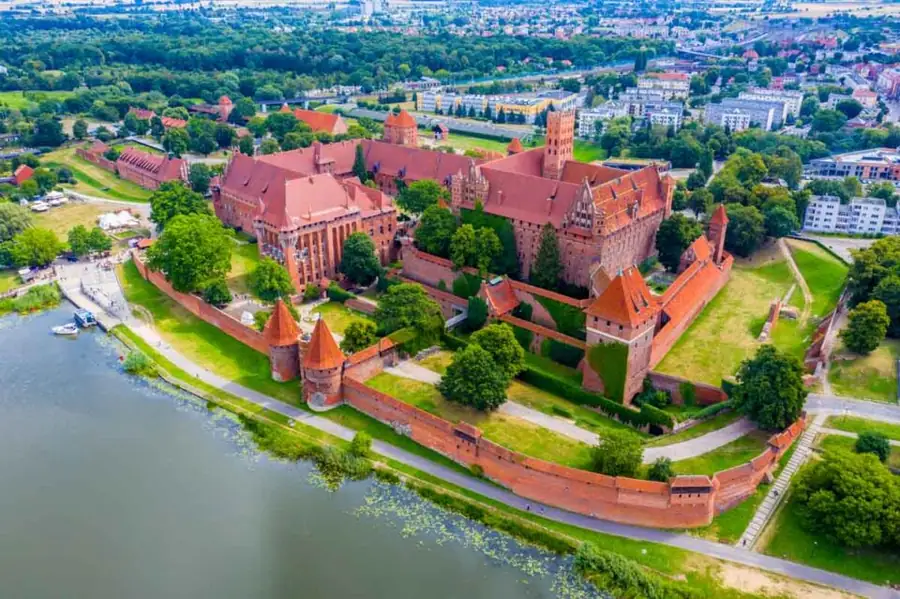
Malbork was the capital of the Teutonic State, a unique political entity that combined religious zeal with cold, bureaucratic efficiency. The High Castle served as the spiritual heart, containing the convent and the Treasury, while the Middle Castle housed the administrative offices and the Grand Master's residence. The complex featured central heating systems and advanced plumbing that were centuries ahead of their time, allowing the knights to live in relative comfort during the brutal Baltic winters. After 1457, when the Polish King Casimir IV Jagiellon took possession, the castle shifted from a military outpost to a lavish royal treasury. Its restoration after 1945 is considered one of the greatest feats of architectural conservation in history, as nearly half the structure had been reduced to rubble.
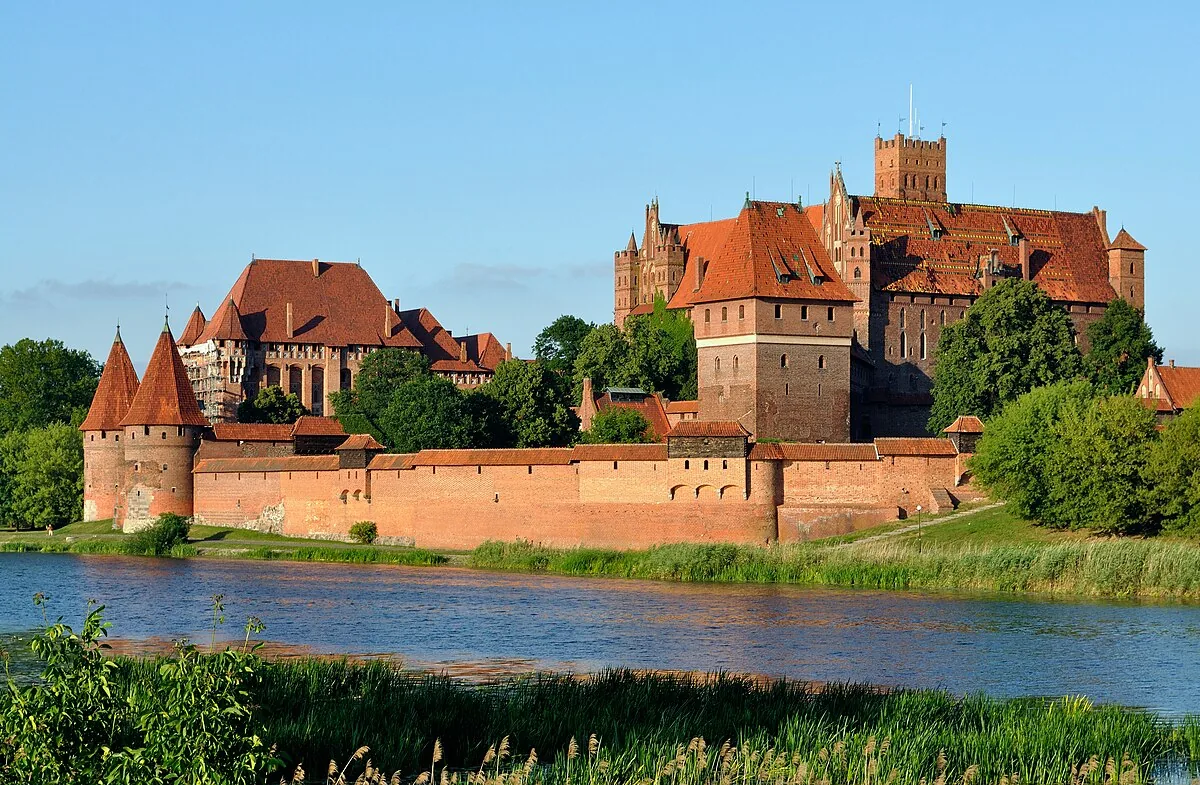
Malbork Castle in Poland
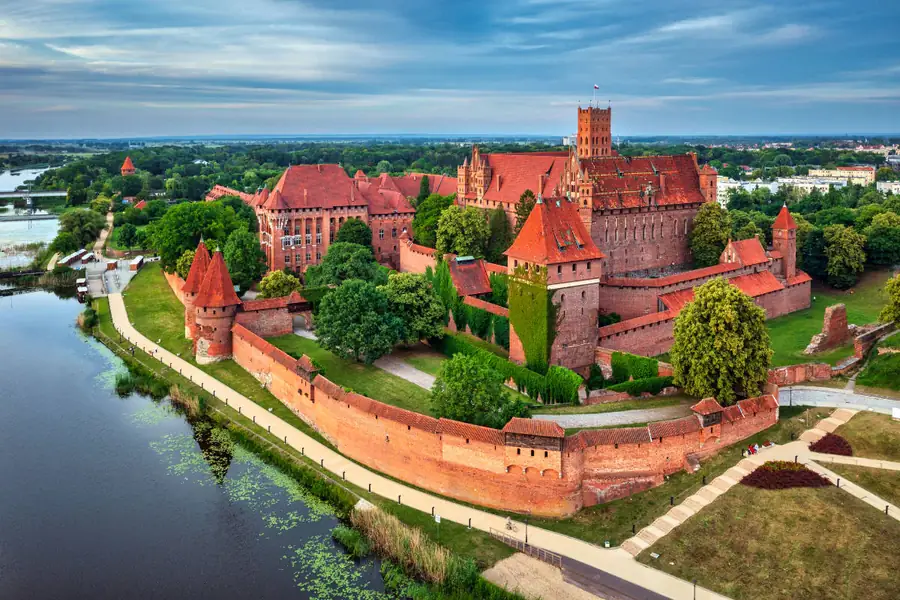
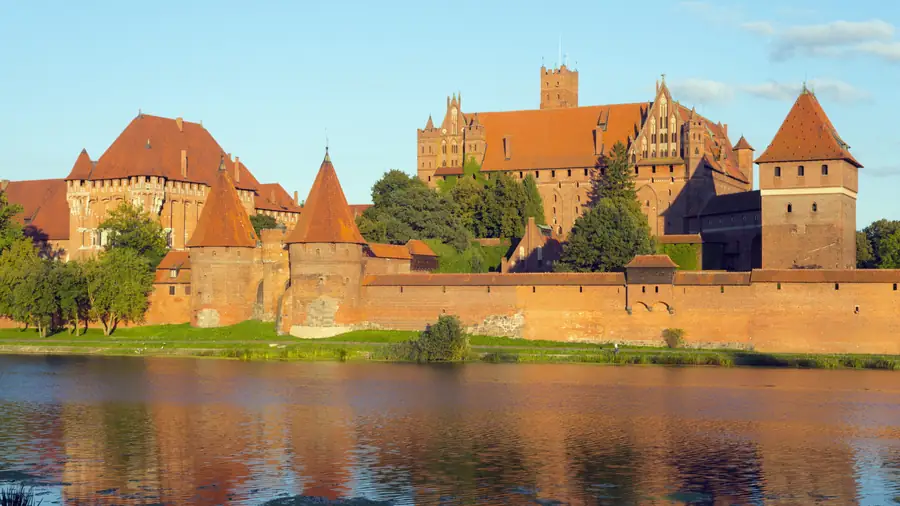
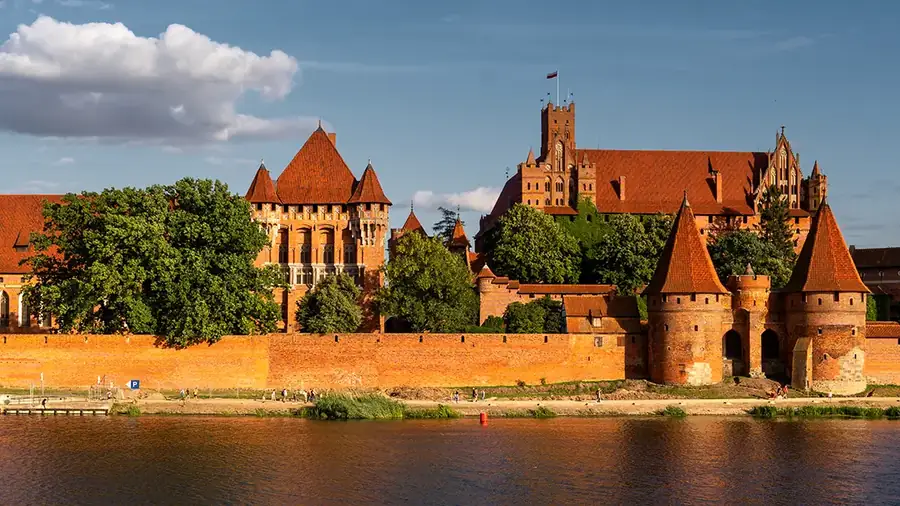
Red brick walls rise from the banks of the Nogat River with such overwhelming scale that they seem to define the very horizon of northern Poland. Malbork Castle, the seat of the Teutonic Knights, is the largest fortress in the world by land area, a sprawling Gothic complex of three distinct castles nested within one another. On all sides, There is a scent of river reeds, old stone, and the dry, dusty smell of medieval brickwork. You walk across massive drawbridges and through vaulted gateways. Notice how the architecture was designed to intimidate and impress in equal measure. In your ears is a mix of the wind whistling through the high battlements and the distant, hollow echo of footsteps in the Great Refectory. It feels like a fortress built by warrior-monks who intended to hold their ground for eternity.
Red brick walls rise from the banks of the Nogat River with such overwhelming scale that they seem to define the very horizon of northern Poland.
Order began construction, 1274
The Teutonic Order began construction in 1274, moving their headquarters here from Venice in 1309 to better manage their growing crusader state. For nearly two centuries, Malbork was the nerve center of a powerful monastic empire, serving as the launching point for campaigns against the pagan tribes of the Baltic. The fortress was nearly impregnable, surviving numerous sieges through a combination of massive stockpiles and ingenious defensive engineering. Following the Order's decline after the Battle of Grunwald, the castle became a royal residence for Polish kings before falling into neglect during the partitions of Poland. Heavily damaged during the final months of World War II, it was meticulously rebuilt by Polish conservators who treated the ruins as a jigsaw puzzle of national identity. Today, it is the ultimate icon of Gothic brick architecture, a style that defines the northern European landscape.
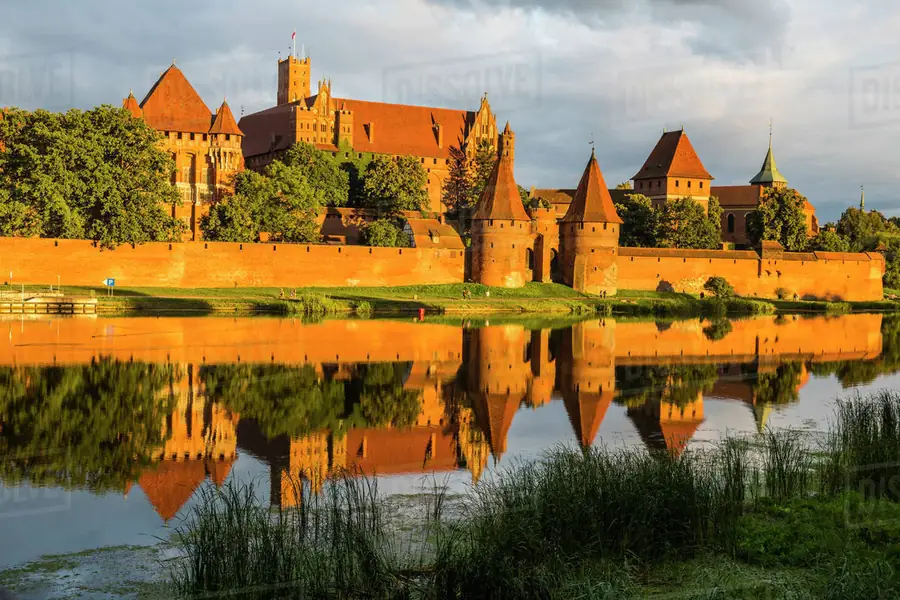
Crossing into the High Castle,
Crossing into the High Castle, The physical weight of the history as the courtyard narrows and the walls grow taller. The first thing you register is the intricate ribbed vaulting in the Grand Master's Palace, where the light filters through tall, slender windows to illuminate floors made of polished terracotta. The smell of the castle interiors is neutral and cool, a scent of ancient mortar and shadow. A sense of unease in the dark, narrow spiral staircases that were designed to be defended by a single knight. Right away, the incredible attention to detail in the amber collection, where pieces of fossilized resin glow like trapped sunlight against the dark stone walls. The most striking moment is standing on the riverbank at sunset, watching the miles of red brick turn a deep, bloody crimson as the shadows stretch across the water. Malbork is an easy day trip from Gdansk, with frequent regional and express trains making the journey in thirty to fifty minutes. The walk from the Malbork railway station to the castle takes about fifteen minutes, leading you through the modern town directly to the riverfront entrance. Arriving as soon as the gates open is essential, as the castle is vast and requires at least four hours to explore thoroughly. Audio guides are provided and are excellent for navigating the labyrinthine complex without getting lost in the interconnected courtyards. Most of the site is outdoors or in large unheated halls, so dressing for the weather is crucial for a comfortable visit.
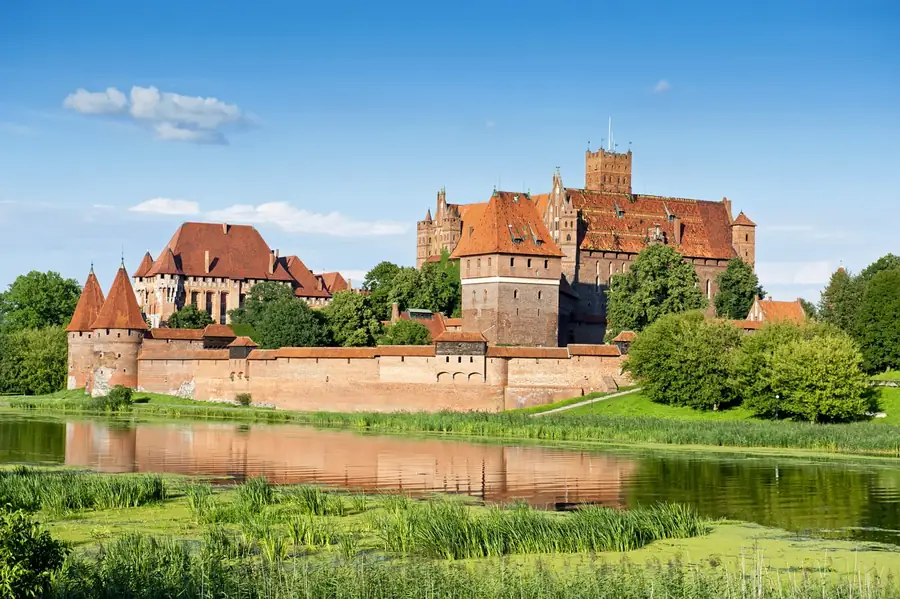
The Experience
The feel of Malbork is one of military precision and Gothic grandeur. You catch the smell of the damp river air mingling with the cold breath of the stone cellars. The sheer scale of the place in your legs, as the walk from the outer gate to the inner sanctum covers several hectares of history. The light is best in the late afternoon when it hits the red brickwork, making the entire fortress appear to burn with a dull, orange fire. The silence of the 'Gdanisko', the detached latrine tower, which highlights the isolation of the knights. The most evocative detail is the set of medieval floor tiles in the dining hall, still bearing the faint patterns of the men who ruled the north with an iron hand.
The feel of Malbork is one of military precision and Gothic grandeur.
Why It Matters
Malbork is the pinnacle of the Gothic brick style and a monumental record of the rise and fall of the Teutonic Order. It represents the meeting point of medieval religion, politics, and military might in Eastern Europe. Culturally, its survival and restoration are a symbol of Polish resilience and a commitment to preserving the shared history of the Baltic region.
Why Visit
Why this place matters: you want to see a castle that makes all other castles look like toys. While others offer charm, Malbork offers sheer, unadulterated power. You come here to walk through the corridors of an empire that vanished and to see what five million bricks look like when they are piled into a mountain. It is the only place where the Middle Ages feel this massive and this permanent.
✦ Insider Tips
- 1
Rent the audio guide; the castle's layout is intentionally confusing for defensive reasons and you will miss the best rooms without it.
- 2
Look for the 'Golden Gate' in the High Castle; the terracotta figures are some of the most beautiful examples of medieval sculpture in the country.
- 3
Walk across the wooden bridge to the opposite bank of the Nogat River for the classic panoramic photo of the entire complex reflecting in the water.
- 4
The castle kitchen and the heating vents in the floors are fascinating looks at medieval daily life that most people overlook in favor of the armory.
- 5
Allow at least five hours for a visit; the 'short' route is still nearly three kilometers of walking.