“Deep underground, three miners spent three decades carving a cathedral out of a solid block of salt, proving that even the darkest pits can be turned into monuments of light.”
About Wieliczka Salt Mine
The discovery of rock salt at Wieliczka transformed the region into the treasury of the Polish Crown, with salt income once accounting for a third of all royal revenues. Founded in the late 1200s, the mine saw the introduction of massive horse treadmills and complex ventilation systems that were marvels of medieval engineering. King Casimir the Great codified the mining laws in 1368, ensuring the welfare of the 'salt-workers' who formed a unique social class. Throughout the centuries, royal guests like Copernicus and Goethe visited the shafts, marvelling at the artistic expressions of the miners who carved statues of kings and saints in their spare time. The mine survived the partitions of Poland and both World Wars, finally ceasing commercial production to preserve the fragile, artistic heritage of its 2,000 chambers.
What Wieliczka Salt Mine actually is
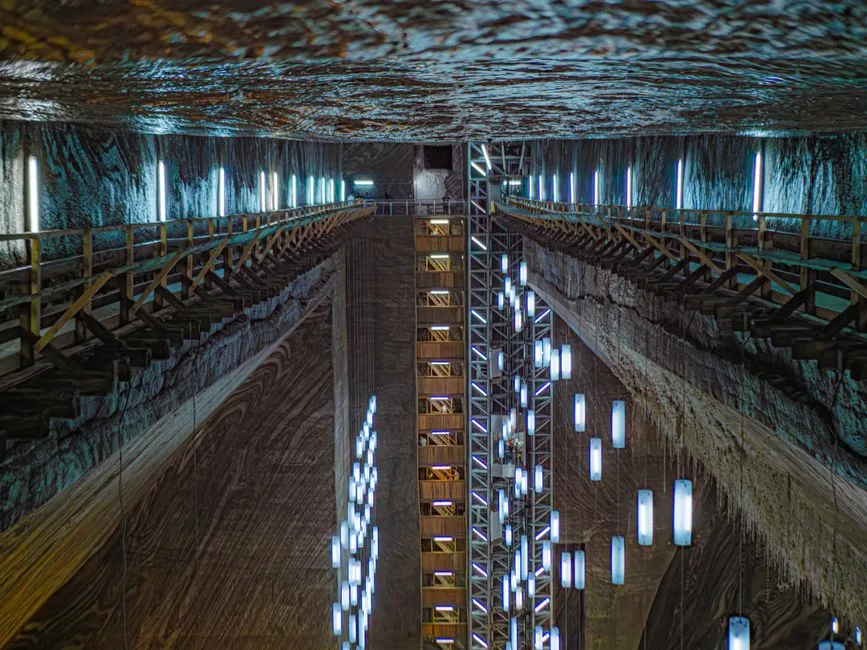
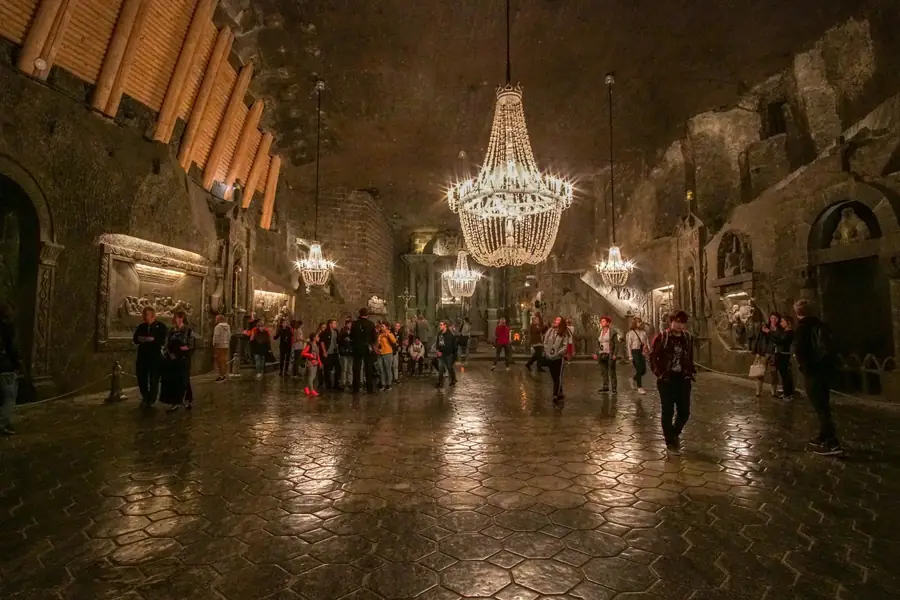
Deep beneath the unassuming streets of a Polish suburb lies a subterranean world where everything from the ornate floor tiles to the shimmering chandeliers is carved entirely from salt. The Wieliczka Salt Mine is a labyrinthine a result of human endurance and artistic devotion, stretching over two hundred miles of tunnels that reach deep into the earth's crust. A distinctive, crisp salinity that feels remarkably clean on the lungs, maintaining a constant, cool temperature regardless of the season above. You descend hundreds of wooden steps into a realm of grey, rock-like salt that reveals unexpected translucent depths when caught by the light. The sound layer is one of heavy, subterranean silence, occasionally broken by the distant drip of saline water or the hushed echoes of voices carrying through vast chambers. It feels like entering a hollowed-out planet where the miners' labor eventually gave way to a profound, crystalline beauty.
Deep beneath the unassuming streets of a Polish suburb lies a subterranean world where everything from the ornate floor tiles to the shimmering chandeliers is carved entirely from salt.
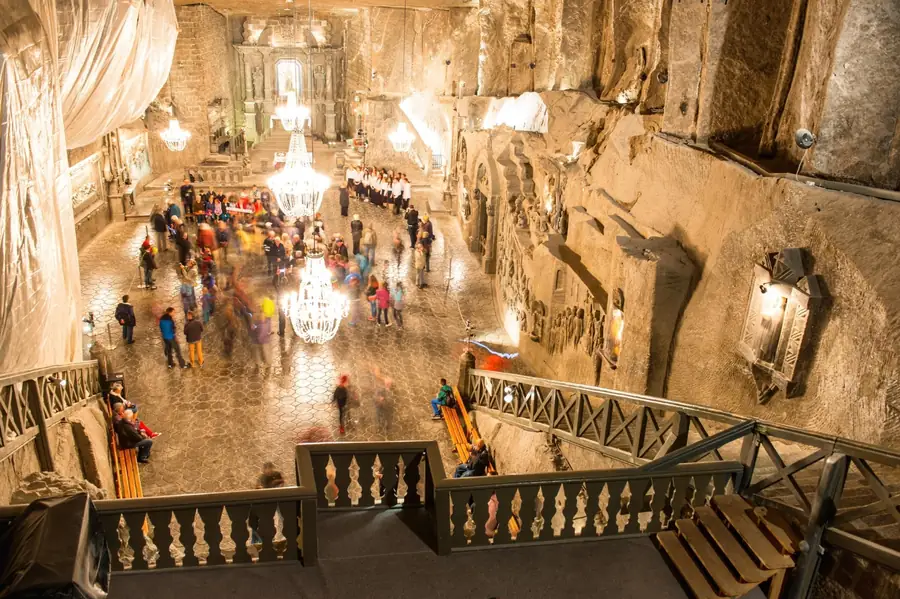
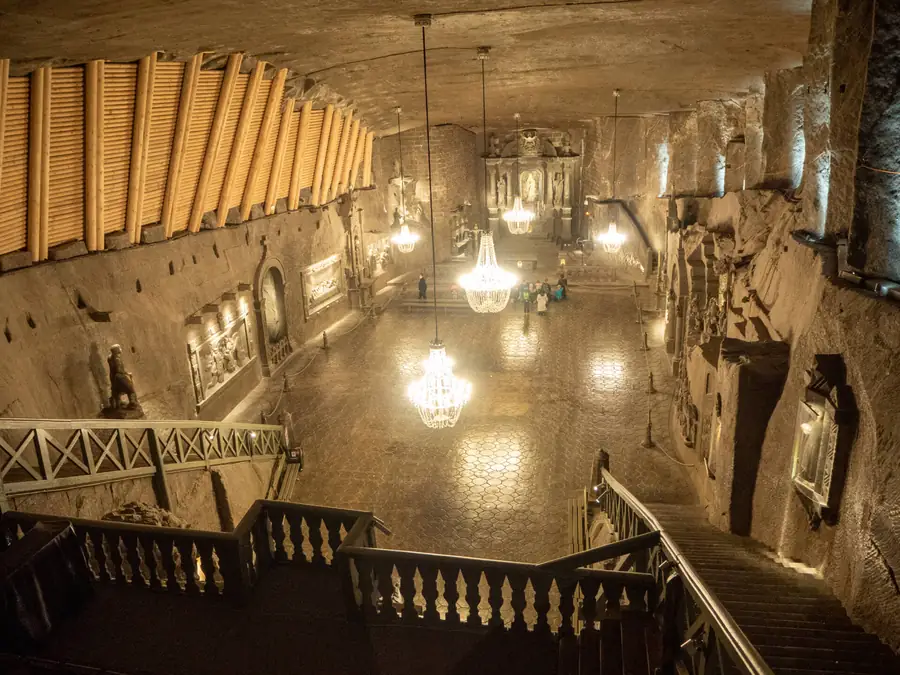
Salt was once known as 'white gold,' providing the economic backbone of the Polish Kingdom since the 13th century when the first shafts were sunk into the Miocene deposits. For over seven hundred years, generations of miners labored in these depths, carving out massive caverns as they extracted the precious mineral for the royal table. To combat the loneliness and danger of their work, these men became accidental sculptors, transforming their dark workplace into a series of chapels and monuments. The most extraordinary addition, the Chapel of St. Kinga, took over thirty years for just three men to complete, carving biblical scenes in bas-relief directly into the salt walls. Despite numerous floods and the shifting pressures of the earth, the mine remained operational until 1996, eventually transitioning from an industrial powerhouse to one of the world's first UNESCO heritage sites.
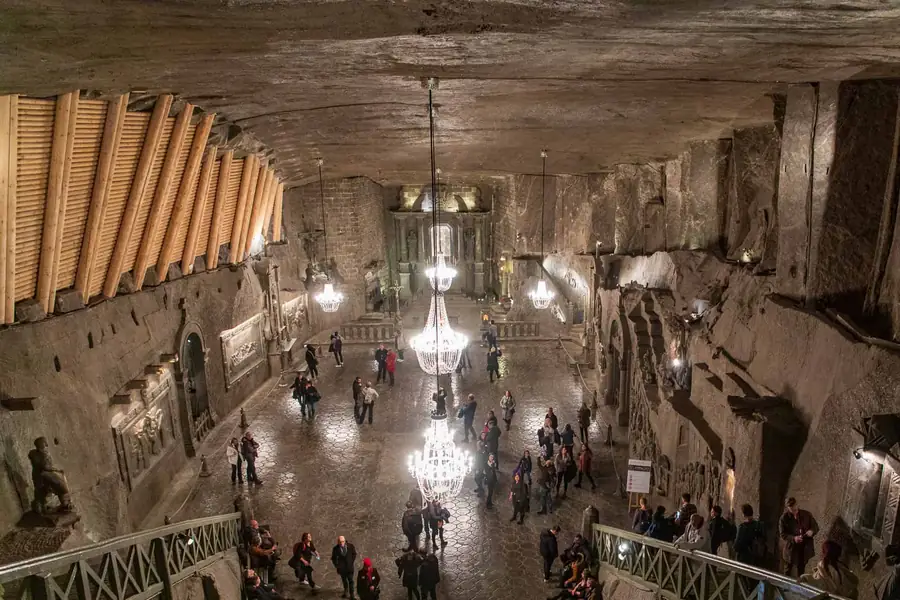
Walking through the Chapel of St.
Kinga, There is a sense of sheer disbelief as you realize the delicate crystal chandeliers hanging above are made of salt that has been processed to achieve the clarity of glass. You catch the way the light plays off the uneven surfaces of the walls, revealing colors ranging from deep obsidian grey to a pale, snowy white. The environment is still and cool, carrying no scent of decay or dampness, only the dry, mineral tang of the salt itself. You discover a smooth, cool texture of the walls under your fingertips, a surface that has been licked by thousands of curious visitors over the decades. First, the eerie green hue of the underground saline lakes, where the water is so dense with minerals that nothing can sink. The element that stays with you is the walk through the cavernous Stanislaw Staszic Chamber, where the ceiling is so high it once hosted the world's first underground bungee jump. Wieliczka is situated about ten kilometers southeast of Krakow, making it a straightforward excursion by train, bus, or taxi. The local train from Krakow's main station is the most scenic and efficient route, dropping you a short walk from the Daniłowicz Shaft. The majority join a guided tour, as the mine is far too complex to navigate alone, with paths specifically designed to showcase the most impressive carvings. Arriving early in the morning or booking a late afternoon slot helps avoid the largest tour groups that congregate around midday. Because the tour involves significant walking and a long climb back to the surface via a vintage miner's elevator, a moderate level of physical readiness is helpful.
The Experience
The quality of Wieliczka is one of hushed, cool solemnity. What registers is the air feels different, thick with salt and incredibly pure, making every breath feel like a tonic. A remnant of the transition from the rough-hewn, timber-supported tunnels to the vast, polished majesty of the cathedrals. The light is soft and artificial, designed to highlight the texture of the salt carvings without melting them. First, the peculiar sound of the mine; it is a silence that feels 'heavy,' as if the weight of the mountain above is pressing down on the quiet. The most striking detail is the Last Supper relief in the main chapel, carved with such depth and perspective that it looks like a painting until you touch the cold, hard mineral surface.
The quality of Wieliczka is one of hushed, cool solemnity.
Why It Matters
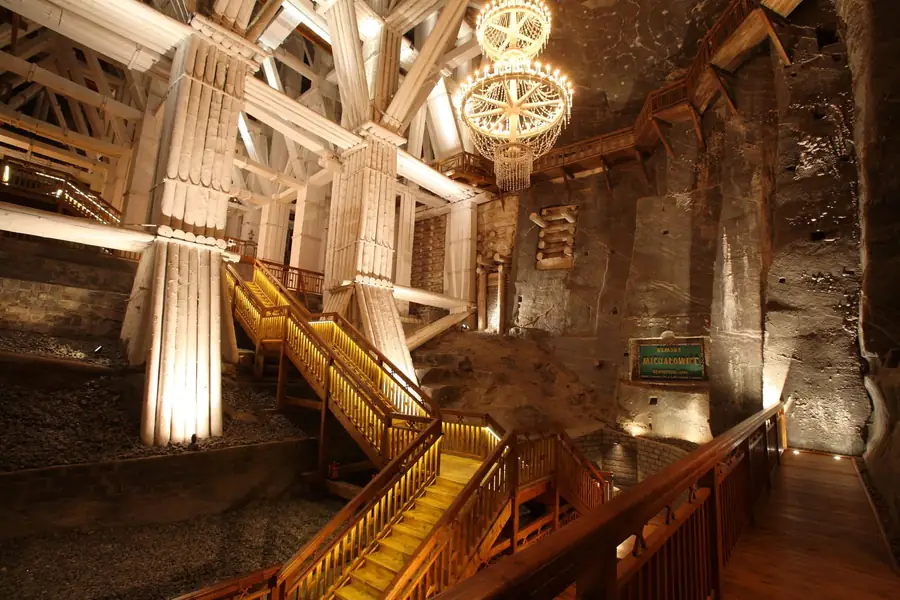
Wieliczka is a masterpiece of European industrial history and an without equal gallery of folk art. It represents the centuries-long dialogue between human industry and the natural world, showing how a site of labor can evolve into a site of spiritual reflection. Humanly, it matters because it honors the anonymous miners who found beauty in the dark.
Why Visit
The point is that you need to see a cathedral that grew downwards instead of upwards. While European cities are full of stone churches, only Wieliczka offers a sanctuary carved from the earth's salt. You come here to stand in a place where the floor, walls, and ceiling were all once part of a prehistoric sea. It is the only place where the air itself is an ancient mineral.
✦ Insider Tips
- 1
Bring a sweater even in the height of summer; the temperature stays at 14°C (57°F) once you descend past the first level.
- 2
Lick the wall once in a non-touristy corner; it sounds like a cliché, but the sharp, clean salt taste is the most direct way to understand the environment.
- 3
Book the 'Miners’ Route' instead of the standard 'Tourist Route' if you want to wear a jumpsuit, carry a headlamp, and try actual mining tasks.
- 4
Stay for the light and sound show at the underground lake; the reflection of the music on the hyper-saline water is genuinely haunting.
- 5
Don't worry about the stairs back up; a small, thrillingly fast elevator returns you to the surface at the end of the tour.