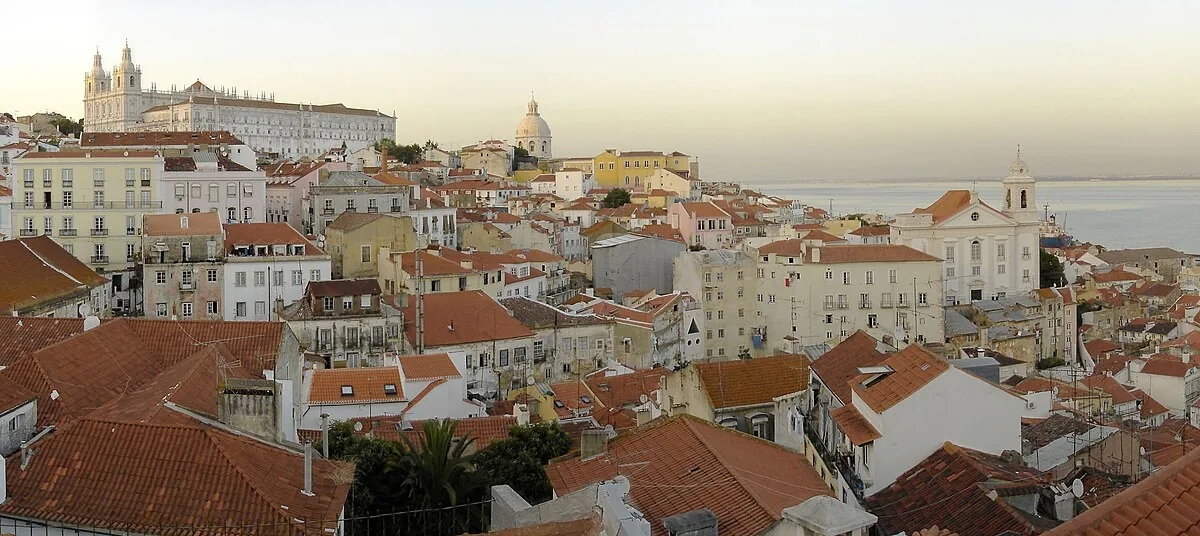
When the great earthquake of 1755 leveled Lisbon, this Moorish labyrinth stood firm, preserved by the very bedrock that makes its streets too narrow for the modern world to enter.
About Alfama
Alfama’s roots reach into the Roman era, but the Visigoths and Moors truly defined its bones. The district’s layout reflects the Islamic urban philosophy of privacy and defense, with blind alleys and sudden courtyards designed to confuse invaders. After the Christian Reconquista in 1147, the neighborhood became a mixing ground for cultures, eventually housing the city’s Jewish quarter before the tragedies of the Inquisition. In the 19th century, it was a place of sailors' songs and social unrest, giving birth to fado as a legitimate art form. Today, it is a protected heritage zone, where the challenge lies in balancing the demands of global tourism with the preservation of a local population that has called these stones home for a thousand years.
Alfama in Portugal
Sunlight bounces off faded pastel facades and drying laundry in this vertical labyrinth, where the streets are often no wider than a person's outstretched arms. Alfama is the oldest soul of Lisbon, a resilient Moorish quarter that refused to fall during the great earthquake of 1755. This space smells of grilled sardines, woodsmoke, and the damp, cool scent of ancient limestone. You climb steep stone staircases and navigate narrow alleys that twist with a logic only a medieval sailor could love. You catch is a complex web of screeching yellow trams, the rhythmic clack of backgammon tiles in a corner tasca, and the haunting, melodic strain of fado drifting from an open window. It feels like a village that has been folded into a city, maintaining its own secretive pace while the rest of the world hurries toward the water below.
The Moors gave this district its name, calling it Al-Hamma after the hot springs that once bubbled at the foot of the hill. During their rule, Alfama was the most prestigious part of the city, though as the centuries progressed and the wealthy moved west, it became the gritty home of dockworkers and fishermen. This working-class stubbornness is precisely why it remains today. When the earth shook and the subsequent fires consumed the planned lower city, Alfama’s bedrock and compact architecture held firm. For generations, it was a place of relative isolation where the specific melancholy of Portuguese fado was born in the taverns by the river. It was only in the late 20th century that the world rediscovered these crooked streets, transforming crumbling tenements into coveted spaces without entirely erasing the local community that keeps the district's heart beating.
Visiting Alfama
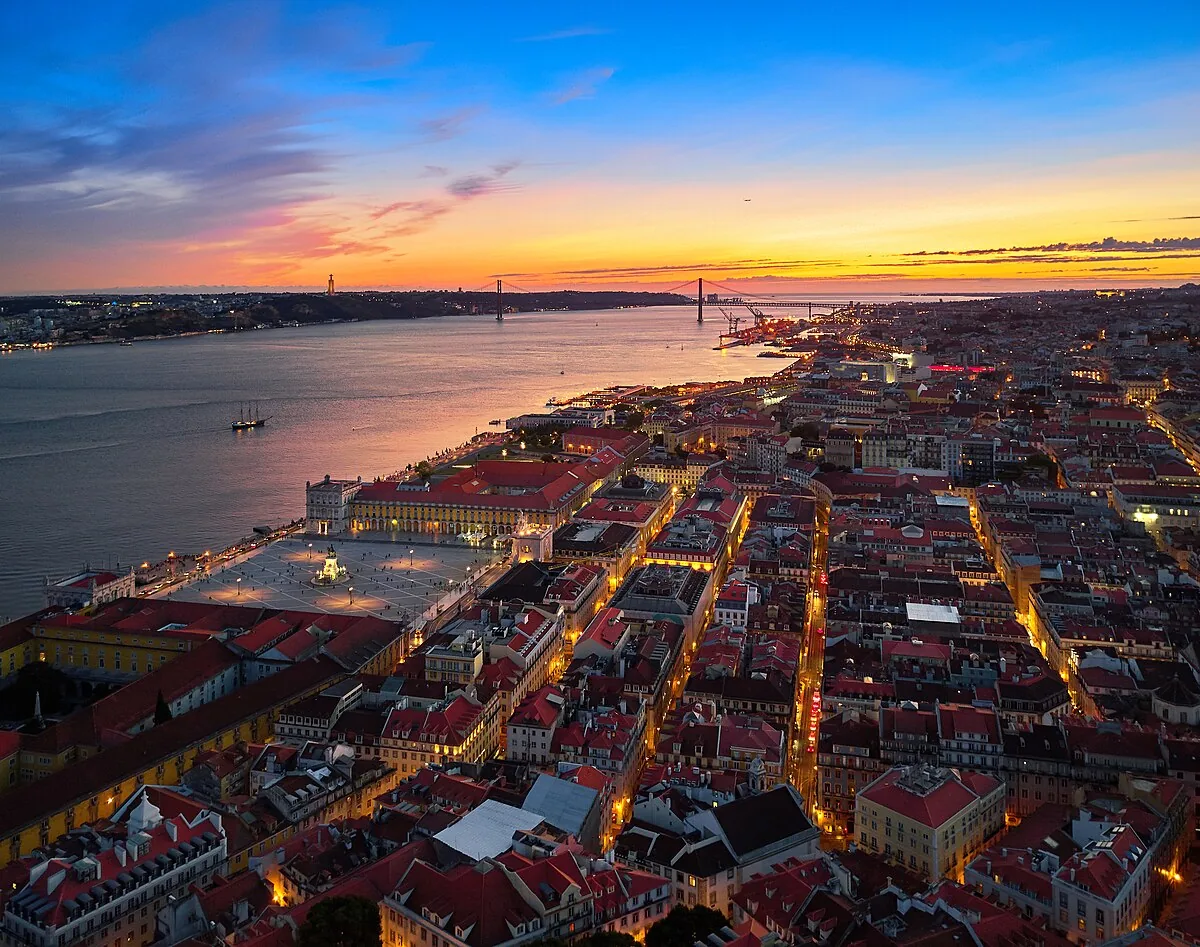
Walking through the Largo do Chafariz de Dentro, The physical compression of history as the buildings lean toward one another, almost blocking out the Atlantic sky. What hits is the way the light catches the chipped azulejo tiles, revealing patterns that have weathered centuries of salt air. The smell of the neighborhood changes block by block, from the sharp tang of vinegar and olives in a grocery store to the sweet, heavy scent of jasmine trailing over a wrought-iron balcony. The weight of the vibration in the soles of your feet as a tram rattles past, a sudden mechanical intrusion into a space that feels fundamentally medieval. Beginning with the small, glass-fronted shrines to Saint Anthony tucked into the walls, often surrounded by fresh carnations. The detail that stays with you is standing at the Miradouro de Santa Luzia at sunset, watching the red-tiled roofs tumble down toward the shimmering blue expanse of the Tagus.
Most travelers arrive via the legendary Tram 28
Most travelers arrive via the legendary Tram 28, which squeals through the district's tightest corners, though walking up from the Baixa district provides a much more intimate introduction. The blue line metro stops at Santa Apolónia at the foot of the hill, offering a steep but rewarding climb past the Fado Museum. Navigating Alfama requires a willingness to get lost, as many alleys are not marked on digital maps and dead ends are frequent. Sturdy footwear is essential for the uneven, often slippery cobblestones. Arriving in the early evening allows you to witness the neighborhood’s transition from a sleepy daytime village to a vibrant hub of music and candlelight.
The Experience
Inside Alfama is one of dense, lived-in nostalgia. What emerges is the sound of neighbors shouting greetings across balconies, a vocal intimacy that has largely vanished from modern European capitals. You discover a cool temperature of the shaded alleys, a welcome relief from the white heat of the Lisbon sun. The light is a master of disguise here, playing tricks with shadows that make the small squares feel larger than they are. Initially, the texture of the 'calcada' pavement, which has been polished to a dangerous sheen by millions of footsteps over centuries. The most striking detail is the absence of cars; the silence that descends on certain back alleys makes you feel as though you have stepped back into the 15th century.
Why It Matters
Alfama is the only surviving piece of pre-earthquake Lisbon and a living museum of Moorish urban planning. It represents the cultural heart of fado music and the enduring resilience of the city's working-class heritage. Historically, it is a rare urban survivor that bridges the gap between the medieval Islamic world and the modern European Atlantic.
Why Visit
What pulls people here is that you want to see a city with its makeup off. While the rest of Lisbon is grand and geometric, Alfama is crooked, raw, and unapologetically beautiful. You come here to lose your way and to find a place where the 21st century feels like a distant rumor. It is the only place where a simple walk to the river feels like an epic route through time.
✦ Photo Gallery
Best Season
🌤 June is the definitive time to visit, specifically during the Feast of Saint Anthony when the entire district is transformed into a street party smelling of grilled sardines and basil.
Quick Facts
Best time to visit
June is the definitive time to visit, specifically during the Feast of Saint Anthony when the entire district is transformed into a street party smelling of grilled sardines and basil.
Getting there
In Lisbon, Portugal; reach Lisbon first, then continue to the site.
Location
Lisbon, Portugal
Type
attraction
Coordinates
38.7122°, -9.1300°
Insider Tips
- 1
Follow the smell of smoke; the best grilled fish is often found in the tiny, unmarked patios where residents set up makeshift barbecues.
- 2
The Tram 28 is famous for pickpockets; keep your bag in front of you and consider the less-crowded Tram 12 for a similar experience.
- 3
Visit the Fado Museum at the base of the hill before exploring the district to understand the lyrics of the songs you will hear later that night.
- 4
Look for the 'Beco dos Grous' for one of the narrowest and most atmospheric photo opportunities in the entire quarter.
- 5
Avoid the restaurants with 'Fado' signs and barkers out front; look for the quiet tavernas where the music starts spontaneously among the diners.