Spices like pepper and cinnamon paid for this limestone masterpiece, built on the very spot where explorers spent their final nights praying for safe passage into the unknown.
About Mosteiro dos Jerónimos
The monastery was originally funded by the 'Vintena da Pimenta,' a five percent tax on all trade from Africa and the Orient. This wealth allowed architects like Diogo de Boitaca and João de Castilho to experiment with the Manueline style, an exuberant Portuguese variation of the Gothic. Throughout the 16th century, it served as a symbol of the crown's maritime monopoly and its divine mandate. When the 1755 earthquake struck, the monastery’s base-isolation qualities, unintentional though they were, allowed it to remain standing while the surrounding district crumbled. Following the secularization of Portugal in 1833, it housed an orphanage for over a century before being meticulously restored for its 500th anniversary in 2001.
What Mosteiro dos Jerónimos actually is
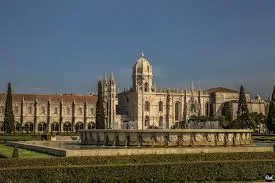
Golden limestone glows with a honeyed warmth against the crisp blue sky of Belém, carved into shapes so intricate they seem more like petrified lace than structural stone. The Mosteiro dos Jerónimos is the ultimate limestone celebration of the Age of Discovery, a monument funded by the very spices Vasco da Gama sought on the high seas. Within, the space the cloisters feels cool and smelling of old incense and the saline breath of the nearby Tagus River. You walk beneath soaring fan vaults. Notice how the columns are adorned with maritime motifs, stone ropes, and exotic sea creatures that reflect a kingdom looking toward unknown horizons. The sound is a mix of hushed whispers reflecting off the vaulted ceilings and the distant, rhythmic clang of the city’s yellow trams. It feels like a prayer in stone, a quiet space where the ambition of explorers was anchored in spiritual devotion.
commissioned the monastery, 1501
King Manuel I commissioned the monastery in 1501 to commemorate da Gama’s successful voyage to India and to serve as a pantheon for the House of Aviz. The site was chosen specifically where a small chapel had once stood, a place where sailors spent their final nights in prayer before setting sail into the Atlantic. For nearly four centuries, the monks of the Order of Saint Jerome lived here, tasked with praying for the King’s soul and providing spiritual counsel to navigators. The construction took over a hundred years to complete, surviving the catastrophic 1755 earthquake that leveled much of Lisbon, which many saw as a divine born from its structural and spiritual strength. In the 19th century, after the dissolution of religious orders in Portugal, the monastery transitioned from a secluded sanctuary into a national treasure, eventually becoming the final resting place for da Gama and the poet Luís de Camões.
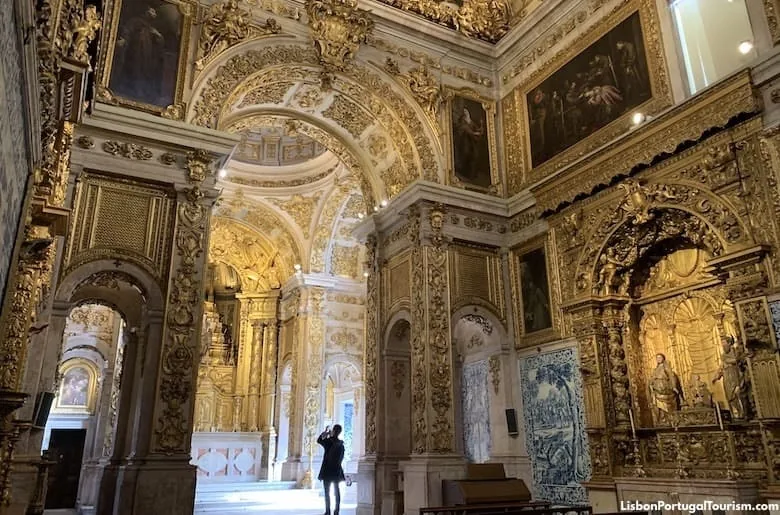
Standing in the center of the two-story cloister, The physical impact of the Manueline style, where every inch of limestone is alive with coral, artichokes, and nautical knots. You catch the way the afternoon sun casts long, geometric shadows across the courtyard, highlighting the transition from Late Gothic to Renaissance aesthetics. The grain of the stone is surprisingly smooth, worn down by centuries of rain and the touch of countless visitors seeking the same sense of peace as the monks before them. Something like a shift in gravity when entering the Church of Santa Maria, where the slender octagonal columns stretch upward like palm trees to support a ceiling that seems to defy the laws of physics. What you catch first is the silence of the refectory, where the walls are lined with 18th-century azulejos depicting the life of Joseph. The most striking detail is the South Portal, an explosion of sculptural detail that is a stone gateway between the terrestrial city and the celestial sanctuary.
Location and access
The monastery is located in the Belém district, accessible from central Lisbon via the iconic E15 tram or the Cascais line train to Belém station. Most people arrive in the morning to beat the queues, often pairing the visit with a stop at the nearby Pastéis de Belém bakery. Admission is managed through timed tickets, which are best purchased online to avoid the long lines at the physical kiosks. Passing through the surrounding gardens offers a panoramic view of the facade's scale before entering the more intimate spaces of the cloisters. Because the site is one of Portugal's most visited, arriving late in the afternoon can sometimes provide a quieter experience as the tour groups begin to migrate back toward the city center.
The Experience
The quality of Jerónimos is one of expansive, maritime grace. The first thing you register is the smell of the river breeze mingling with the dusty, sweet scent of sun-baked limestone. The scale of the church interior, which creates a sense of insignificance that was precisely what the medieval builders intended for the faithful. The light is the true master of the cloisters, shifting from a bright, reflective white in the morning to a deep, golden ochre as the sun moves toward the Atlantic. What you catch first is the sound of the wind whistling through the stone gargoyles, a hollow noise that competes with the chatter of tourists. The most evocative detail is the tomb of Vasco da Gama, where the stone carvings of caravels remind you that this sanctuary was built on the back of the sea.
Why It Matters
Jerónimos is the definitive example of Manueline architecture and a UNESCO World Heritage site that embodies the Portuguese national identity. It represents the historical moment when Portugal became the first global empire, linking Europe to the East. Humanly, it is a monument to the courage of navigators and the artistic vision that translated their discoveries into stone.
Why Visit
Why this place matters: you want to see what happens when a kingdom’s entire wealth is poured into a single block of limestone. While other cathedrals are dark and brooding, Jerónimos is bright, nautical, and full of life. You come here to stand in a forest of stone palm trees and to realize that for the Portuguese, the sea was the only true religion. It is the only place where the stones smell like the ocean.
✦ Photo Gallery
Best Season
🌤 May and October offer the perfect balance of soft Atlantic light and mild temperatures, avoiding the intense white heat of the mid-summer sun reflecting off the stone.
Quick Facts
Best time to visit
May and October offer the perfect balance of soft Atlantic light and mild temperatures, avoiding the intense white heat of the mid-summer sun reflecting off the stone.
Getting there
In Lisbon, Portugal; reach Lisbon first, then continue to the site.
Location
Lisbon, Portugal
Type
attraction
Insider Tips
- 1
Visit the Church of Santa Maria first; it is free to enter and often opens earlier than the cloister section which requires a paid ticket.
- 2
Look for the carved sea monsters and nautical ropes on the columns in the lower cloister; they are the most direct link to the sailors' myths of the 1500s.
- 3
The entrance for the cloister is separate from the church; don't wait in the long church line if you already have a timed ticket for the monastery.
- 4
The upper level of the cloister provides a much better view of the intricate stone vaulting and the central courtyard garden.
- 5
Combine your visit with the nearby Maritime Museum to see the actual maps and instruments used by the men who inspired the monastery's carvings.