“Every night, a colony of bats is released into this 18th-century library to hunt the insects that would otherwise eat some of the world's rarest books.”
About Biblioteca Joanina
The library was built during the peak of the Portuguese Baroque, a period when the wealth of the empire was reflected in its monumental architecture. King João V personally oversaw the selection of the wood and the commissioning of the elaborate frescos that celebrate the University's faculty. It survived the 1755 earthquake with minimal damage, unlike much of the country, preserving its original structure and collection. Today, it remains a working research library, though the ancient books are now handled with extreme care under controlled environmental conditions.
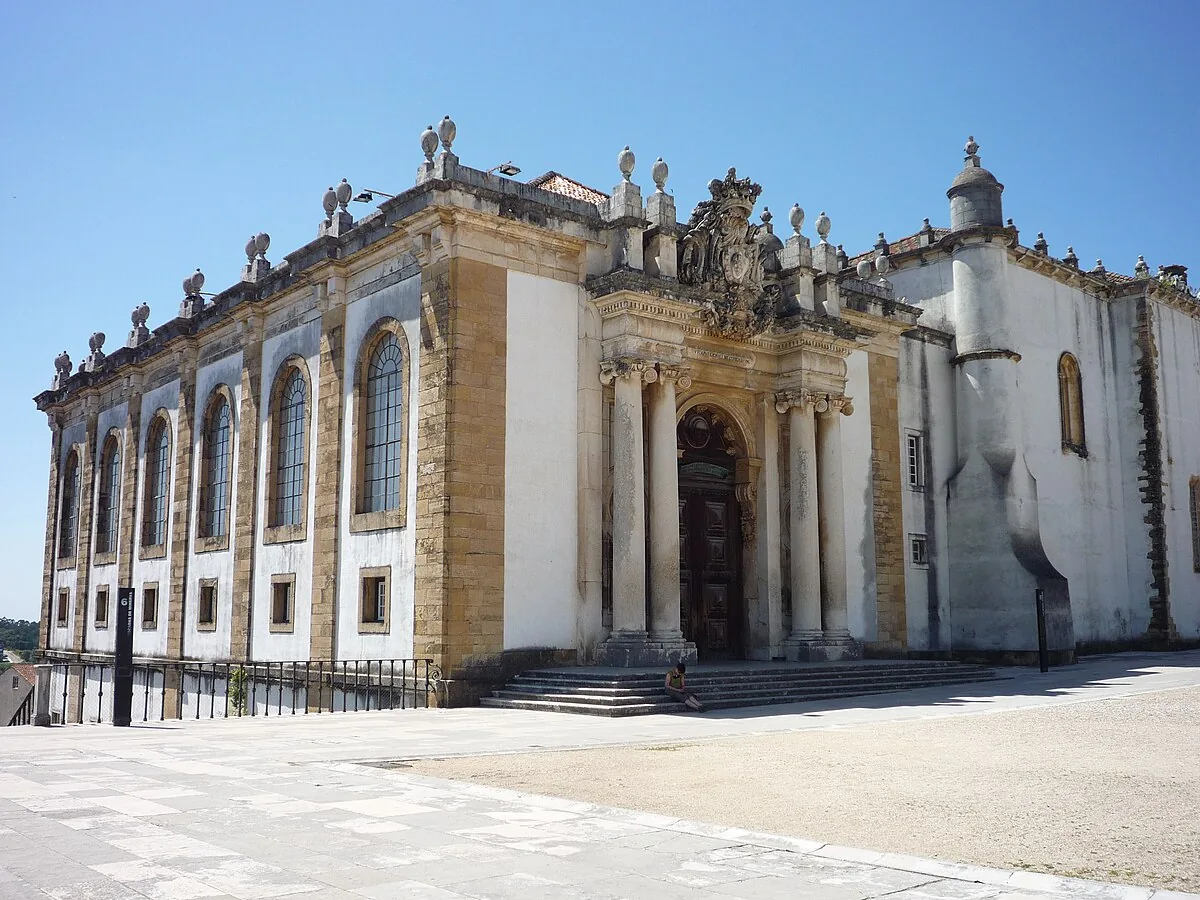
What Biblioteca Joanina actually is
Deep inside the University of Coimbra, three grand rooms encased in two-meter-thick stone walls house a deep collection of 60,000 volumes, protected by a colony of bats. The Biblioteca Joanina is a baroque masterpiece that is a cathedral to human knowledge, commissioned by King João V in the early 18th century. Its interior is an explosion of gold leaf, exotic woods from Brazil, and trompe-l'oeil ceilings that make the rooms appear to stretch into the heavens. This is not just a place where books are kept; it is a display of imperial wealth and intellectual ambition. The atmosphere smells of old paper and beeswax, and the silence is so absolute it is like a physical weight.
Deep inside the University of Coimbra, three grand rooms encased in two-meter-thick stone walls house a deep collection of 60,000 volumes, protected by a colony of bats.
Commissioned by King João
King João V, known as 'The Magnanimous,' used the gold flowing from the mines of Brazil to transform Coimbra into a symbol of the Enlightenment. Completed between 1717 and 1728, the library was designed to function as a fortress for the written word. The walls are exceptionally thick to maintain a constant temperature of 18 to 20 degrees Celsius, and the shelves are made of solid oak, which is too dense for most wood-boring insects. Worth knowing: the library’s most famous residents are its bats. Every night since the 18th century, these creatures have been allowed to fly through the halls to eat any insects that might damage the ancient vellum. It is a symbiotic relationship that has preserved some of the world's rarest academic texts for three hundred years.
Passing through the heavy oak doors,
Passing through the heavy oak doors, The sudden change in acoustics; the outside world vanishes, replaced by a dense, muffled stillness. It smells of leather, dust, and the sweet, resinous scent of rosewood. The element that registers is the way the light from the high windows strikes the gold leaf on the shelves, creating a soft, flickering glow that illuminates the spines of centuries-old books. The scale of the ceiling paintings, where figures representing the four corners of the world peer down from a fake architectural sky. What most skip is the 'Academic Prison' located in the basement, where students and faculty were once confined for minor transgressions. The piece that stays with you is the realization that the bats are sleeping somewhere above you, a silent, furry security force guarding the history of Western thought.
The library is the centerpiece
The library is the centerpiece of the Paço das Escolas at the top of Coimbra’s university hill. Coimbra is midway between Lisbon and Porto and is easily reached by the Alfa Pendular high-speed train. From the Coimbra-B station, take a local train to Coimbra-A and walk up the steep 'Quebra-Costas' (Back-Breaker) stairs to the university plateau. Admission is strictly controlled via timed entry tickets, which should be booked online well in advance, especially during the graduation seasons in May and October.
The library is the centerpiece of the Paço das Escolas at the top of Coimbra’s university hill.
The Experience
The way the floorboards creak underfoot, despite their immense thickness. The sound of the university bells outside feels distant, as if the library exists in a different pocket of time. Something of smooth, cold surface of the marble tables where scholars have sat for centuries. Most visitors miss the intricate ladders hidden within the shelving units, designed to look like part of the decor. The piece that stays with you is standing in the Noble Room and realizing that the 'sky' above you is actually a flat wooden ceiling painted with such mastery that it feels like an endless void.
Why It Matters
The Biblioteca Joanina is one of the most beautiful libraries in the world and a supreme example of Portuguese Baroque art. It represents the historic prestige of the University of Coimbra, one of the oldest in continuous operation. Culturally, it is a monument to the era when Portugal was at the center of global trade and intellectual exchange.
Why Visit
Visit this library because it is a real-life Borges story. It is one of the few places where the environment is as fascinating as the artifacts it contains. Between the gold-drenched shelves and the bat-guarded halls, it offers a glimpse into a time when the preservation of knowledge was treated with the same reverence as the worship of a god.
✦ Insider Tips
- 1
Book your timed entry for the first slot of the day to experience the library in its most authentic, quiet state.
- 2
The 'Academic Prison' in the basement is included in the ticket and offers a fascinating, darker contrast to the splendor above.
- 3
Do not try to take photos inside the library; the guards are incredibly strict to protect the gold leaf and ancient paper.
- 4
Look for the giant portrait of King João V; the library was designed to lead the eye directly to his image.
- 5
After your visit, walk to the nearby Botanical Garden, which was established shortly after the library to serve the university's medical students.