“In this northern wilderness, Roman milestones still mark the way and wild ponies roam through granite villages that look like they were carved directly from the mountain.”
About Parque Nacional da Peneda-Gerês
The park’s human history stretches back to the Neolithic period, evidenced by dolmens and megalithic tombs found on the high plateaus. The Roman presence in the 1st century AD left the Geira, a highway that remains one of the best-preserved examples of Roman engineering in Europe. During the Middle Ages, the high mountains were used as a natural defense against Moorish and later Spanish incursions. The 1971 designation was a landmark moment for Portuguese conservation, recognizing that the park's value lay not just in its wolves and golden eagles, but in the communal traditions of its mountain people.
What this is
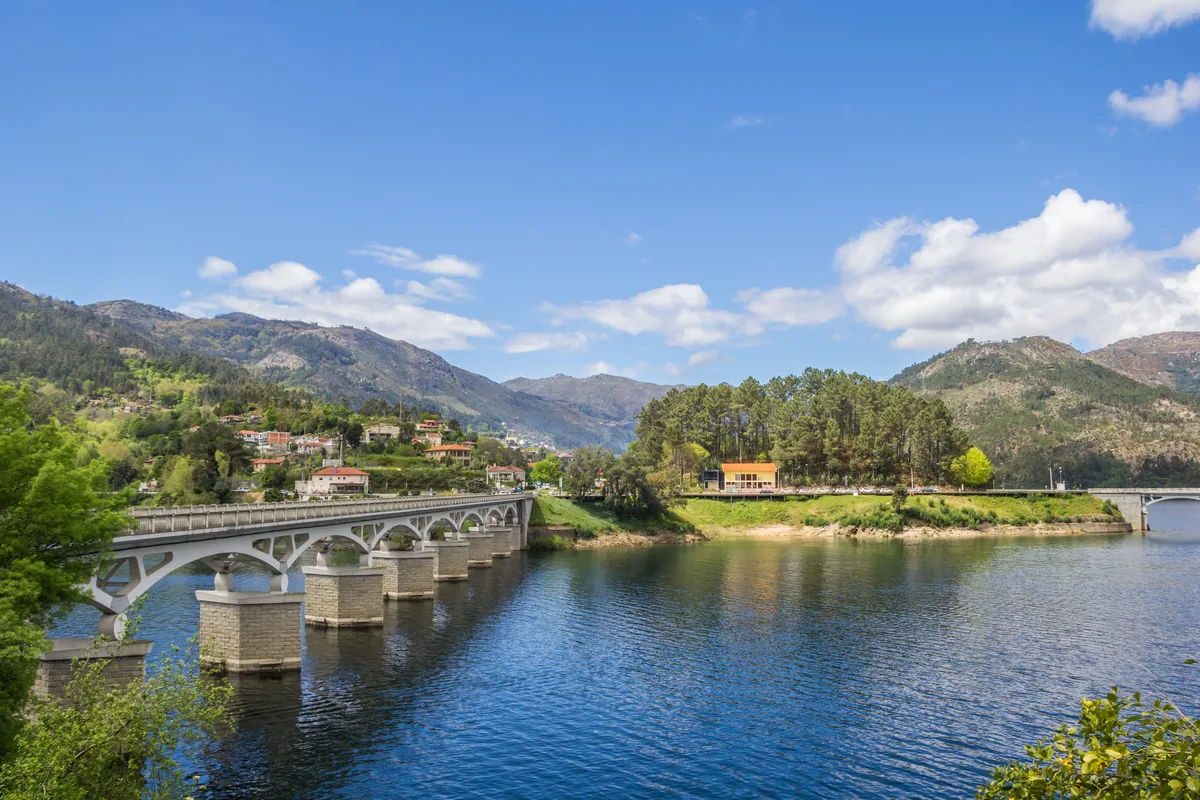
Granite peaks rise like jagged teeth over deep, mist-filled valleys where wild horses roam and ancient oak forests remain untouched by time. Peneda-Gerês is Portugal’s only National Park, a 700-square-kilometer crescent of wilderness that straddles the northern border with Spain. This is a landscape defined by water and stone, featuring crystal-clear lagoons fed by thunderous waterfalls and Roman roads that still bear the ruts of ancient wagons. Scattered throughout the park are small, isolated villages where life follows the seasonal rhythms of transhumance, and the local 'Barrosão' cattle, with their massive lyre-shaped horns, have right of way on the narrow mountain passes. It is a place of raw, unpolished beauty that feels worlds away from the sun-drenched beaches of the south.
Granite peaks rise like jagged teeth over deep, mist-filled valleys where wild horses roam and ancient oak forests remain untouched by time.
park was established, 1971
The park was established in 1971 to protect both the unique high-mountain ecosystems and the human culture that has existed here for millennia. Long before it was a national park, the Romans used the Geira road to connect the cities of Bracara Augusta and Asturica Augusta, leaving behind hundreds of stone milestones that still stand today. Throughout the centuries, the harsh terrain provided a sanctuary for those fleeing conflict, leading to the development of communal farming villages like Castro Laboreiro and Soajo. Here, the famous 'espigueiros', granite grain stores raised on stilts to keep out rodents, were built to resemble small tombs. The survival of these traditions alongside the reintroduction of the Iberian wolf makes Gerês a rare example of a 'living' landscape where nature and humans have negotiated a fragile peace.
Hiking along the granite ridges,
Hiking along the granite ridges, The air is incredibly thin and sharp, smelling of wet earth and wild gorse. Audible: water is omnipresent, from the distant roar of the Arado waterfall to the quiet trickle of mountain springs into stone troughs. The rough, cool texture of the granite boulders, many of which are balanced precariously by glacial retreat. The 'Garrano' ponies, a primitive breed that moves through the mist with a ghostly grace. Simple to walk past is the 'fendeira', hidden cracks in the rock where locals once stored snow to keep food cool. What stays with you is finding a 'poço', a natural swimming hole carved into the rock, where the water is a brilliant, freezing emerald and the only spectators are the circling eagles above.
Location and access
The park is located in the extreme northwest of Portugal, roughly a ninety-minute drive from Porto. While there are buses to the main gateway towns like Vila do Gerês, a car is absolutely essential to explore the deeper reaches of the park. The roads are famously winding and narrow, often shared with livestock, so driving requires patience and focus. The most dramatic entrance is through the Mata de Albergaria, an ancient forest where driving is restricted to preserve the ecosystem. Most visitors base themselves in the central Gerês valley or the northern village of Castro Laboreiro to access the high-altitude trails.
The park is located in the extreme northwest of Portugal, roughly a ninety-minute drive from Porto.
The Experience
The thing that lands is the way the light filters through the ancient oak canopy, creating a dappled, silvery glow on the moss-covered rocks. The silence of the high plateaus is profound, broken only by the whistling wind and the occasional clank of a cowbell. The physical challenge of the 'Trilho da Preguiça,' where the steep ascent rewards you with views that stretch all the way to the Atlantic. Most visitors miss the 'mariolas', small piles of stones left by shepherds to mark paths in the fog. What remains with you is watching a sunset from the Pedra Bela lookout.
Why It Matters
Peneda-Gerês is the last stronghold of several endangered species, including the Iberian wolf and the Pyrenean desman. It is a UNESCO Biosphere Reserve that maintains a rare communal way of life that has largely vanished from the rest of Europe. It serves as the primary water source for much of northern Portugal, anchored by its massive reservoirs and mountain springs.
Why Visit
Visit Gerês to see the 'other' Portugal. It is the perfect antidote to the tiled cities and crowded resorts. It offers a sense of discovery that is hard to find elsewhere in Western Europe, if you are swimming in a secret lagoon or sharing a path with a herd of wild horses. It is a place where you can still feel like an explorer.
✦ Insider Tips
- 1
Download offline maps before you enter the park; cell service is non-existent in the deep valleys and high ridges.
- 2
If you see a herd of Barrosão cattle on the road, stop the car and wait; they will move eventually, and their horns can easily scratch a vehicle.
- 3
Swim in the 'Tahiti' waterfalls (Cascata de Fecha de Barjas), but arrive before 10 AM to avoid the local crowds.
- 4
Respect the 'Mata de Albergaria' forest rules; it is a sensitive UNESCO site where stopping your car is prohibited in certain zones.
- 5
Try the local honey and 'Posta Barrosa' beef in the village of Castro Laboreiro for an authentic taste of the mountains.