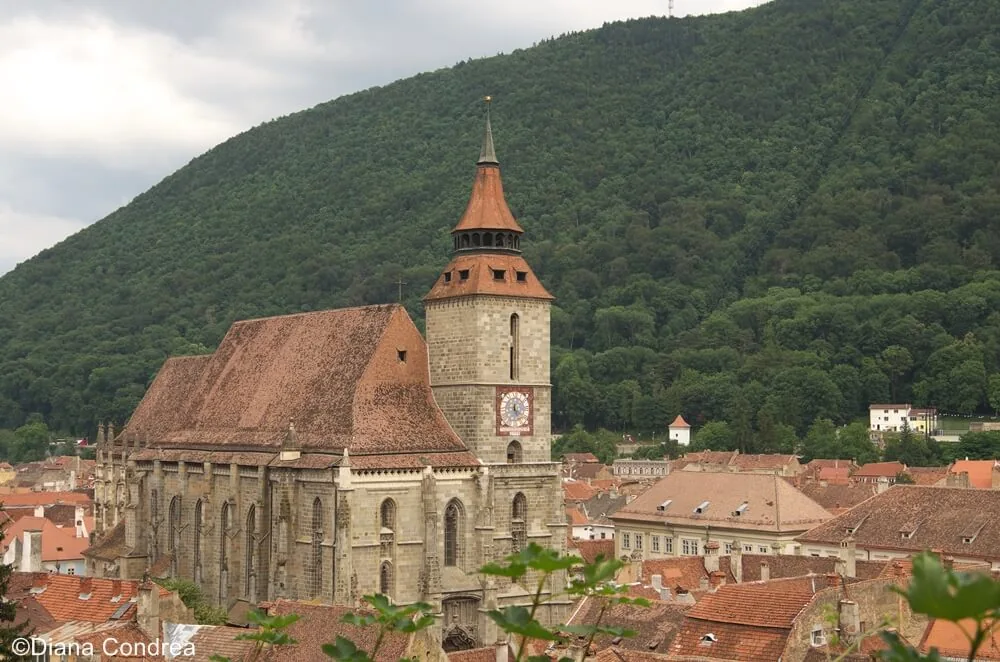
A devastating fire in 1689 turned this cathedral into a blackened husk, yet it inadvertently created the perfect backdrop for the most colorful collection of Ottoman rugs in Europe.
About Black Church
The Black Church represents the easternmost point of major Gothic architecture in Europe. Its builders were local Saxons who utilized the labor of craftsmen from across the Holy Roman Empire, resulting in a structure that feels both Germanic and uniquely Transylvanian. After the Reformation, the church became a center for German-language education and culture. During the 18th century, it underwent significant interior renovations in the Baroque style, though the exterior was never scrubbed of its soot, as the community came to see the blackened stone as a badge of survival. The 19th century saw the installation of the grand organ, which remains one of the largest and best-preserved instruments of its era in Europe.
What Black Church actually is
Brașov is a city of orange tiles and defensive walls, but its heart is a soot-stained Gothic giant. The Black Church, or Biserica Neagră, dominates the Council Square, standing as the largest Gothic cathedral between Vienna and Istanbul. Its name is a scar from a 1689 fire that blackened its exterior walls, leaving a permanent shadow across the city center. Despite its somber appearance, the interior is an unexpected treasury of color and light, housing one of the world’s most significant collections of Anatolian carpets. It is a building defined by endurance, having survived earthquakes, fires, and the shifting borders of empires while remaining the spiritual home of the city's Saxon community.
late 14th century, 1383
Construction began in the late 14th century, around 1383, on the site of an earlier church destroyed by Mongol invasions. It took nearly a century to complete, with the final touches reflecting the wealth of the local guilds who financed the work. Originally dedicated to Saint Mary, the church transitioned from Catholic to Lutheran during the Reformation, a shift led by the humanist Johannes Honterus, whose statue now stands near the southern portal. The defining moment of its history occurred during the Great Fire of 1689, when Imperial Austrian forces set fire to the city. The church's roof collapsed and the heat was so intense it melted the bells, yet the massive stone walls remained upright, forever charred a dark, ash-grey color.
Walking toward the main entrance, the sheer verticality of the buttresses is intimidating. The stone is pockmarked with history, including bullet holes from the 1989 revolution. Once inside, the atmosphere shifts from the grim exterior to an airy, echoing hall. You are immediately greeted by the sight of hundreds of vibrant Turkish carpets draped over the pews and hanging from the walls, gifts from merchants who returned safely from trade routes in the East. The smell is a mixture of old wool, cold stone, and the faint metallic tang of the massive Buchholz organ. This organ, with its 4,000 pipes, produces a sound so deep it can be felt in the chest. In the back of the nave, the 15th-century bronze font, shaped like a chalice, is still a rare survivor of the fire.
Brașov is a central hub
Brașov is a central hub of Romania, easily reached by train or car from Bucharest in under three hours. The church is the focal point of the Old Town, located just off the Piața Sfatului. Most of the area is pedestrianized, making it a natural stop for those exploring the winding cobblestone alleys. While the church is visible from almost anywhere in the lower city, the best approach is through the narrow streets that lead from the Graft Bastion, allowing the massive proportions of the building to reveal themselves slowly behind the historic merchant houses.
The Experience
From the entrance, the silence of the church feels different than a typical cathedral; it is a silence that feels 'padded' by the thick wool of the Anatolian carpets. The light enters through high, narrow windows, illuminating the intricate patterns of the rugs, deep madder reds, indigo blues, and saffron yellows, which stand out brilliantly against the grey stone. You get a history in the uneven floorboards and the cold drafts that seem to come from the crypts below. The scale is so massive that the people at the other end of the nave appear like tiny figurines. If you stay for the evening organ recital, the music fills every corner of the six-ton structure, a sound that seems to vibrate the very soot on the outer walls.
Why It Matters
The Black Church is more than a place of worship; it is a repository of European trade history. The presence of the Anatolian carpets signifies the importance of Brașov as a bridge between the Orient and the Occident. It is a monument to the resilience of the Transylvanian Saxon culture, which has maintained its traditions and language in this mountainous enclave for nearly eight centuries.
Why Visit
The jarring contrast between the 'haunted' exterior and the warm, textile-rich interior. It is one of the few places in the world where you can see the intersection of Islamic art and Christian architecture so harmoniously displayed. It offers a tangible sense of the medieval power that once governed these borderlands.
✦ Photo Gallery
Best Season
🌤 Winter evenings in Brașov are magical, especially when the black stone of the church is dusted with white snow and the nearby Christmas market fills the air with the smell of mulled wine.
Quick Facts
Best time to visit
Winter evenings in Brașov are magical, especially when the black stone of the church is dusted with white snow and the nearby Christmas market fills the air with the smell of mulled wine.
Getting there
In Brașov, Romania; reach Brașov first, then continue to the site.
Location
Brașov, Romania
Type
attraction
Insider Tips
- 1
Look for the 'scared boy' statue on one of the exterior buttresses; local legend says he was a master's apprentice who was pushed off by his jealous teacher.
- 2
Attend an organ concert during the summer months (June to September) to hear the Buchholz organ in its full glory.
- 3
Check the back of the church for the display of 15th-century frescoes that were only recently uncovered during restoration.
- 4
Photography is restricted inside the church, so focus your camera on the intricate portal carvings on the outside instead.
- 5
The gift shop offers high-quality local honey and crafts that are better than the generic souvenirs in the main square.