Europe’s youngest territory grows by forty meters every year as the river dumps a mountain of silt into the Black Sea, creating a sanctuary for 300 bird species.
About Danube Delta
The Delta has always been a frontier. In the 19th century, the European Commission of the Danube turned Sulina into a cosmopolitan port where twenty languages were spoken. During the communist regime, the area was viewed as a resource to be exploited, with plans to turn the reeds into paper and the wetlands into rice paddies. The 1989 revolution saved the ecosystem from total destruction. Now, the Lipovan people, whose ancestors survived here by blending into the reeds, are the primary guardians of the reserve, balancing their traditional sturgeon fishing with a growing eco-tourism industry that values the birds more than the catch.
Danube Delta in Romania
Where the second-longest river in Europe finally meets the Black Sea, the earth dissolves into a 4,000-square-kilometer labyrinth of reeds, floating islands, and hidden channels. The Danube Delta is the largest and best-preserved wetland on the continent, a shifting landscape that grows by forty meters every year. This is a world ruled by water, where the only roads are liquid and the only sounds are the rhythmic dip of oars and the cacophony of three hundred bird species. Massive colonies of white pelicans take flight in synchronized clouds, their shadows dancing over the lily pads. It is a place of primal beauty, where the Lipovan fishing villages maintain a lifestyle that has remained unchanged for centuries, anchored by the cycles of the river and the seasons of the migration.
“Where the second-longest river in Europe finally meets the Black Sea, the earth dissolves into a 4,000-square-kilometer labyrinth of reeds, floating islands, and hidden channels.”
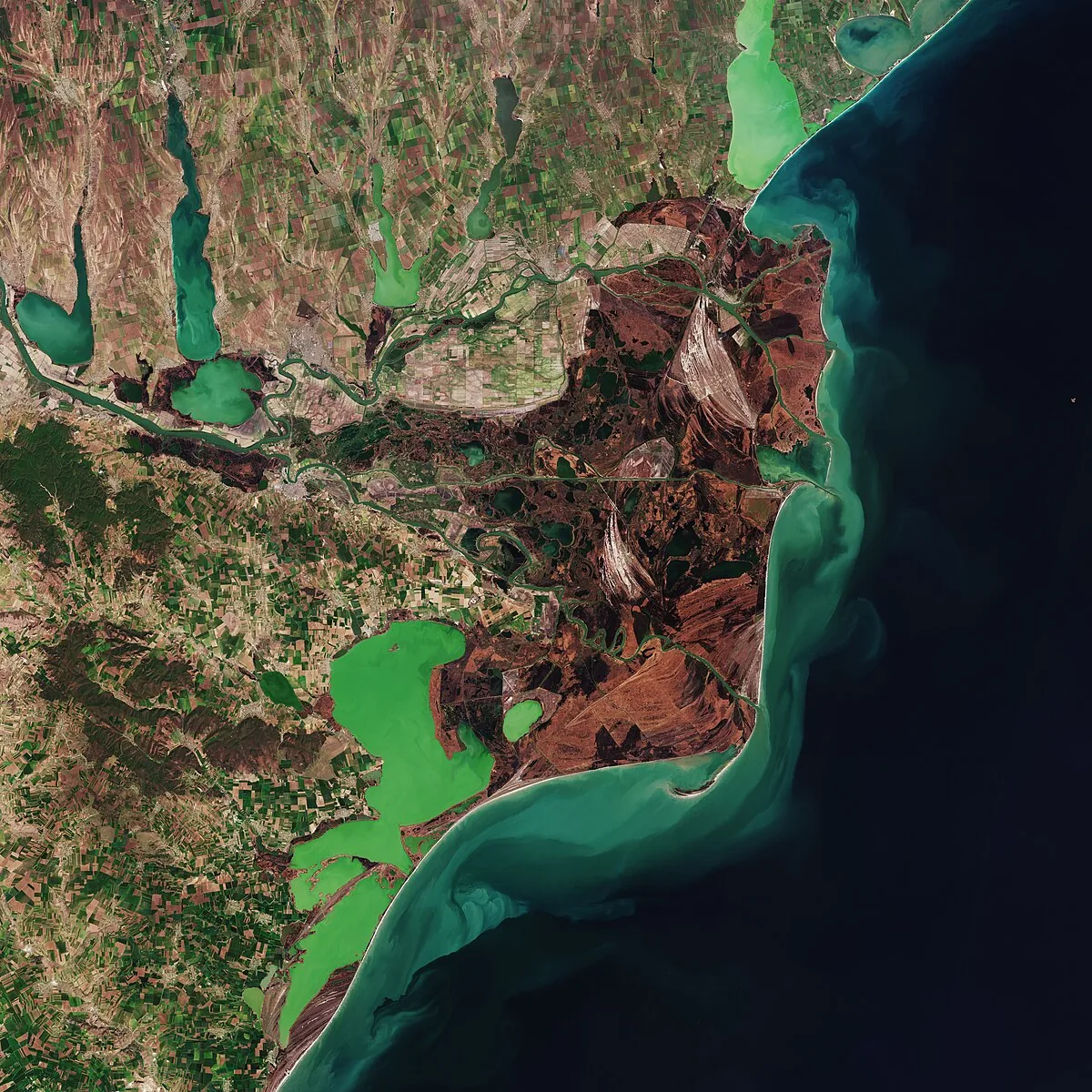
Danube Delta, Romania
Formed over five millennia, the Delta is the youngest land in Romania. It is divided into three main branches: Chilia, Sulina, and Sfântu Gheorghe. Historically, these waters were the haunt of Greek traders, Roman soldiers, and Ottoman sailors, all of whom sought to control the entry point to the heart of Europe. In the 18th century, the Lipovans, Old Believers fleeing religious persecution in Russia, found sanctuary in these remote marshes, bringing with them unique fishing techniques and blue-painted wooden houses. The area was declared a Biosphere Reserve in 1991, stopping a Soviet-era plan to drain the wetlands for agriculture. Today, it is a UNESCO World Heritage site, protected not just for its beauty, but as a critical filter for the entire Danube basin.
Gliding through a narrow channel in a traditional wooden 'lotca,' The cool humidity rising from the water as the sun begins to burn off the morning mist. The environment smells of wet silt, fresh mint, and the faint, briny scent of the sea. Opening with the way the reeds, some four meters high, bow in the breeze, creating a whispering wall on either side of the boat. First, the sudden flash of blue as a kingfisher dives for a meal, a sharp contrast to the green expanse. The mass of the boat lift slightly entering a wide lake, noticing the vast rafts of white and yellow lilies that stretch to the horizon. The noise of thousands of frogs, a steady, vibrating pulse that defines the Delta’s night. In the village of Mila 23, the soft sand underfoot and notice the bright blue trim on the whitewashed houses. What hits is the taste of 'storceag,' a thick sturgeon soup enriched with sour cream and dill, cooked over an open fire. People generally stay on the larger tour boats, but you should notice the silence of the smaller canals where the water is so still it reflects the clouds like a mirror. First, the wild horses of Letea Forest, grazing among ancient oaks draped in climbing vines, a scene that feels more like a dream than reality. Tulcea is the connection to the Delta, a port city accessible by train or car from Bucharest. From Tulcea, the only way forward is by passenger ferry or private boat. Sulina, the easternmost point of Romania, can only be reached by water, making the journey part of the destination itself.
The Experience
The orange light of the sunset turns the water into liquid fire as you head back to the village. The first thing you register is the silhouette of a lonely grey heron standing perfectly still among the cattails. You discover a temperature drop sharply as the sun disappears, replaced by the cool breath of the Black Sea. The smell of woodsmoke from the village chimneys, signaling that the evening's fish broth is being prepared. What stays with you is the sheer scale of the sky, unblocked by any hills or buildings, filled with stars so bright they reflect in the dark water of the channel.
Why It Matters
The Danube Delta is Europe’s biological lungs. It acts as a massive natural water filter and a vital stopover for migratory birds traveling between Africa and the Arctic. Culturally, it is the last stronghold of the Lipovan tradition, a unique ethnic enclave that has preserved its language and faith through sheer geographic isolation.
Why Visit
Visit the Delta if you are tired of the paved world. It is the only place in Europe where you can get lost in a truly wild landscape that feels endless. It offers a combination of world-class birdwatching and a glimpse into a subsistence lifestyle that is rapidly disappearing elsewhere on the continent.
Insider Tips
- 1
Hire a local fisherman with a small boat rather than joining a large tour; they can take you into the narrow channels where the pelicans actually nest.
- 2
Pack high-quality mosquito repellent and wear long sleeves after 5 PM, as the Delta insects are legendary for their persistence.
- 3
Take the slow passenger ferry from Tulcea to Sulina at least once; it takes four hours but offers a meditative look at river life that the speedboats miss.
- 4
Visit the Letea Forest to see the northernmost subtropical forest in Europe and the wild horses that have lived there for centuries.
- 5
Try the 'Malasolka', salt-cured fish served with boiled potatoes and garlic sauce, a staple of the Lipovan diet that is perfect after a day on the water.