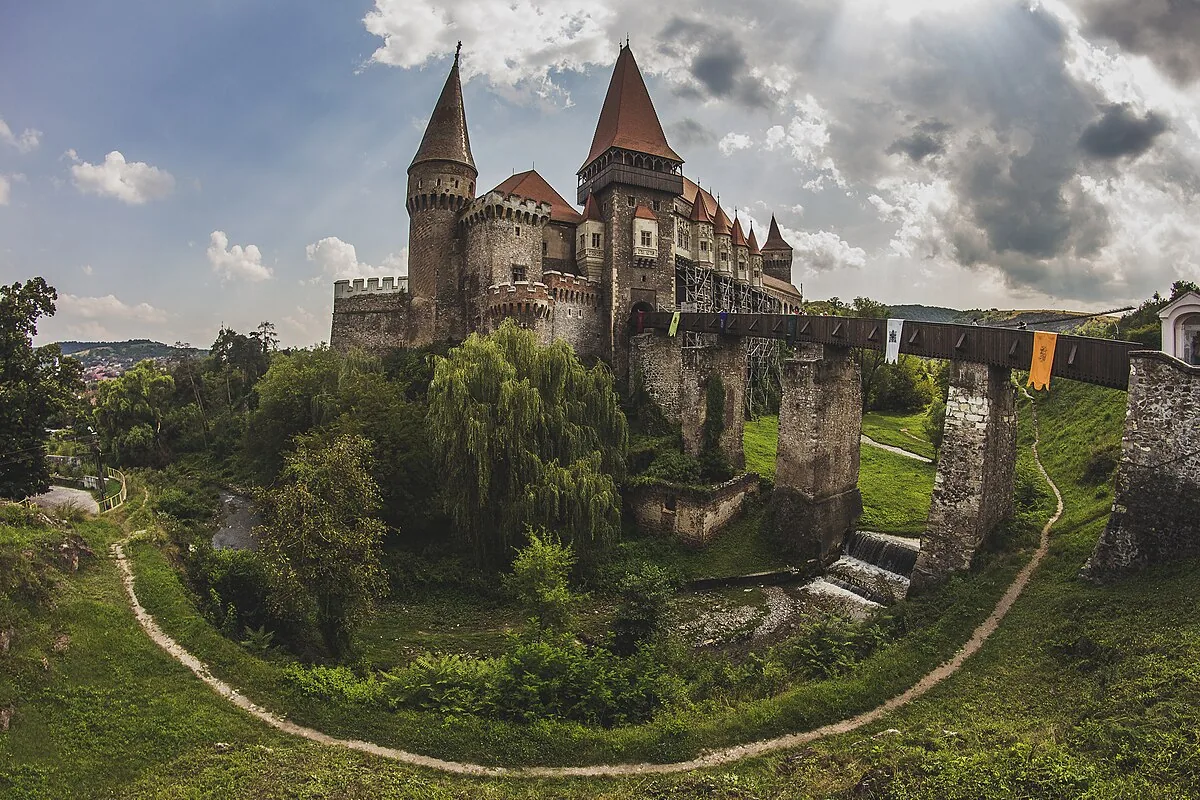
Seven hundred architects and twenty thousand workers spent a decade building a structure so heavy it sinks six millimeters into the Bucharest soil every single year.
About Palace of the Parliament
This was originally Uranus Hill, a historic district that was completely leveled to satisfy the dictator's vision of 'Civic Center.' Anca Petrescu, a 28-year-old architect, led the design team, creating a style known as Totalitarian Realism. After the 1989 execution of Ceaușescu, the building was nearly renamed 'The Palace of the People,' but the sheer cost of its upkeep, exceeding $6 million annually for electricity alone, made it a source of national debate. By the late 1990s, it finally became the permanent home of the Chamber of Deputies and the Senate.
Palace of the Parliament
Standing before this mountain of marble and steel, the sheer scale of Nicolae Ceaușescu’s megalomania becomes a physical weight. The Palace of the Parliament is the second largest administrative building on the planet, a structure so vast it has its own microclimate and can be seen from the moon. Every inch of its colossal footprint tells a story of sacrifice, as entire neighborhoods were razed to make way for this neoclassical behemoth. Inside, the air feels different. It carries a trace of old dust and cold stone, filtered through kilometers of hand-woven carpets. This is not merely a government building; it is a monument to an era that nearly broke a nation, now repurposed as the seat of Romanian democracy. Visitors often find themselves whispering, silenced by the audacity of the grand staircases and the chandeliers that weigh as much as small cars.
“Standing before this mountain of marble and steel, the sheer scale of Nicolae Ceaușescu’s megalomania becomes a physical weight.”
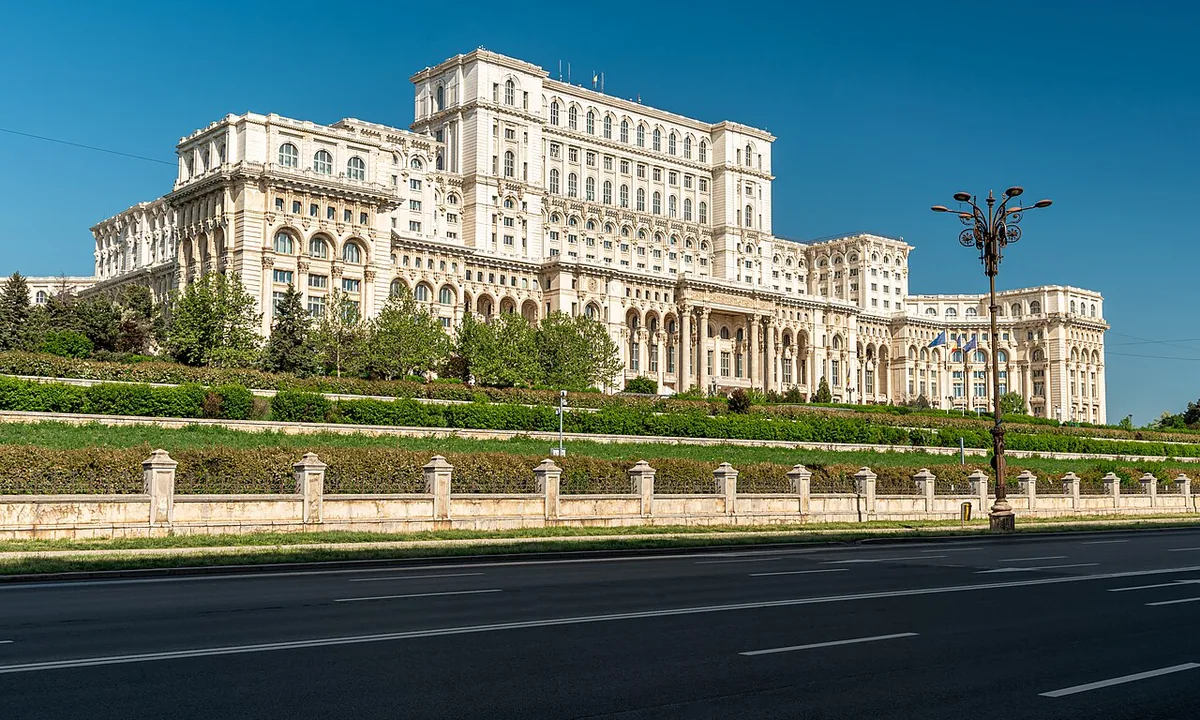
Palace of the Parliament, Romania
Work began, 1984
Work began in 1984 under the title 'Project Bucharest,' a plan that required 700 architects and an army of 20,000 workers. Ceaușescu demanded that every material used be strictly Romanian. This nationalist decree led to the consumption of one million cubic meters of Transylvanian marble and 3,500 tons of crystal. To clear the space, 40,000 people were forcibly relocated and historic churches were either demolished or rolled away on tracks. When the 1989 revolution toppled the regime, the building was only 60 percent complete. The new government faced a dilemma: finish the cursed structure or tear it down. They chose to complete it, transforming a symbol of tyranny into a functional parliament, though large portions of its eight underground levels remains shrouded in mystery and shadow.
Walking through the Union Hall , the echo of your footsteps travels across the vast expanse of the world’s largest hand-woven carpet, which had to be stitched inside the room because it was too large to fit through the doors. The sense is a strange chill even on a warm day, the result of high ceilings and massive stone walls that refuse to hold heat. Straight off, the intricate patterns in the oak and cherry wood paneling, carved with such precision it looks like lace. You catch the absence of air conditioning; the building relies on its own massive thermal mass to stay cool. Something like a sense of vertigo in the main ballroom, looking up at a chandelier featuring 7,000 light bulbs. Most people stick to the official guided route, but you should notice the heavy silk drapes that were woven by nuns in remote monasteries, a soft contrast to the hard lines of the marble. At first, the way the light catches the dust motes in the abandoned hallways that branch off the main tour, hinting at the ninety percent of the building that remains empty and silent. The sheer repetition of columns and arches begins to feel hypnotic moving from one cavernous hall to the next.
Active Izvor Park sits just north
Active Izvor Park sits just north of the main entrance, making the Palace easily accessible via the M1 and M3 metro lines. Those visiting arrive at Izvor station and walk across the broad Bulevardul Națiunile Unite. Security is high, so entering requires a pre-booked tour and a valid passport, as this remains a functioning high-security government facility.
“Active Izvor Park sits just north of the main entrance, making the Palace easily accessible via the M1 and M3 metro lines.”
The Experience
A heavy silence hangs in the air of the Senate Hall, where the gold-leaf ceilings reflect the amber glow of massive crystal fixtures. You register the scent of floor wax and the faint, ozone smell of old electrical wiring. You get small, almost insignificant, as you climb the ceremonial stairs that were specifically designed to match the short stride of the former dictator. The way the light dies out in the deep recesses of the corridors, suggesting the miles of tunnels that supposedly lead to the airport and secret bunkers.
Why It Matters
The Palace is an uncomfortable bridge between Romania’s communist past and its democratic present. It is shaped by the country's industrial capacity and the skill of its artisans, even if the impetus for its creation was dark. Culturally, it remains a unavoidable landmark that defines the skyline and the psyche of modern Bucharest.
Why Visit
Check out this place to understand the physical reality of absolute power. No photograph can convey the exhaustion felt after walking just a fraction of its halls. It provides a visceral lesson in history that no book can replicate, offering a chance to see the world's most expensive crystal and marble collection under one roof.
Insider Tips
- 1
Book the 'Standard + Underground' tour option to see the secret bunkers, as the basic tour only shows the polished surface halls.
- 2
The Museum of Contemporary Art (MNAC) is located in the rear wing; use the separate entrance for a much quieter, more artistic perspective on the building.
- 3
Look for the vent holes in the walls; these were designed for natural ventilation because Ceaușescu feared poisoned air could be pumped through a central AC system.
- 4
Stand in the center of the Union Hall and clap your hands to hear the six-second acoustic delay caused by the sheer volume of the space.