“Nine defensive towers still stand guard over this hilltop fortress, where residents still live, work, and sleep in houses built before the Renaissance began.”
About Sighișoara Citadel
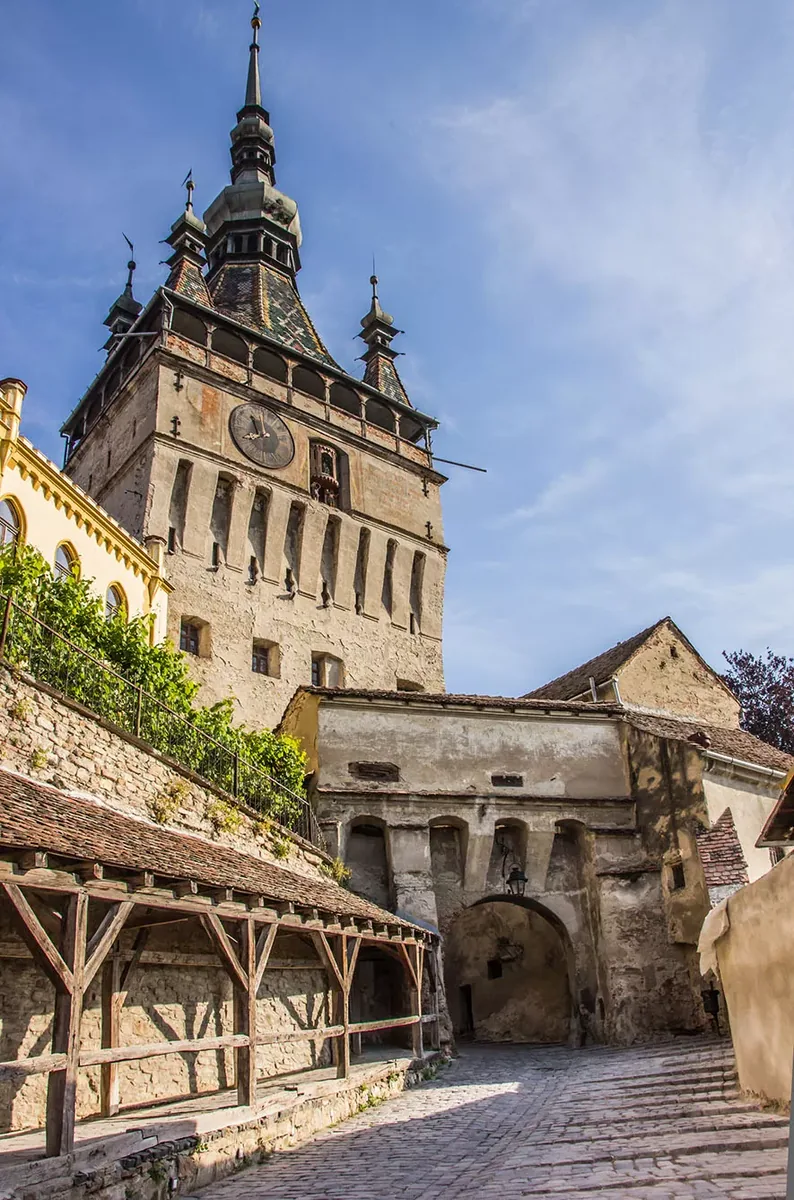
The 14th-century Clock Tower serves as the citadel's main gate and its historical heartbeat. It housed the town hall until 1556 and survived a catastrophic fire in 1676 that destroyed much of the lower town. The tower's mechanism, crafted in Switzerland, features seven figures representing the pagan gods that gave their names to the days of the week. Below the hill, the 'Lower Town' developed later, but the citadel remained the elite enclave of the Saxon elite, who maintained strict laws to preserve the Germanic character of their island in a Romanian sea for nearly eight hundred years.
What Sighișoara Citadel actually is
Cobblestones polished by eight centuries of footfalls lead upward into the heart of Sighișoara, one of Europe’s last inhabited medieval fortresses. The Citadel sits on a hill overlooking the Târnava Mare River, a vertical world of pastel-colored houses and fortified towers. Each tower belongs to a guild, the Blacksmiths, the Tailors, the Shoemakers, creating a defensive perimeter like a physical manifestation of medieval trade. The space here smells of woodsmoke and damp earth, mixed with the sweet aroma of chimney cakes roasting over charcoal. Unlike many historical sites that feel like museums, Sighișoara hums with the life of a real town. Locals lean out of shutters to water geraniums, and children run through the same arches that once sheltered Saxon merchants from invading armies.
Cobblestones polished by eight centuries of footfalls lead upward into the heart of Sighișoara, one of Europe’s last inhabited medieval fortresses.
Background
German craftsmen, known as Transylvanian Saxons, were invited by the King of Hungary in the 12th century to settle and defend the frontier of his realm. They built 'Castrum Sex' on the ruins of a Roman fort, creating a highly organized society where the wealth of the guilds funded the massive walls and nine surviving towers. Sighișoara is perhaps most famous as the birthplace of Vlad III, the 15th-century prince who inspired the Dracula legend. His childhood home still stands near the Clock Tower. Through fires, plagues, and numerous sieges, the citadel remained remarkably intact, largely because its hilltop position and stout masonry made it an unattractive target for looters. In 1999, its architectural continuity earned it a place on the UNESCO World Heritage list, cementing its status as a survivor of the Middle Ages.
Climbing the Scholars’ Stairs, the cool , trapped air of the covered wooden tunnel that leads to the Church on the Hill. The 175 steps creak under your boots, a rhythmic sound that has echoed here since 1642. First, the texture of the yellow ochre and dusky rose lime-wash on the houses, peeling back in layers to reveal the stone underneath. Immediately, the Clock Tower at the strike of the hour, when the wooden figurines representing the days of the week rotate in a mechanical dance. The unevenness of the river-stone streets, which force you to slow down and observe the small details, like the wrought-iron signs hanging over artisan workshops. The first thing you register is the heavy scent of drying herbs in the local pharmacy museum, a trace of the plague-ridden years. Most people gather around the statue of Vlad Tepes, but you should notice the quiet, overgrown cemetery at the top of the hill, where the headstones are carved with ancient Saxon names. The way the light turns a soft gold in the late afternoon, casting long shadows from the Tinners' Tower across the village square. The taste of a sharp, local plum brandy in a cellar bar provides a warm finish to the climb. Trains from Brașov or Sibiu arrive at the station at the base of the hill, about a ten-minute walk from the citadel gates. The climb into the upper town is steep, and vehicles are restricted within the walls, so arriving on foot is the most authentic way to enter. Those visiting use Sighișoara as a central hub for exploring the fortified churches of the surrounding Transylvanian countryside.
The Experience
The damp, mossy scent of the old stone walls hits you as you pass through the Tailors' Tower. The first thing you register is the way the light catches the uneven glass of the window panes, distorting the view of the square below. A sense of historical continuity while watching the night watchman, a tradition that was briefly revived for the benefit of those staying within the walls. The standout is the vibrant, hand-painted furniture in the small boutiques, a craft that has been passed down through generations of Transylvanian families. What anchors you is standing on the ramparts at dusk, watching the fog roll in from the surrounding forests and realizing the town looks exactly as it did five centuries ago.
The damp, mossy scent of the old stone walls hits you as you pass through the Tailors' Tower.
Why It Matters
Sighișoara is a rare example of a small fortified medieval town that has maintained its functional and architectural integrity. It serves as a living record of the Saxon culture that shaped Transylvania's history. Its survival through centuries of conflict makes it a poignant symbol of resilience and community pride.
Why Visit
Visit Sighișoara to escape the 'theme park' feel of many European medieval sites. Here, the history is layered and messy, and the lack of modern development within the walls creates a genuine time-capsule effect. It is the best place to feel the transition from the ancient world to the modern, while enjoying the best artisan crafts in Romania.
✦ Insider Tips
- 1
Avoid the restaurants directly in the main square; instead, find the small cellar eateries tucked behind the towers for much better 'ciorbă' and local stews.
- 2
Visit the Church on the Hill early in the morning to see the 500-year-old frescoes before the crowds arrive.
- 3
The stairs leading to the upper citadel are slippery when wet; wear boots with good grip if there is even a hint of rain.
- 4
Look for the house of the 'Dragon' near the Clock Tower; it is where Vlad the Impaler's father lived and contains some of the oldest secular murals in the country.
- 5
Climb to the top of the Clock Tower for a panoramic view that reveals the defensive layout of the city and the surrounding Saxon villages.