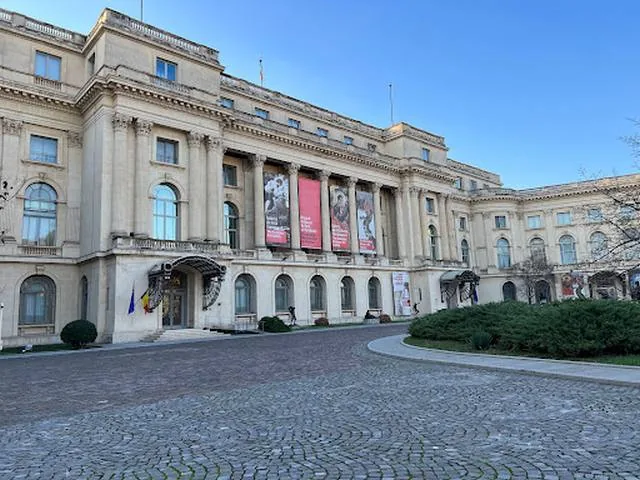
“Bullet holes from the 1989 revolution still mark the marble exterior of this former royal palace, where today, the quiet gaze of an El Greco saint meets the gaze of the modern world.”
About National Museum of Art of Romania
The National Museum of Art emerged from the ashes of the Romanian monarchy and the violence of the late 20th century. Originally the official residence of the Kings of Romania, it was designed by architect Nicolae Nenciulescu to exude French-style elegance. The art collection was built from the royal family's private acquisitions, supplemented by works from the Kalinderu Museum and other confiscated private estates. During the 1989 revolution, the building was shelled by tanks, and the resulting fires threatened to wipe out the nation's artistic heritage. The museum’s current state is a miracle of conservation, as specialists spent years repairing canvasses that had been shredded by shrapnel and blackened by smoke.
Situated in the former Royal Palace on Calea
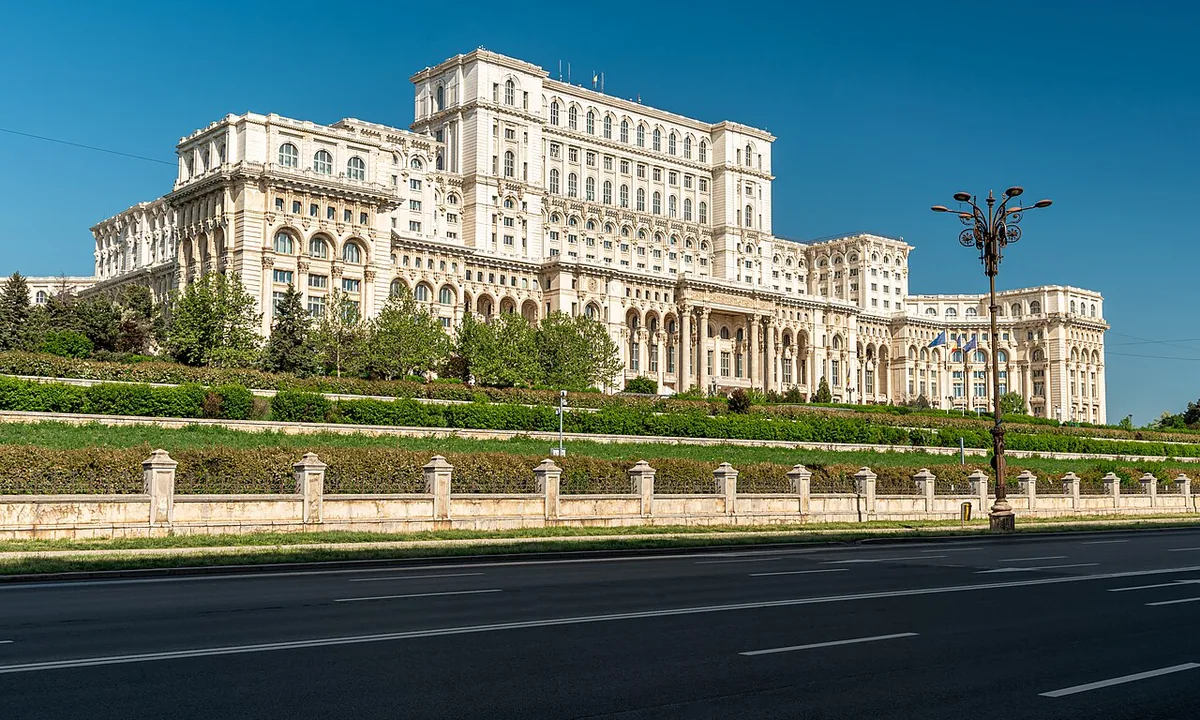
Situated in the former Royal Palace on Calea Victoriei, the National Museum of Art of Romania (MNAR) is a palace of contradictions. Its neoclassical facade still bears the subtle scars of the 1989 revolution, yet inside, the galleries are spaces of serene, curated brilliance. This institution houses the country’s most comprehensive collection of Romanian and European art, spanning from the medieval period to the modern era. The building itself is an artifact of the Romanian monarchy, with high-ceilinged ballrooms and marble staircases that once hosted the country's kings. Today, it is the cultural soul of Bucharest, bridging the gap between the Byzantine spirituality of the past and the avant-garde movements of the 20th century.
Situated in the former Royal Palace on Calea Victoriei, the National Museum of Art of Romania (MNAR) is a palace of contradictions.
King Carol II
The site has been a center of power since the early 19th century, but the current palace structure was largely completed in the 1930s under King Carol II. It replaced an earlier palace that had been destroyed by fire. Along the forced abdication of King Michael I in 1947, the new communist regime converted the royal residence into a state museum. The museum suffered catastrophic damage during the 1989 uprising against Ceaușescu, as the palace was caught in the crossfire between revolutionaries and loyalist forces. Over 1,000 works of art were damaged or destroyed. A decade of painstaking restoration followed, resulting in the modern, world-class galleries that reopened in the early 2000s.
Entering through the grand courtyard , the noise of Bucharest's heavy traffic immediately fades. The museum is divided into two main sections: the National Gallery and the European Art Gallery. In the National Gallery, you encounter the luminous gold of medieval icons and the heavy, earthy tones of Nicolae Grigorescu’s landscapes. The Modern Romanian Art section is a revelation, featuring the early, formative sculptures of Constantin Brâncuși. The light in these rooms is controlled and soft, highlighting the textures of oil and bronze. What you catch first is the creak of the parquet floors and the vastness of the Royal Dining Room, which retains its monarchical opulence. The European wing offers surprising encounters with masters like Rembrandt, El Greco, and Rubens, all housed in an intimate setting that allows for close study. The museum is located in central Bucharest, across from the Memorial of Rebirth in Revolution Square. It is easily accessible via the Piata Romana or Universitate metro stations. Calea Victoriei, the grand boulevard it sits on, is often closed to cars on summer weekends, making it a perfect time for a stroll to the museum. Most people arrive on foot after exploring the nearby Old Town or the Romanian Athenaeum, which is just a few steps away. Taxis and ride-sharing services are plentiful, but the museum’s central location means it is integrated into the city’s most walkable and historic district.
The Experience
The first thing you catch is a profound transition as you move from the chaos of Revolution Square into the hushed hallways of the palace. The room is cool and smells faintly of wax and old paper. The most striking moment occurs in the Treasury, where the gold-leafed altarpieces from destroyed monasteries glow with an almost supernatural light. The mass of history in the Throne Hall, where the scale of the room makes you realize the ambition of the Romanian kingdom. In the Brâncuși room, the simplicity of his early works like 'The Prayer' offers a sharp contrast to the gilded frames of the European masters. It is a place where you can witness the literal and metaphorical 'healing' of a nation through its art.
The first thing you catch is a profound transition as you move from the chaos of Revolution Square into the hushed hallways of the palace.
Why It Matters
MNAR is the definitive repository of the Romanian visual identity. It preserves the unique fusion of Eastern Orthodox traditions and Western European aesthetics that defines the country’s culture. It also functions as a memorial to the resilience of Romanian institutions, having survived the transition from monarchy to communism to democracy, all while protecting the fragile beauty of its collections.
Why Visit
You visit to see the 'unseen' Brâncuși and to understand the specific, melancholic beauty of Romanian painting that rarely makes it to Western galleries. It is the best place to understand how Romania views itself, a country at the crossroads of empires, holding onto its beauty despite the scars of its history.
✦ Insider Tips
- 1
Purchase a combined ticket for both the National and European galleries, but plan for at least four hours to see both without rushing.
- 2
Don't miss the basement level of the National Gallery, which contains rescued fragments from the Văcărești Monastery, demolished by Ceaușescu.
- 3
Check the museum's website for 'Royal Spaces' tours, which grant access to the Throne Hall and the grand staircase.
- 4
The museum shop has excellent, high-quality prints of Romanian modernist works that are difficult to find elsewhere.
- 5
Photography without flash is allowed in most galleries, but the lighting is quite dim, so bring a steady hand for your shots.