“Three hundred original peasant homes were dismantled piece by piece and moved to a Bucharest park to ensure the soul of rural Romania wouldn't vanish into the 20th century.”
About National Village Museum
Dimitrie Gusti’s 'sociological school' was revolutionary, involving hundreds of students who lived in remote villages to identify the best examples of folk architecture. The museum was inaugurated by King Carol II, who saw it as a vital tool for nation-building. Many of the homes were moved along with their original owners for the first few months to ensure they were 'lived in' correctly during the opening season. Over the years, the museum has expanded to include specialized buildings like a traditional fishery and a watermill. Despite being in the middle of a metropolis, the museum maintains its own micro-ecosystem, with many of the original fruit trees and plant species brought from the provinces still thriving on the site.
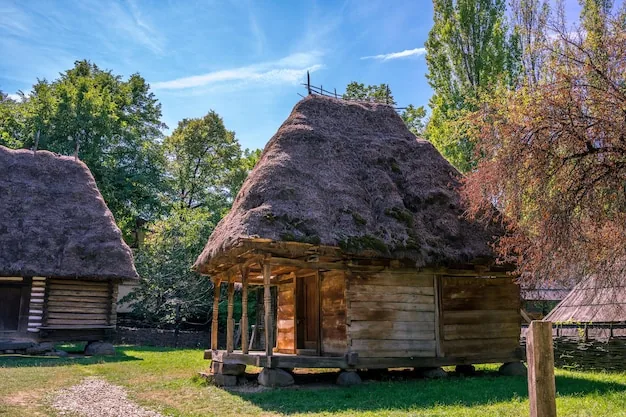
Authentic peasant life from every corner of Romania
Authentic peasant life from every corner of Romania is gathered along the banks of Herăstrău Lake, creating a quiet village that spans centuries in a few city blocks. The Dimitrie Gusti National Village Museum is an open-air sanctuary where over 300 original structures, houses, windmills, and churches, have been meticulously dismantled and rebuilt. Moving through the gate feels like an immediate escape from the chaotic traffic of Bucharest into a range of thatched roofs and hand-carved porches. The area here is noticeably cooler and smells of dried grass and old timber, a sensory bubble that preserves the soul of rural Romania. This is not a collection of replicas; these are homes where people lived, worked, and died, each one telling the specific story of its home province, from the high Carpathians to the marshes of the Danube Delta.
Authentic peasant life from every corner of Romania is gathered along the banks of Herăstrău Lake, creating a quiet village that spans centuries in a few city blocks.
Founded the museum, 1936
Sociologist Dimitrie Gusti founded the museum in 1936, making it one of the oldest open-air ethnographic sites in the world. His mission was to document the fast-disappearing folk traditions of the Romanian countryside as the country modernized. He didn't just want the architecture; he insisted on bringing the tools, the furniture, and the very textiles that made these houses homes. During the communist era, the museum was a quiet act of resistance, preserving the traditional religious and social structures that the state was trying to erase in the villages. Each house was selected for its unique regional character, such as the steep, shingled roofs of Maramureș designed for heavy snow or the mud-brick shelters of Dobrogea built to withstand the coastal winds. The collection has survived fires and the urban sprawl of the capital, remaining a sanctuary of national identity.
Crossing the threshold of a 19th-century
Maramureș house, The immediate scent of old oak and cold ash from the hearth. Within, the space is dim and quiet, the thick walls providing a natural silence that blocks out the nearby city. The intricate 'rope' carvings on the massive wooden gates, a symbol of the continuity of life that is found throughout northern Romania. The vibrant, hand-woven carpets hanging on the walls, their geometric patterns telling local stories of protection and fertility. You get a rough, uneven texture of the lime-washed walls, which are cool to the touch even in the height of summer. The first thing you register is the sound of the wind catching the blades of a wooden windmill from the Delta, a slow, creaking rhythm that feels prehistoric. The majority walk the main paths, but you should notice the small, sunken vegetable gardens and the fruit trees that are still maintained between the houses. You get a sense of peace sitting on a porch in the Moldavian section, watching the light filter through the trees onto the thatched roofs. The way the houses are grouped by region, allowing you to walk from the Black Sea to the Hungarian border in under an hour. The smell of the lake and the blooming linden trees in June creates a heady, nostalgic atmosphere.
King Mihai I
The museum is located in Herăstrău Park (King Mihai I Park) in northern Bucharest. It is easily reached via the Aviatorilor metro station or by taking the 131 or 335 bus. The Arch of Triumph is just a few minutes' walk from the entrance, making it a perfect hub for a day of exploring the city's green spaces.
The museum is located in Herăstrău Park (King Mihai I Park) in northern Bucharest.
The Experience
The sound of church bells from the 18th-century wooden church from Dragomirești creates a moment of profound calm in the middle of the park. The first thing you register is the tiny, hand-stitched icons and the scent of incense that still clings to the timber walls. Something like a sense of awe at the engineering of the high, narrow steeples, built entirely without metal nails. What you catch first is the way the light catches the dust motes in the small windows, illuminating the simple wooden cradles and spinning wheels. The piece that stays with you is standing between two houses from completely different centuries and realizing they share the same DNA of craftsmanship and survival.
Why It Matters
The National Village Museum is the most important ethnographic archive in Romania. It preserves the specialized knowledge of traditional construction, using wood, clay, and reeds, that is rapidly being lost to modern materials. Culturally, it acts as a mirror for the Romanian people, reflecting a history that is rooted in the land and the changing seasons.
Why Visit
See this museum to understand Romania's diversity in a single afternoon. While the city center is all French influence and communist blocks, this park is the 'real' Romania. It is the best place to appreciate the incredible artistry of the Romanian peasant and to find a level of quiet that is impossible anywhere else in Bucharest.
✦ Insider Tips
- 1
Allow at least three hours for your visit; the site is much larger than it looks on the map and requires a lot of walking.
- 2
Check the schedule for 'Artisans' Week' in the summer, when craftsmen from the provinces demonstrate weaving, woodcarving, and egg painting in the houses.
- 3
The museum shop near the entrance sells high-quality, authentic folk art that is much better than the souvenirs found in the city center.
- 4
Bring a bottle of water; there are only a few spots to buy drinks once you are deep inside the museum grounds.
- 5
Look for the 'sunken' houses from the southern plains; they were built half-underground to stay cool in the brutal summer heat of the Danube valley.